
In May 1845 the Royal Navy sent Sir John Franklin, a 59-year-old veteran of earlier Arctic surveys, to complete the search for a Northwest Passage through the islands north of Canada. He commanded two converted bomb vessels, HMS Erebus and HMS Terror, fitted with steam engines and heating and stocked with about three years of provisions, much of it in tins. The ships left Greenhithe on the Thames on May 19 with 134 men; five were sent home from Greenland, leaving 129. Whalers in Baffin Bay saw them that summer. After that, nothing.
What happened
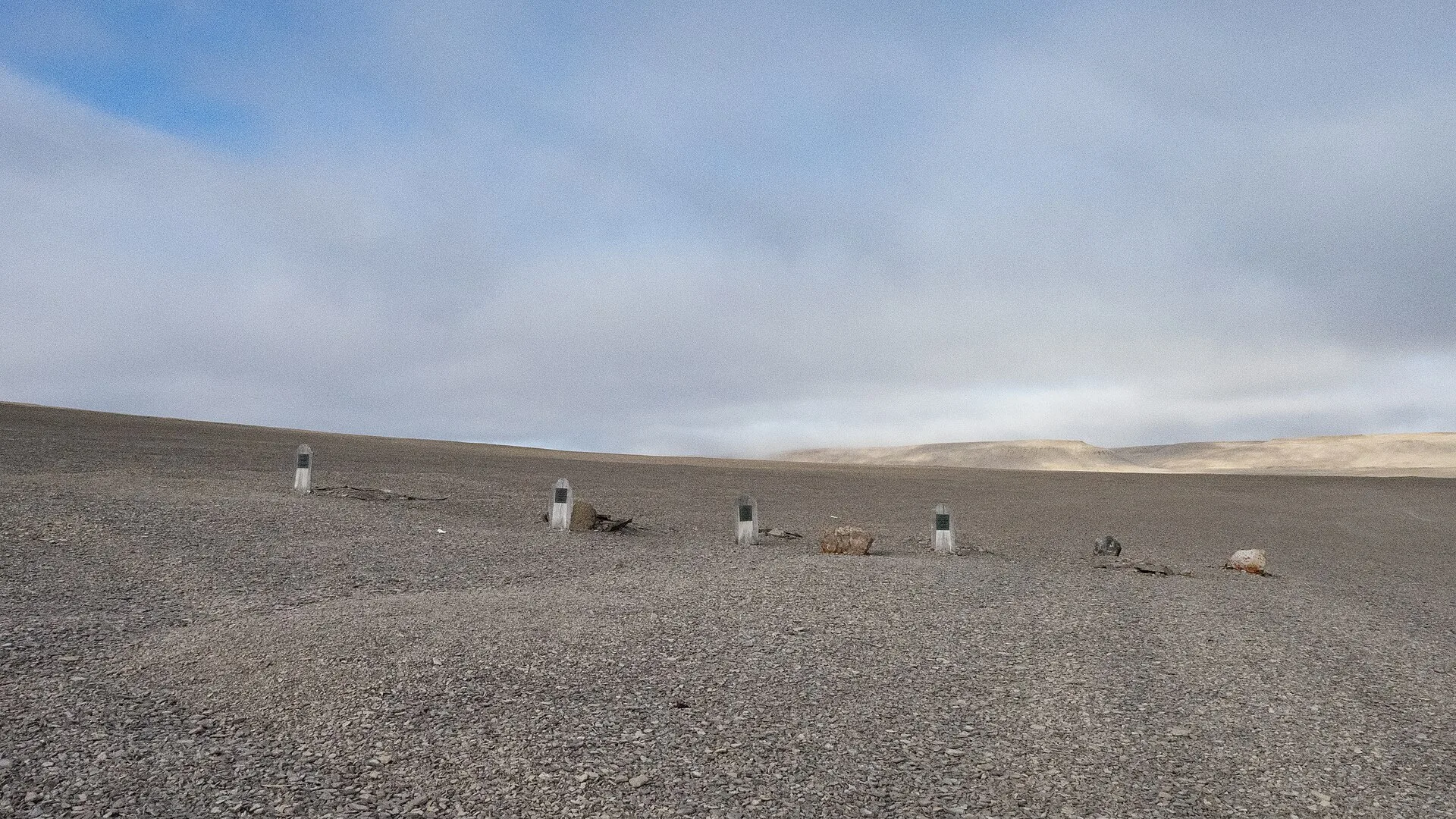
By 1848 public alarm, led by Franklin’s wife Jane, pushed the Admiralty into searching, and over the next decade dozens of naval and private expeditions crossed the Arctic. The first real clue came in 1850 on Beechey Island, a small island off Devon Island, where searchers found the remains of a winter camp and the graves of three young sailors, John Torrington, John Hartnell and William Braine, who had died in the first months of 1846. There was no message explaining where the ships had gone.
In 1854 John Rae of the Hudson’s Bay Company, surveying the Boothia Peninsula, met Inuit who described a party of white men seen several years earlier dragging a boat south along the coast of King William Island, thin and short of food, and later finding bodies near the mouth of the Back River. Some of the bodies, they said, had been cut up, and the contents of cooking pots made it clear the last survivors had eaten their dead. Rae bought silver forks and spoons, some marked with officers’ initials, and Franklin’s own Hanoverian order, and took the news to London. The reaction was fury. Jane Franklin refused to accept it, and Charles Dickens published a two-part essay in his magazine Household Words arguing that British sailors would never have done such a thing and suggesting the Inuit had killed them instead. Rae defended his informants in print.
Jane Franklin then paid for her own search under Francis McClintock. In 1859 his lieutenant, William Hobson, found a metal canister in a cairn at Victory Point on King William Island. The paper inside carried two notes. The first, from May 1847, reported the Beechey Island winter and that the ships were held in the ice, adding that all was well. The second, written around its margins in April 1848 by Captains Francis Crozier and James Fitzjames, said that Franklin had died on June 11, 1847, that nine officers and fifteen men were dead, and that the 105 survivors had abandoned the ships on April 22 and were setting out for the Back River. McClintock’s parties found skeletons, a ship’s boat mounted on a heavy sledge, and more relics.
The investigation
Later travelers, including the American Charles Francis Hall in the 1860s, gathered further Inuit accounts, among them descriptions of a ship that had drifted south and sunk off the island. In the 1980s the Canadian anthropologist Owen Beattie exhumed the three Beechey Island sailors, preserved in the permafrost, and found signs of scurvy and very high lead levels, which he linked to the solder used in the tinned food. Bones from King William Island examined in the 1990s showed elevated lead and cut marks consistent with cannibalism. Later researchers have questioned how much the tins were to blame, and the relative weight of lead, scurvy and other illness, starvation and cold is still debated.
The ships themselves stayed lost until the 21st century. Parks Canada began systematic surveys in 2008, guided partly by the Inuit testimony Hall recorded. In September 2014 a Parks Canada team found Erebus in shallow water south of King William Island, near where an Inuk informant had placed a sunken ship. Two years later a crew from the Arctic Research Foundation located Terror in Terror Bay on the island’s southwest coast. Both wrecks are now a national historic site managed jointly with Inuit, and underwater archaeologists have been recovering material from Erebus since.
Where it stands
Researchers at the University of Waterloo and Lakehead University have been matching DNA from skeletal remains against living descendants. They identified the Erebus engineer John Gregory in 2021 and Captain Fitzjames, whose jawbone showed cut marks, in 2024. In 2026 they named four more, bringing the total to six. The broad outline Rae’s informants gave in 1854 has been confirmed many times over. What remains open is exactly why so many men died so fast, what happened to the last of them, and where most of their bodies lie.