
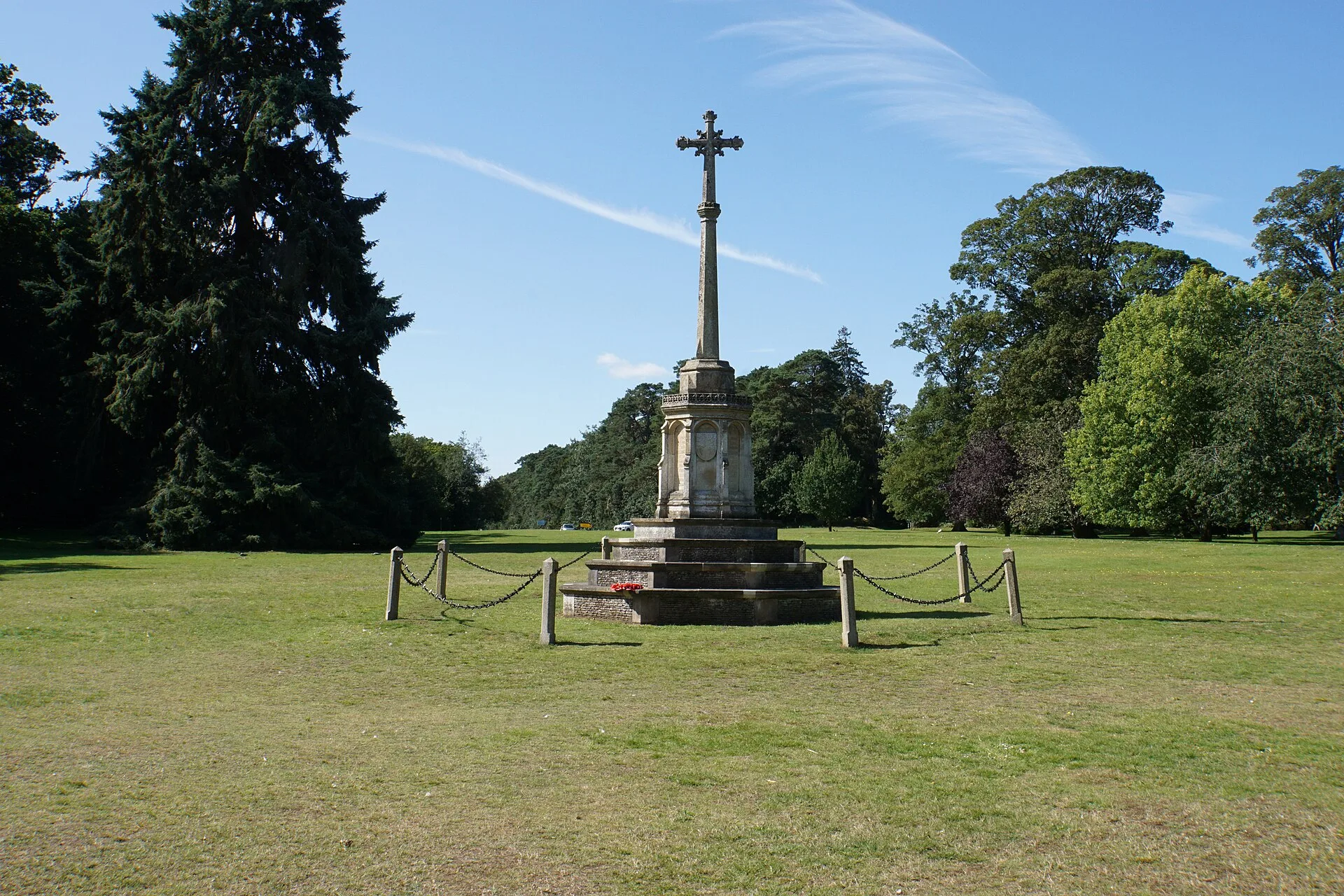
Few First World War stories are stranger than the one told about a group of Norfolk soldiers at Gallipoli: that on an August day in 1915 they marched into a low, solid-looking cloud and were never seen again. The soldiers were real, and so was their disappearance from the record for several years. The cloud appeared fifty years later.
The men from Sandringham
Frank Beck, the land agent who ran the royal estate at Sandringham, raised a volunteer company from its staff in 1906: gardeners, grooms, farmhands and household servants, with estate foremen as sergeants. When the Territorial Force was created in 1908 it became a company of the 5th Battalion of the Norfolk Regiment, a Territorial unit drawn from across north Norfolk. When war came Beck, by then in his fifties, volunteered for overseas service with his men, reportedly against the wishes of King George V. A reorganization in February 1915 merged the Sandringham men into a larger “King’s Company,” but the name stuck to them.
August 12, 1915
The 1/5th Norfolks landed at Suvla Bay in August 1915 as part of the British attempt to break the deadlock on the Gallipoli peninsula. On the afternoon of August 12 their brigade was ordered forward across broken, scrubby farmland toward the Anafarta hills, to clear the ground for a bigger attack planned for the next morning. The Norfolks on the right met lighter resistance at first, and their commanding officer, Colonel Sir Horace Proctor-Beauchamp, pressed ahead with a large part of the battalion. Machine-gun fire caught groups of them as they bunched in gaps; some reached a vineyard and a cluster of farm buildings. Beauchamp was last seen urging his men on. After dark a handful of officers led the survivors back. Beck, Beauchamp and a large part of the attacking force did not return.
The idea of a mysterious vanishing began with the commander in chief, General Sir Ian Hamilton. His official dispatch described the colonel, with 16 officers and 250 men, pushing on into wooded country, and said none of them was seen or heard of again; he called it a very mysterious thing. When the dispatch was printed in January 1916, a Norfolk paper ran the headline “Sandringham men disappear.” Yet local papers also printed accounts from survivors who had seen no wood and assumed the missing had been killed or captured, and in February 1916 word came that one wounded officer was a prisoner in Constantinople. Two officers of the battalion were eventually repatriated after the war. Queen Alexandra, whose staff many of the men had been, pressed hard for news.
What was found
In 1919 a British graves registration unit working with the battalion’s former chaplain searched the ground. It found about 180 bodies, 122 of them Norfolks but only two identifiable by name, scattered over roughly a square mile behind what had been the Turkish front line. A local farmer said that on returning home he had found his land covered with the dead and had thrown them into a ravine. Turkish accounts say the attackers were destroyed by two reserve companies in a bayonet counterattack. The battalion’s recorded dead for August 12–31 came to 11 officers and 151 other ranks. Beck’s body was never identified; his watch was later bought back and returned to his family in 1922. He is named on the Helles Memorial with others who have no known grave.
The cloud
The supernatural version came out in April 1965, at the fiftieth anniversary of the Anzac landings. Frederick Reichardt, a New Zealand veteran who had approached the organizer of a UFO meeting in Rotorua, produced a signed statement. It described six to eight identical loaf-shaped clouds hanging motionless over Hill 60 on August 28, 1915, and a dense gray cloud about 800 feet long resting on the ground. A British regiment, which he named as the “First Fourth Norfolk,” marched into it; the cloud then rose, joined the others and drifted away. The statement was published in a New Zealand UFO magazine and spread worldwide.
When the military historian Ian McGibbon checked the record for the New Zealand Skeptics in 1999, the account fell apart. The date was sixteen days after the Norfolks’ attack, the place was a different part of the front, and there is no mystery at all about the 1/4th Norfolks. Of the two co-signers, service records showed one had been evacuated sick on August 21 and the other was in hospital from early August; neither was on the peninsula on the date given. McGibbon pointed out that a real and costly attack had gone in through swirling mist at nearby Scimitar Hill on the evening of August 21.
Where it stands
The battalion did not vanish; it was cut down in a confused advance, and the dead were found in 1919. A 1999 BBC drama, All the King’s Men, suggested the men were executed after capture, an ending Turkey’s ambassador and Beck’s grandson both criticized for lacking evidence. The cloud is a later legend.