
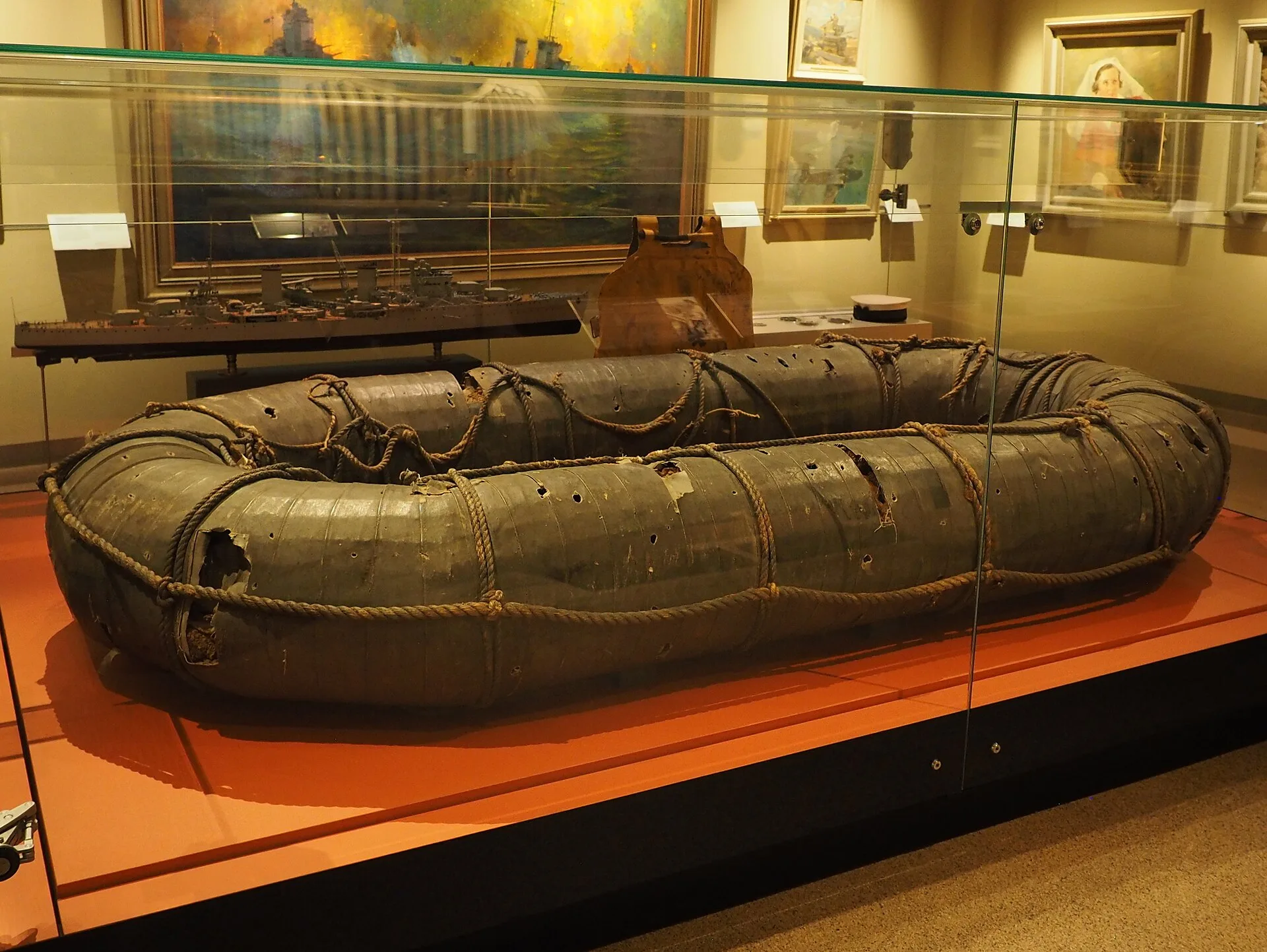
HMAS Sydney, a light cruiser and the most celebrated ship in the Royal Australian Navy, went down in the Indian Ocean in November 1941 with every one of the 645 men aboard. For decades the only trace of her crew was a single body, a sailor lying in a shot-up life raft that drifted ashore at Christmas Island in February 1942. He was buried without a name, the navy came to doubt he was from Sydney at all, and only in 2021 did DNA give him back his name: Thomas Welsby Clark, an able seaman from Brisbane.
What happened
On the afternoon of November 19, 1941, Sydney was heading home to Fremantle after escort duty when she came on a merchant ship some 120 nautical miles out from Steep Point, near Shark Bay, that identified itself as the Dutch freighter Straat Malakka. It was the German auxiliary cruiser Kormoran. For over an hour the cruiser exchanged signals as she drew closer, until she was almost alongside. When the raider’s crew failed to give a secret recognition signal, they dropped their disguise and opened fire, and the first salvos wrecked Sydney’s bridge and gunnery control. The cruiser’s return fire crippled Kormoran, which her own crew blew up after abandoning ship. Sydney drifted away burning and sank in the night. More than 300 Germans were rescued and held as prisoners until the war ended. No Australian survived. Debris was scarce: a naval-pattern Carley float and a life belt.
The raft at Christmas Island
Toward dusk on February 6, 1942, lookouts on Christmas Island saw seabirds circling an object off Flying Fish Cove. A launch went out and towed back a Carley float, half-swamped and heavy with weed and barnacles, holding the body of a man in a boiler suit bleached white by the sun. The harbor master, Captain J. R. Smith, recorded that the raft was of naval pattern, its metal frame stamped as Australian-made, its covering torn and holding embedded metal fragments, one of which the island’s gun crew took for the remains of a bullet. The body was too far gone to identify. With a Japanese invasion expected, the man was buried with military honors in the island’s old European cemetery, and the officials’ written reports were lost during the evacuation and occupation; they were later reconstructed from memory. A 1949 assessment by the navy’s intelligence chief concluded the raft had not come from Sydney, and the grave dropped from sight.
The search and the identification
Researchers, among them the Western Australian historian Wes Olson, argued for years that the float’s construction and fittings matched Sydney’s equipment, and a 1998 parliamentary inquiry recommended finding the grave. A navy search in 2001 failed. In 2006 a second team found the remains with help from the veteran Brian O’Shannassy, who had photographed the grave on a visit some fifty years earlier. At the Shellshear Museum in Sydney, the anthropologist Denise Donlon found a fragment of German shell lodged in the skull and built a profile of a tall, right-handed man in his twenties, probably raised on the Australian east coast. He was reburied as an unknown sailor in the war graves section at Geraldton, Western Australia, in November 2008, while the DNA work went on.
The match came almost by accident. After the University of Adelaide geneticist Jeremy Austin described the sailor’s genetic profile in a lecture, someone in the audience mentioned a friend whose family history sounded similar. That led to a Queensland farmer, Colin Clark, whose uncle had served on Sydney. The navy announced the identification on November 19, 2021, eighty years to the day after the battle.
Where it stands
Clark had joined Sydney only that August and was 21 when he died. No other man from the ship is known to have made it onto a raft, and the wound to his head suggests he was hurt in the action and died on the float. His grave at Geraldton now carries his name. Searchers located both wrecks in 2008, and an inquiry by the former judge Terence Cole concluded that most of the crew died in the battle or went down with the ship. The question of who lay in the Christmas Island raft, the heart of this case, is answered.