
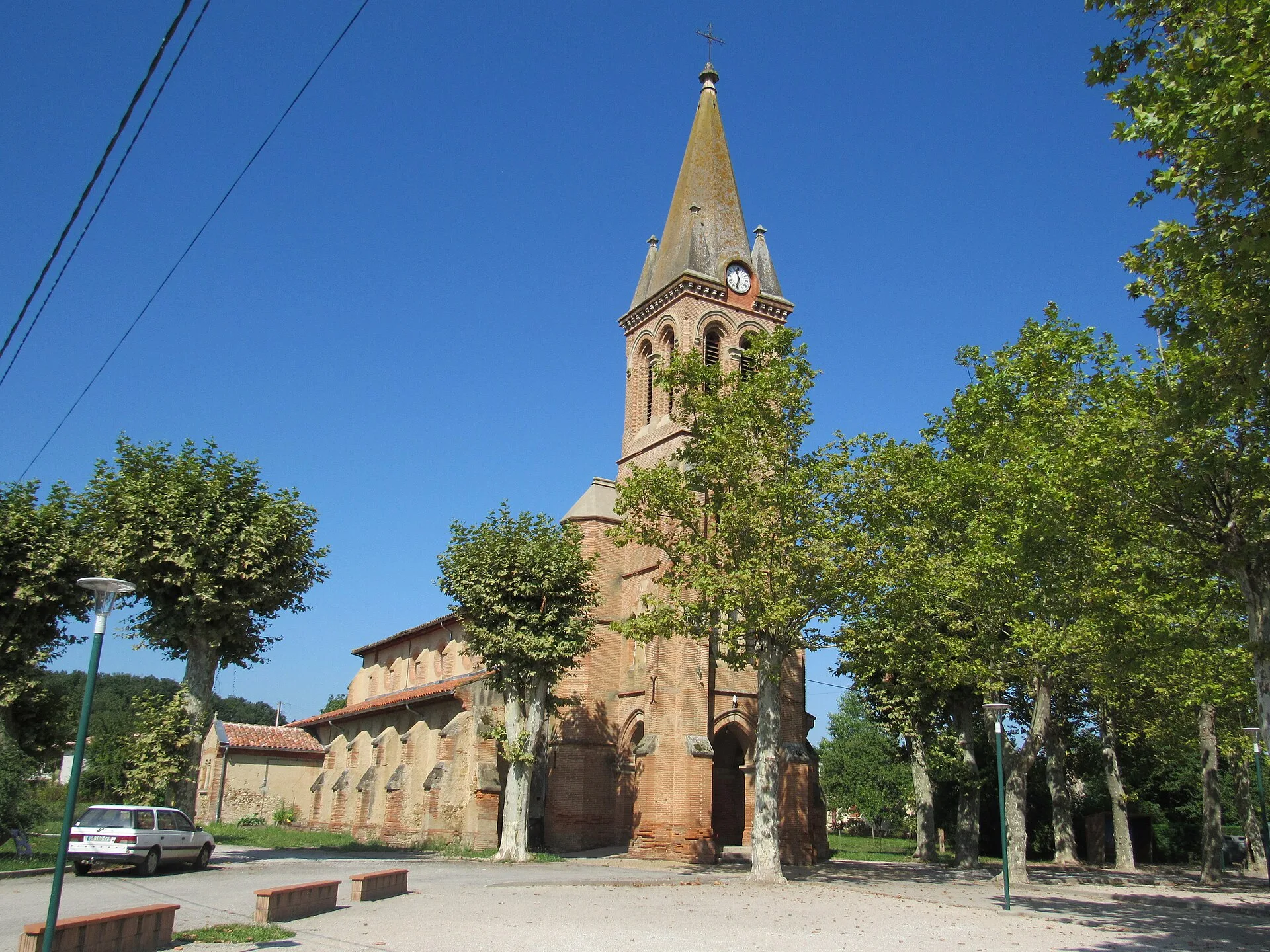
In September 1560 the Parlement of Toulouse, one of the senior courts of France, sentenced a man to be hanged outside a farmhouse in the village of Artigat, in the foothills of the Pyrenees. He had lived in that house for more than three years as Martin Guerre, the husband of Bertrande de Rols, and most of the village had accepted him as such. The court decided he was Arnaud du Tilh, a man from another village with a poor reputation, and the deciding evidence walked into the courtroom on a wooden leg.
A husband who left
The Guerre family were Basques who had moved to Artigat when Martin was a small child. He was married very young, at about fourteen, to Bertrande, the daughter of a comfortable local family. For eight years the marriage produced no children, which the village blamed on a spell, before a son, Sanxi, was born. In 1548, suspected of taking grain from his own father, Martin vanished. Church law did not let a deserted wife remarry without proof that her husband was dead, so Bertrande waited, neither wife nor widow.
The return
In 1556 a man arrived who said he was Martin. He looked enough like him, and knew enough about the household, its neighbors and its private affairs, that Martin’s four sisters and his uncle Pierre welcomed him, and Bertrande took him into her bed. They lived together for three years and had two daughters, one of whom survived.
Trouble came over money. The newcomer claimed his share of the family property and went to law against Pierre Guerre, who had meanwhile married Bertrande’s widowed mother. Pierre turned against him and began saying he was a fraud. A passing soldier reportedly claimed that the real Martin was alive and missing a leg, lost in the wars. Pierre traced the impostor to Arnaud du Tilh, nicknamed Pansette, and brought a criminal complaint in Bertrande’s name, apparently with heavy pressure on her to go along.
At the first trial, at Rieux, about 150 witnesses were heard. Some swore the accused was Martin, including the sisters; others swore he was Arnaud; many would not commit themselves. The accused made a strong showing: he recounted details of the couple’s early marriage that matched Bertrande’s own account, and dared her to swear he was not her husband. She did not. He was nonetheless condemned and appealed to Toulouse, where the judges, checking his answers against the witnesses, were inclined to believe him and to blame Pierre.
Then a one-legged man appeared and said he was the real Martin Guerre. He had served in Spanish armies and lost his leg fighting at Saint-Quentin in 1557. Questioned on the household’s past, he answered less fluently than the accused, but when the family saw the two side by side, the sisters, Pierre and finally Bertrande recognized the newcomer. Arnaud was condemned for imposture and adultery, confessed before his execution, and was hanged at Artigat in September 1560. The court treated Bertrande as deceived rather than guilty, and her daughter by Arnaud was allowed to keep her legitimacy.
The judge’s book
One of the Toulouse judges, Jean de Coras, served as reporter on the appeal. He was so struck by the case that he spent the following months writing it up, and in 1561 published Arrest memorable, an account of the judgment with a hundred learned annotations. It was reprinted many times, appeared in a Latin version and an Italian adaptation, and later drew comment from Montaigne. Coras himself, a Protestant, was killed in Toulouse in the religious massacres of 1572.
The open question
The question that has never been settled is what Bertrande knew. In 1983 the Princeton historian Natalie Zemon Davis, who had advised on the French film Le Retour de Martin Guerre, argued in The Return of Martin Guerre that Bertrande must have recognized the stranger and chose him anyway: a capable, affectionate husband was better than none, and the matching story of their intimate life looked rehearsed. The historian Robert Finlay replied in the American Historical Review in 1988 that the sources, including Coras, show a woman genuinely deceived, and that Davis had read a modern kind of independence into a sixteenth-century peasant wife. Arnaud’s own explanation, given in his confession, was that two acquaintances of Martin had mistaken him for the missing man, and that he had built the deception from what he then learned.
Where it stands
The facts of the imposture are among the best documented of any early modern case, thanks to Coras. Who Arnaud was, how he was caught and how he died are settled. How he learned so much, and whether Bertrande was his victim or his partner, remain matters of interpretation.