
Alcatraz was the federal prison system’s last stop, a rock in San Francisco Bay reserved for inmates who had made trouble or run from other penitentiaries. Frank Morris and the brothers John and Clarence Anglin fit the profile. All three were career burglars and bank robbers in their thirties with records of escape attempts elsewhere, and by 1961 they held neighboring cells on the island. A fourth inmate, Allen West, was in the plan with them.
What happened
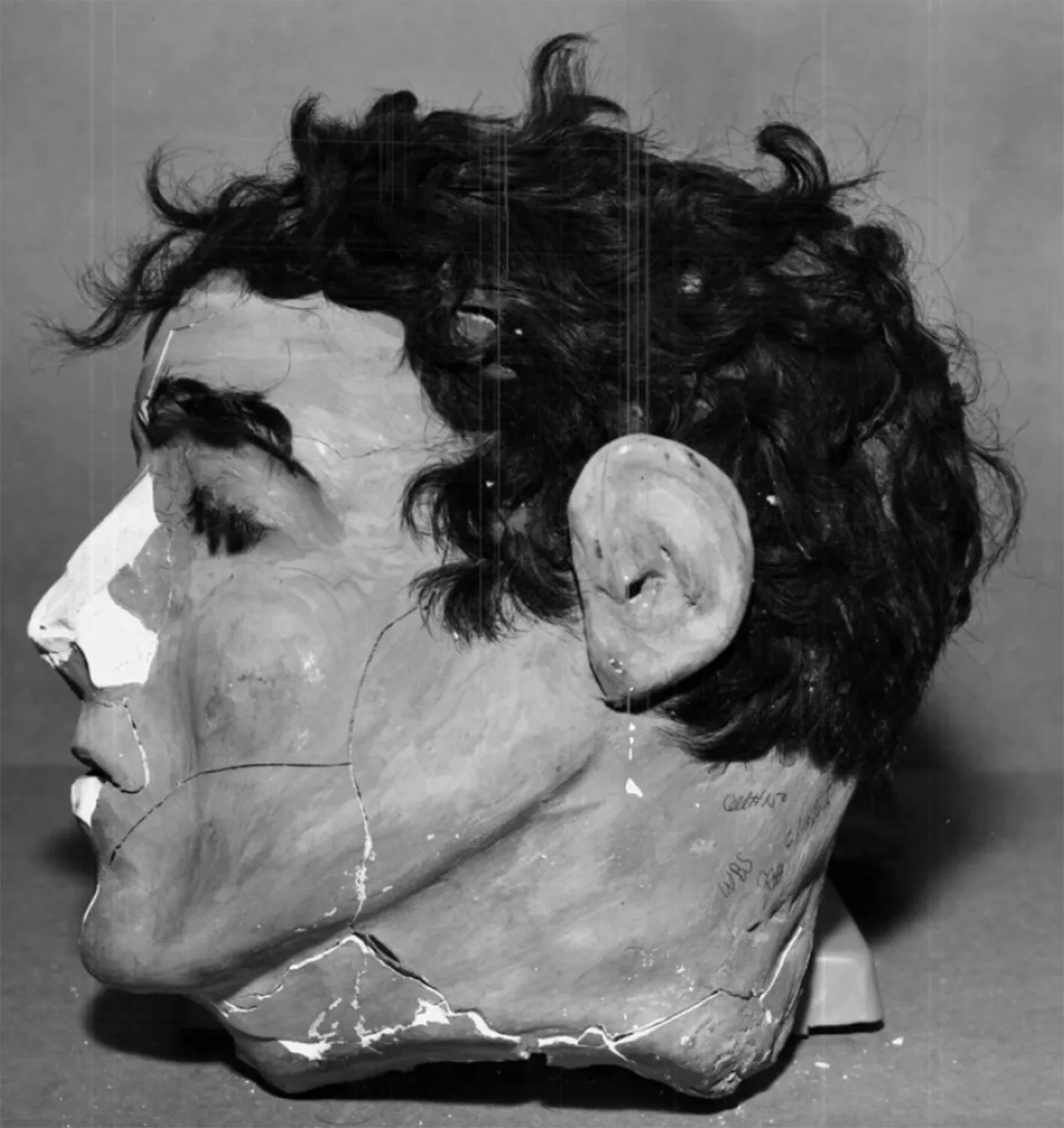
Over roughly six months the men worked on the back walls of their cells, where a small ventilation grille opened onto an unguarded utility corridor. Using spoons ground into tools and a drill improvised from a vacuum-cleaner motor, they widened the vent openings in concrete weakened by salt air and decades of neglect, hiding the holes behind painted cardboard. Out of sight of the guards they glued some fifty stolen prison raincoats into life vests and a raft about six feet by fourteen, with a concertina Morris bought from his prison account to serve as a bellows. For the night count they modeled heads from cement fragments, cotton, glue and paint, finished with real hair swept up in the prison barbershop.
On the night of June 11, 1962 Morris and the Anglins crawled out, climbed the plumbing to the top of the cellblock, forced a roof ventilator whose bars they had already loosened, and slid down a drainpipe at the north end of the cellhouse. Officials believe they put into the water on the island’s northeast side, near the power plant. West could not get his grille free in time and was found locked in when guards discovered dummies in three beds the next morning.
The investigation
The Coast Guard, the Army and local police combed the bay, and a hundred soldiers searched Angel Island, the destination West said the group had chosen. Searchers recovered part of a paddle, pieces of the raincoat vests (one of them outside the Golden Gate), and a waterproof packet made from the same rubberized cloth holding Anglin family photographs and addresses. A postcard signed with three first names reached the warden on June 18; the FBI judged it a hoax. Some weeks later a badly decomposed body in clothing similar to a prison uniform was found up the coast from San Francisco, but it could not be identified. In 1979 the FBI closed its file with the conclusion that they had probably drowned in the cold, fast water and been carried out to sea.
The case did not close with it. The US Marshals Service, which took over responsibility for federal escapees in 1978, still holds warrants for all three and has published age-progressed portraits of them. Alcatraz itself shut in March 1963, its running costs already a political problem, and the escape became a film starring Clint Eastwood in 1979.
The explanations
The drowning theory rests on the bay itself: cold water, strong tidal currents, more than a mile to the nearest shore and a raft made of glued raincoats. Against it, no bodies were positively identified. In 2003 the television series MythBusters built a raincoat raft to the same pattern and paddled it from Alcatraz to the Marin Headlands. In 2014 hydraulic modelers from Delft University of Technology and the Dutch institute Deltares replayed the tides of that night and found that the timing decided everything. A raft launched around ten would probably have been swept out through the Golden Gate, while one launched near half past eleven could have landed just north of the bridge, with the tide later carrying stray debris toward Angel Island, where some was found. The researchers stressed that the model shows survival was possible, not that it happened.
Two later items keep the survival theory alive. Anglin relatives have produced a photograph said to show the brothers on a farm in Brazil in 1975, which the Marshals say cannot be verified. And in January 2018 the CBS station in San Francisco revealed a letter sent in 2013 to a city police station by someone signing as John Anglin, who claimed to be 83, ill with cancer and willing to surrender in return for medical care and a short sentence. He wrote that all three had made it, barely, and that the other two had since died. FBI laboratory work on the fingerprints, DNA and handwriting was inconclusive, and the Marshals have treated the letter as a probable hoax.
Where it stands
Morris and the Anglins remain the only Alcatraz escapees never accounted for. If alive they would be well into their nineties. The officially preferred answer is death in the bay, but no evidence settles it either way, and the Marshals’ file is still open.