
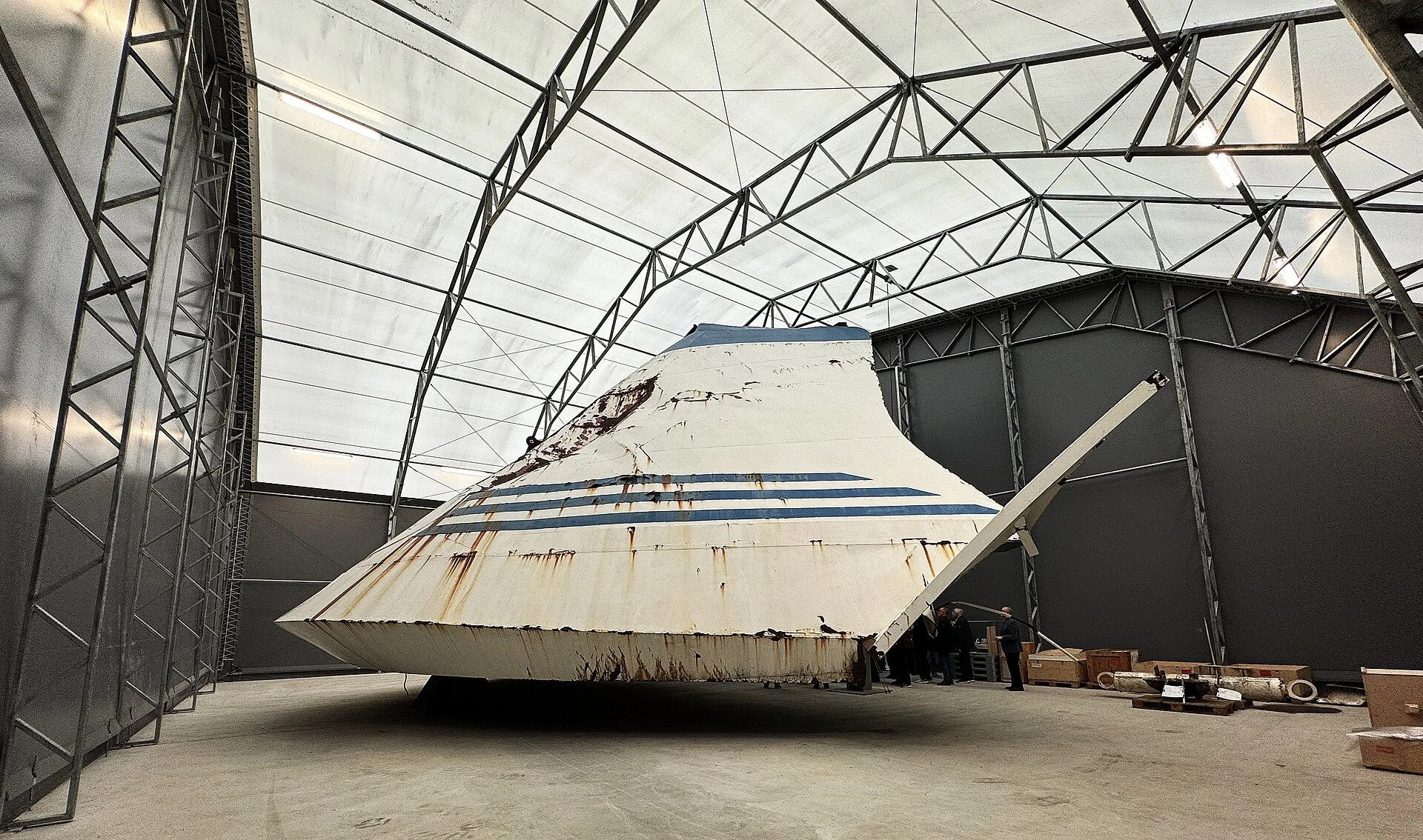
The loss of the ferry Estonia on the night of September 28, 1994 killed 852 people, the deadliest peacetime shipwreck in European waters. An international commission blamed a failed bow door. For three decades a persistent body of opinion has held that the real cause was an explosion or a collision, hidden by governments with something to protect. In December 2025 a second, joint investigation by Estonia, Finland and Sweden tested those claims against the wreck itself.
What happened
Estonia was a roll-on, roll-off car and passenger ferry built in West Germany in 1980 and working the overnight route from Tallinn to Stockholm for Estline. She sailed on the evening of September 27 with 989 people aboard into a Baltic autumn storm, with strong winds and waves of four to six meters. A little after one in the morning crew and passengers heard heavy banging from the bow. Within minutes the ship heeled sharply to starboard. An alarm in Estonian sounded over the loudspeakers, and at about 01:22 the radio officer sent a mayday, but it did not follow the standard format and the wider rescue was slow to start. Power failed, many people in the cabins could not climb the tilted stairways, and by about 01:50 the ship had disappeared from radar. Ferries and helicopters pulled survivors from rafts and the water through the night. Only 137 people were saved.
The investigation
The Joint Accident Investigation Commission of Estonia, Finland and Sweden, known as JAIC, published its final report on December 3, 1997. It found that waves had torn the bow visor, the hinged upper shell of the bow, from the ship after its locks failed. As the visor went it dragged open the car ramp behind it, and seawater poured onto the open vehicle deck, where it sloshed to one side and capsized the vessel. The visor itself was recovered from the seabed. The report also faulted the crew for reacting slowly and raising the alarm late, and later reviews found the visor fastenings had been under-designed from the start.
Several decisions fed suspicion. Sweden chose not to raise the wreck or most of the dead, proposed covering the hull in concrete, and dumped thousands of tons of gravel at the site. A 1995 treaty among the Baltic states and others declared the wreck a grave and made it a crime for their citizens to dive on it. A German journalist and the magazine New Statesman reported laboratory tests on illegally recovered bow fragments that they said showed signs of explosives; a German federal materials institute that examined the samples found they did not prove any explosion. Then in 2004 a former Swedish customs officer told Swedish television that the ferry had been used to carry military equipment. Government inquiries in Sweden and Estonia confirmed that non-explosive military hardware had been shipped on two crossings earlier that month, on 14 and September 20, but found none on the night of the sinking.
The 2020 footage
On the 26th anniversary a Swedish documentary team that had dived the wreck from a German-flagged vessel broadcast underwater footage showing a breach about four meters long in the starboard side of the hull, a side previously hidden against the seabed. Supporters of the collision theory, including Margus Kurm, who had led an Estonian government inquiry, said it pointed to a submarine. The filmmakers were tried in Sweden for disturbing the grave. They were acquitted in 2021 and convicted and fined on retrial in 2022. Sweden and Finland amended their laws in 2021 so that investigators could work at the site.
The new findings
Investigators surveyed the site in 2021, built a detailed 3D model of the wreck from about 45,000 photographs in 2022, sent a remote vehicle into the car deck in 2023 and raised the bow ramp. The intermediate report in January 2023 found the hull damage lined up with outcropping bedrock under the wreck and saw no sign of a collision or a bow explosion. It also concluded that Estonia had not been seaworthy, because the bow parts had never been inspected as her certificate required. The final report, issued on December 16, 2025, describes a dent some 25 meters long in the starboard side that follows a ridge of ancient gneiss, with breaches at each end, and says the wreck has slid and shifted over the years. Steel samples from the damaged area showed no marks of collision or explosives. Of 68 survivors interviewed again, most saw no hull damage while the ship was afloat and most denied that military vehicles were loaded. The authorities concluded that the ferry sank because its bow structure failed and that the side damage came from the seabed, and saw no reason to reopen the case.
Where it stands
The bow-visor explanation now rests on two independent investigations a quarter of a century apart. The parts of the cover-up story that were true, the earlier military shipments and official reluctance to examine the wreck, do not change how the ship sank.