
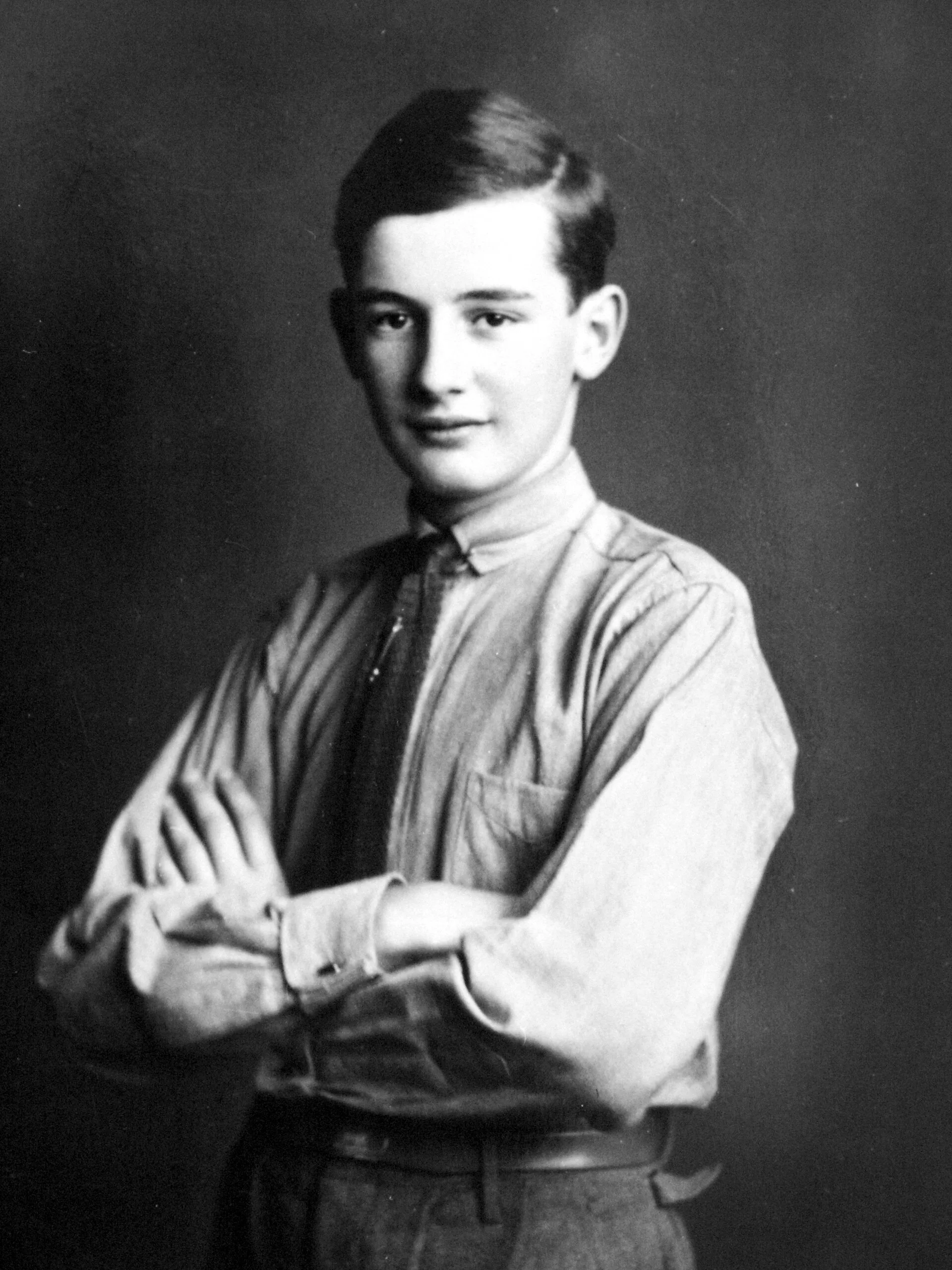
Raoul Wallenberg was born in Stockholm in 1912 and studied in the United States in the 1930s before going into business at home. In June 1944 the US War Refugee Board, looking for someone who could act inside Nazi-occupied Hungary, recruited him, and Sweden gave him diplomatic rank. He reached Budapest on July 9, 1944 as first secretary of the Swedish legation. By then about 440,000 Hungarian Jews had already been deported, most of them to Auschwitz-Birkenau.
What happened
With Swedish government approval, Wallenberg issued protective certificates that placed their holders under Sweden’s care. He rented more than thirty buildings as safe houses, which became the heart of an “international ghetto”, and used American and Swedish money for hospitals, nurseries and a soup kitchen. After the Arrow Cross movement seized power in October 1944 and forced tens of thousands of Jews on marches toward Austria, he went out to the columns again and again to pull out people holding his papers or forgeries of them. More than 100,000 Jews were still alive in Budapest when the Red Army took the city.
On January 16, 1945, as the siege went on, the Soviet deputy foreign minister told Sweden that Wallenberg had been found and taken into the care of Soviet troops. He was last seen with Soviet officers on January 17, together with his driver, Vilmos Langfelder. Both were taken to Moscow and held as prisoners. Neither came home.
The investigation
For years the Soviet line changed. In 1945 the Soviet envoy in Stockholm privately told Wallenberg’s mother that he was in the Soviet Union. In August 1947 Moscow officially said he was unknown there and had probably died in the fighting in Budapest. Sweden’s own minister in Moscow, Staffan Söderblom, weakened his country’s case by saying more than once that he believed Wallenberg was dead, even during a meeting with Stalin in June 1946. In 1956 the Swedish prime minister, Tage Erlander, gave Moscow statements from returned prisoners of war who had been held with Wallenberg.
The answer came on February 6, 1957, in a note handed to the Swedish ambassador, Rolf Sohlman, and known as the Gromyko memorandum. It enclosed a handwritten report by Colonel A. L. Smoltsov, head of the prison medical service, dated July 17, 1947. The report said that “the prisoner Wallenberg” had died suddenly in his cell that night, probably of a heart attack. The report had been addressed to the security minister Viktor Abakumov, and the memorandum blamed the years of denials on a former head of state security who, it said, had misinformed the foreign ministry.
After the Soviet Union began to fall apart, Sweden and Russia set up a joint working group in September 1991 to look into Wallenberg’s fate. It searched Russian archives and interviewed former security officers and prisoners, then reported in 2000. The Swedish side concluded that hiding the truth runs all through the Soviet paperwork, that the Gromyko memorandum was meant to work as a half-truth, and that a key letter from Abakumov to the foreign minister Vyacheslav Molotov, also dated July 17, 1947, had never been found. It found no evidence that settled whether he died that July, or how. The Russian side largely accepted the Smoltsov account.
The explanations
There are three main readings. In the Soviet version, he died naturally in Lubyanka in 1947. Many who have studied the case suspect he was executed or killed in custody around that date and the heart attack was a cover story. A third group points to testimony from former prisoners who said they saw or heard of a Swedish prisoner in camps and in Vladimir Prison after 1947. The working group spent years checking those accounts but could confirm none of them.
Where it stands
In October 2016 the Swedish Tax Agency formally declared him dead, setting the date of death at July 31, 1952, five years after the end of July 1947, when he was last believed to be alive. The agency said the date was a legal formality, not a finding about how or when he died. The United States made him an honorary citizen in 1981. His arrest and the Soviet cover-up are established, but his actual fate is not, so the case is unproven.