
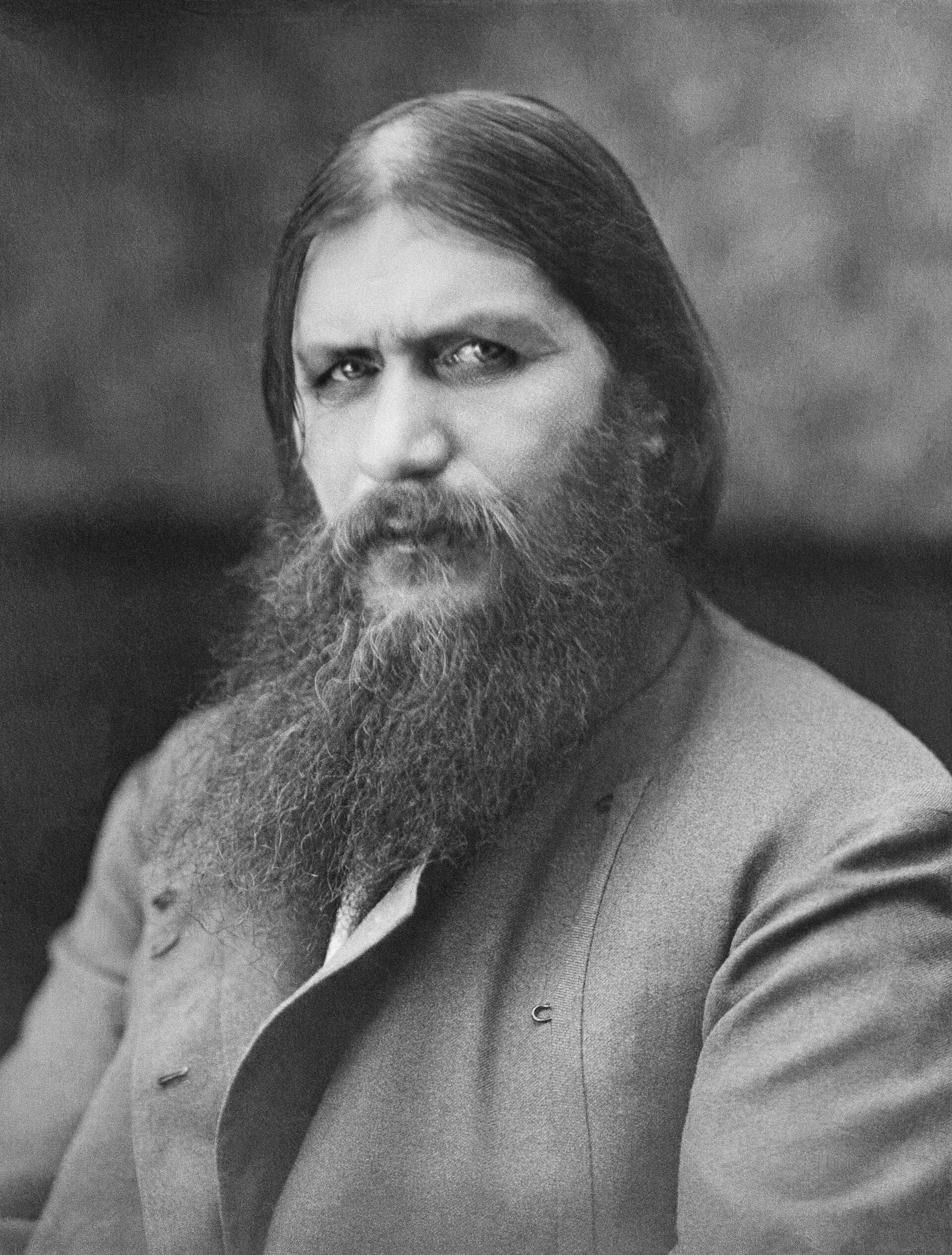
By the winter of 1916 Grigori Rasputin, a peasant preacher from western Siberia, had been close to Russia’s imperial family for about a decade. Empress Alexandra believed his prayers eased the bleeding attacks of her son Alexei, who had haemophilia, and with Nicholas II away commanding the army, rumor in the capital held that the empress and her holy man were running the country. A small group of aristocrats decided to remove him. What they did is not seriously disputed. How they did it, and whether anyone else helped, still is.
What happened
Shortly after midnight on December 30, 1916 (December 17 in the Russian calendar then in use), Prince Felix Yusupov collected Rasputin and drove him to the Moika palace, the family’s mansion in Petrograd. Yusupov, married to the tsar’s niece, had recruited Grand Duke Dmitri Pavlovich, the right-wing Duma deputy Vladimir Purishkevich, an army doctor named Stanisław Lazovert and a young officer, Sergei Sukhotin. Shots were heard before dawn, and a policeman who came to ask about them was told by Purishkevich, who seemed unable to keep quiet, what had been done. Blood on a bridge railing and a boot on the ice led searchers to the Malaya Nevka river, where Rasputin’s body was pulled from under the ice on January 1, 1917.
Yusupov’s version
Exiled in France, Yusupov published his account in 1927, and an English translation followed. It is the story most people know. He led Rasputin to a basement dining room and fed him cakes and Madeira laced with cyanide by Lazovert, which had no visible effect. He went upstairs, came back with a revolver and shot him. Later, as he bent over the body, Rasputin’s eyes opened and he lunged at the prince, then staggered out into the snowy courtyard, where Purishkevich brought him down. The conspirators wrapped the body and threw it from the Bolshoy Petrovsky Bridge. Rasputin’s daughter Maria added a final touch: his hands were found free, she said, proof that he was still alive in the water.
The account has the shape of a legend, and it grew with retelling. In Yusupov’s 1953 memoir Lost Splendour, Rasputin is no longer merely devilish but Satan himself, and writers have noticed that the resurrection scene resembles one in a Dostoevsky story. Yusupov had reasons to tell it this way: as a penniless refugee he traded on his fame as Rasputin’s killer, and he defended that reputation in court, winning a libel case against MGM over its 1932 film Rasputin and the Empress. University College, Oxford, where he studied from 1909 to 1912, notes that his version has been widely questioned.
The autopsy
The body was examined by Dmitry Kosorotov, a senior Petrograd forensic surgeon. His original report does not survive and later copies differ, but the account most historians rely on records three gunshot wounds, in the chest, the back and the center of the forehead, the last fired at close range and fatal. Kosorotov found no trace of poison, and in the version cited by the historian Douglas Smith, no water in the lungs, which rules out drowning. Maria Rasputin also said her father avoided sweet food, which makes the poisoned cakes harder still to credit.
The British claim
Suspicion of the British began almost at once. Within days a Petrograd paper ran a story about English agents behind the killing, and Nicholas II raised it with the British ambassador, Sir George Buchanan, naming Oswald Rayner, an intelligence officer in the city who had known Yusupov at Oxford. Britain had a motive: it feared Rasputin would push the tsar toward a separate peace with Germany, freeing German divisions for the Western Front.
In 2004 the intelligence historian Andrew Cook and Richard Cullen, a retired Scotland Yard commander, put the case in a BBC Timewatch documentary. Working from post-mortem photographs, they argued that the three wounds came from three different guns and that the forehead shot, the work of a professional, matched a Webley revolver, the standard British sidearm. Cullen told the Sunday Telegraph he was 99.9 per cent certain Rayner fired it. They also cited a letter, dated January 7, 1917 and attributed to Captain Stephen Alley, reporting that the objective had been achieved and that Rayner was attending to loose ends. Letters held at Preston Manor in Brighton add color: a British colonel in Petrograd wrote in February 1917 that a well-placed contact had remarked it took an Englishman to do the job.
Where it stands
The weaknesses are real. The autopsy could not identify the weapon, the photographs are too poor to settle questions of caliber or powder burns, the Alley letter has not been authenticated, and Rayner, who died in 1961, destroyed his papers. Rasputin’s killers were never tried, and the revolution two months later buried the inquiry. Yusupov’s poison-and-resurrection tale is contradicted by the medical evidence; a British hand in the final shot is possible, plausible to some historians, and unproven.