
Barbara Newhall Follett came into the world on March 4, 1914, in the college town of Hanover, New Hampshire. Her parents were the editor and critic Wilson Follett and his wife Helen, a former teacher who schooled her at home. She learned to type before most children learn to write and spent her early years inventing an imaginary country, Farksolia, complete with its own language. At eight she began a story about a girl named Eepersip who runs away to live wild in the meadows and mountains. After the first manuscript was lost in a house fire she wrote it again, and in January 1927, edited by her father and published by Knopf, it appeared as The House Without Windows. She was twelve.
The reviews were extraordinary. H. L. Mencken sent her parents a letter of admiration, and newspapers treated her as a prodigy. A second book followed in 1928: The Voyage of the Norman D., her account of a summer spent aboard a lumber schooner sailing to Nova Scotia, which critics in New York and London praised as the work of a real writer. Days before it came out, her father told the family he was leaving them for another woman.
What happened
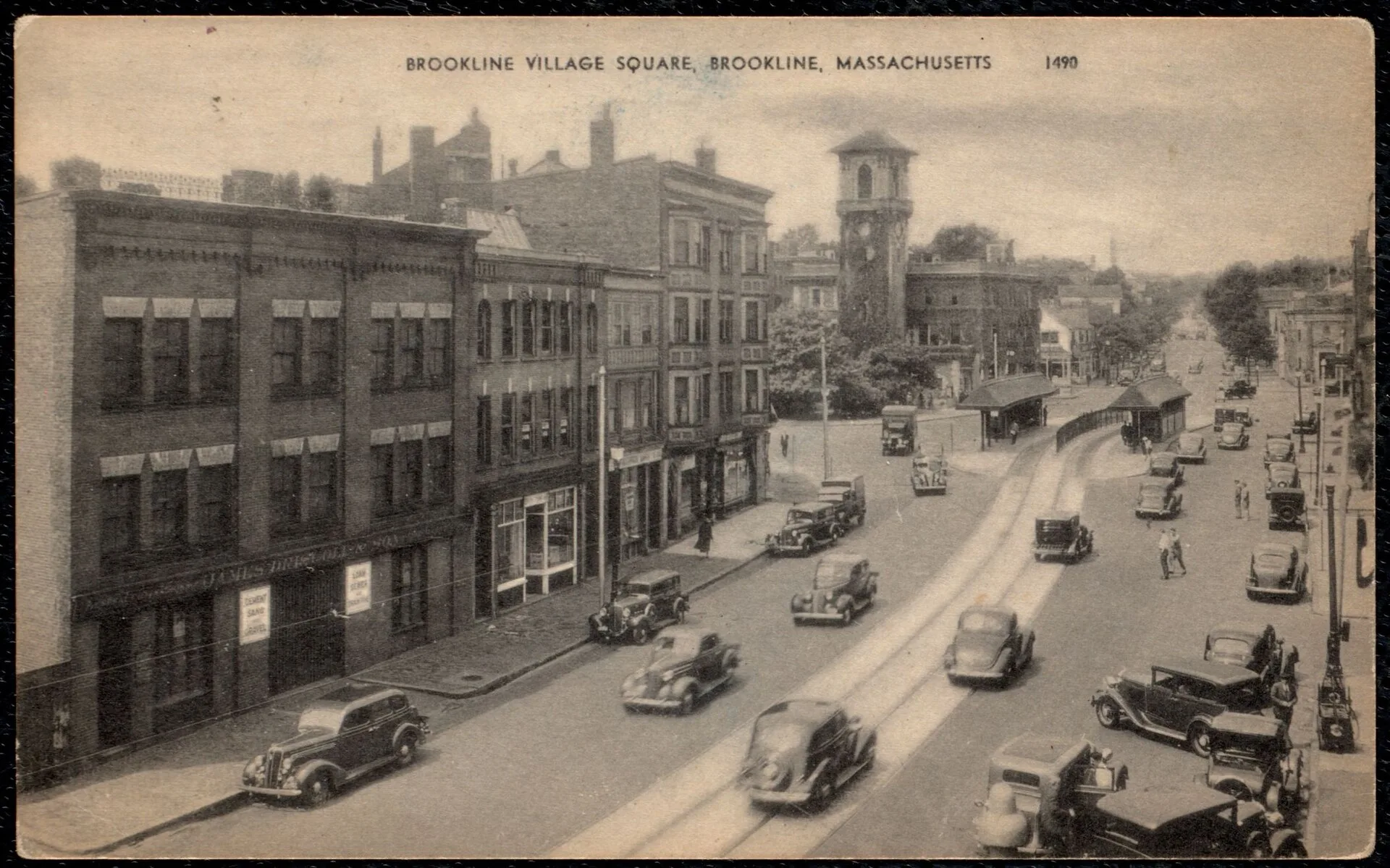
The decade that followed was hard. With little money, Barbara and her mother drifted; at fifteen she ran away to San Francisco and had to be retrieved by police; at sixteen, as the Depression deepened, she was working as a secretary in Manhattan. She kept writing, finishing a novel and a travel book, but publishers no longer wanted her. In 1931 she met Nickerson Rogers, an outdoorsman who shared her love of hiking, and in 1934, after long walking trips together in New England and Europe, they married and settled in Brookline, near Boston. By 1939 her letters to friends describe a marriage in trouble, her belief that her husband was involved with someone else, and her need for sleeping medicine to rest.
On December 7, 1939, according to a friend’s later account, the couple quarreled, and that evening Barbara went out. She is said to have taken only a small sum of money. She was 25. Nobody is known to have seen her again.
The investigation
There was barely one. Rogers did not contact the police for two weeks, saying he expected her back, and waited about four more months before asking for a missing-persons bulletin. It went out in April 1940 under the name Barbara Rogers, describing a woman of about five foot seven with dark auburn hair who sometimes wore horn-rimmed glasses, and no newspaper connected it with the famous child author. In 1952 Helen Follett, discovering how little had been done, urged the Brookline police to reopen the matter and wrote to her son-in-law that his silence made it look as though he had something to hide. Nothing came of it. The public learned of the disappearance only in 1966, when a psychologist published a study of Barbara’s writings with her mother’s help.
The explanations
The possibilities are the usual ones for an adult who walks away: a new life under another name, suicide, an accident or foul play. Her letters from late 1939 show real despair, and she had once joked to a friend that she could always disappear. No evidence of a crime has ever been produced, and her husband was never accused of one by any authority.
In 2019 the novelist Daniel Mills offered a specific answer. On Thanksgiving Day 1948 a deer hunter found a woman’s skeleton beside a brook on a slope called Pulsifer Hill, in the New Hampshire town of Holderness, with glasses, a compact and a medicine bottle holding traces of a barbiturate. Investigators decided she was Elsie Whittemore, a local woman missing since 1936, although Whittemore’s family never accepted it. Mills argued that the height estimate was flawed, that the glasses fit Barbara better, and that local newspaper notes show the Rogers couple renting a farmhouse on Pulsifer Hill in 1937 and 1938. It is a careful case, but it remains circumstantial.
Where it stands
No DNA comparison or official review has tested the Holderness theory, and Barbara Newhall Follett is still formally a missing person. Her first novel was reissued in 2019, and her letters and manuscripts are held at Columbia University. When and how she died, and whether she died in the woods she wrote about as a child, is unknown.