
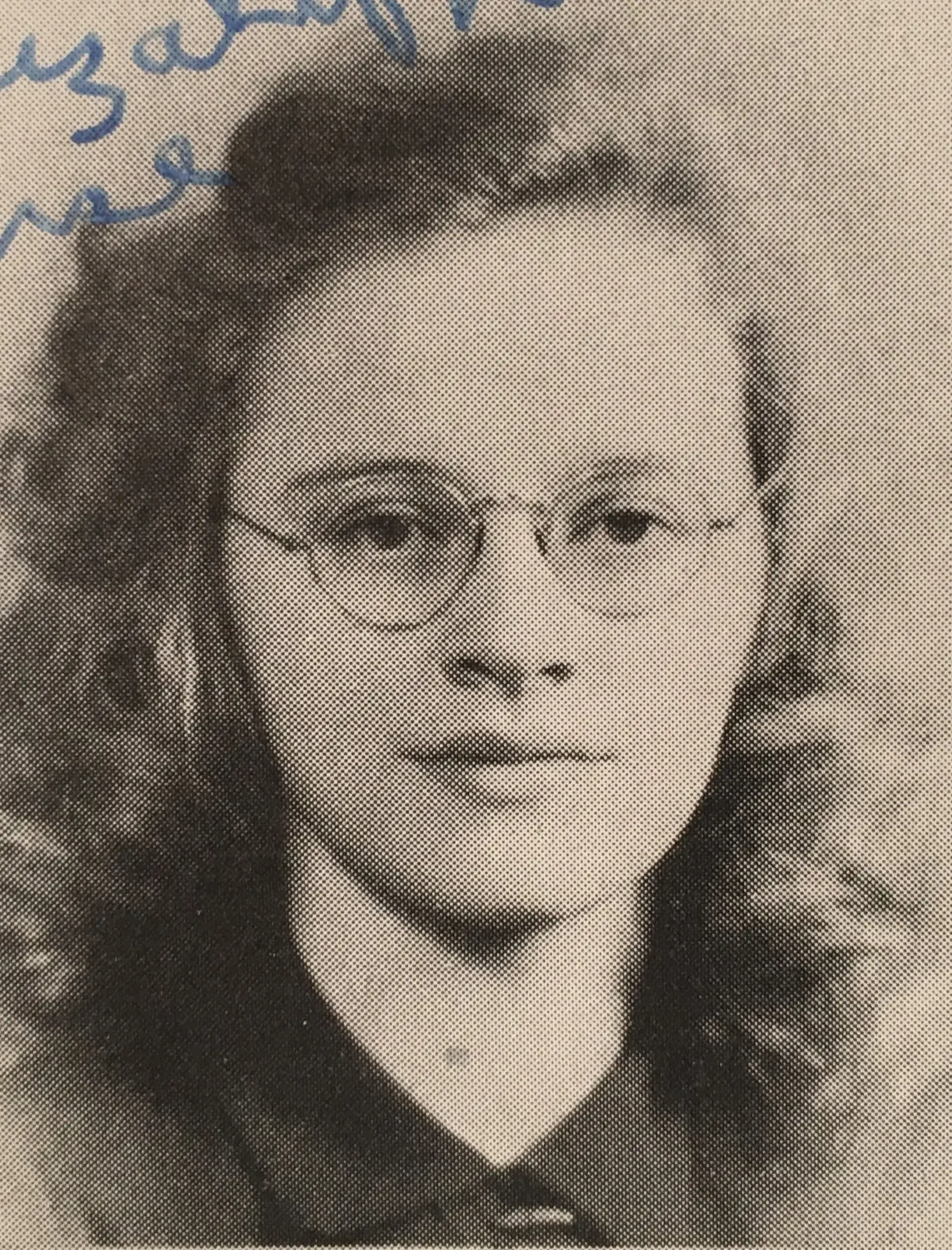
Elizabeth Eaton Converse was born in Laconia, New Hampshire, in August 1924 and raised in Concord, the daughter of a Baptist minister in a strict household. She finished top of her high-school class and won a scholarship to Mount Holyoke College, but left after two years for New York, where she worked as a researcher and writer for the Institute of Pacific Relations and later at a printing company. Friends there started calling her Connie.
The music
In New York in the early 1950s Converse began writing songs and singing them to her own guitar for friends. They were unlike anything else being made at the time: wry, literate, personal pieces that borrowed from folk ballads and art song and anticipated the confessional singer-songwriters of the following decade. The animator Gene Deitch, who recorded musicians at informal gatherings in his home, taped her in 1954. That same year she appeared once on CBS’s The Morning Show with Walter Cronkite. She also made home recordings, many of which she sent to her younger brother Philip. No record company took her on, and apart from a few performances of her songs by other singers, her music went nowhere.
Discouraged, she left New York around 1960 and moved to Ann Arbor, Michigan, where Philip was building a career as a political scientist at the University of Michigan. She worked first as a secretary and then for about a decade running the day-to-day editing of the Journal of Conflict Resolution, a scholarly quarterly based at the university, while also writing about race and civil rights. Colleagues valued her, but by the early 1970s she was exhausted and depressed. The journal moved to Yale in 1972, friends paid for a long trip to England that did little to lift her spirits, and she was drinking heavily.
What happened
Converse turned fifty on August 3, 1974. Within days she had written goodbye letters to relatives and friends. Her brother’s family took a lake vacation in Michigan every summer, and she chose not to go. By the time the letters arrived she had packed her belongings into her Volkswagen Beetle and left Ann Arbor. The letters said she meant to find a new life and asked people to let her go. One, a typed note headed to anyone who might ask after her, described years of failed attempts to find her footing and closed with thanks. Another, to Philip, enclosed a check to keep her health insurance paid up for a set period and then let it lapse.
She was not seen again. No body was found, and no trace of the car turned up.
The investigation
According to the producers who later released her music, Philip hired a private investigator within about ten years. The investigator warned him that finding his sister would not mean she would come back or even speak to him, and the family decided to respect her choice and stopped looking. Years afterward someone told Philip of a phone-book listing for an Elizabeth Converse in Kansas or Oklahoma; he did not pursue it.
The explanations
The letters can be read two ways. They speak of starting over, but they also read as a carefully arranged farewell, and the instruction about the insurance suggests she did not expect to need it. Philip Converse, who died in 2014, came to believe his sister had taken her own life. The other reading remains possible: she left with a car, some money and a stated plan, and in the 1970s an adult who wanted to drop out of sight could do so. Nothing found since favors either account.
Where it stands
Converse’s music came back without her. In the early 2000s Deitch played one of his old tapes on David Garland’s WNYC program Spinning on Air. A listener, Dan Dzula, tracked down Deitch and Philip Converse, and in 2009 a small label released How Sad, How Lovely, a collection of her recordings. Reissues, tribute albums and Howard Fishman’s 2023 biography, To Anyone Who Ever Asks, followed. What became of the woman who wrote the songs is still unknown.