
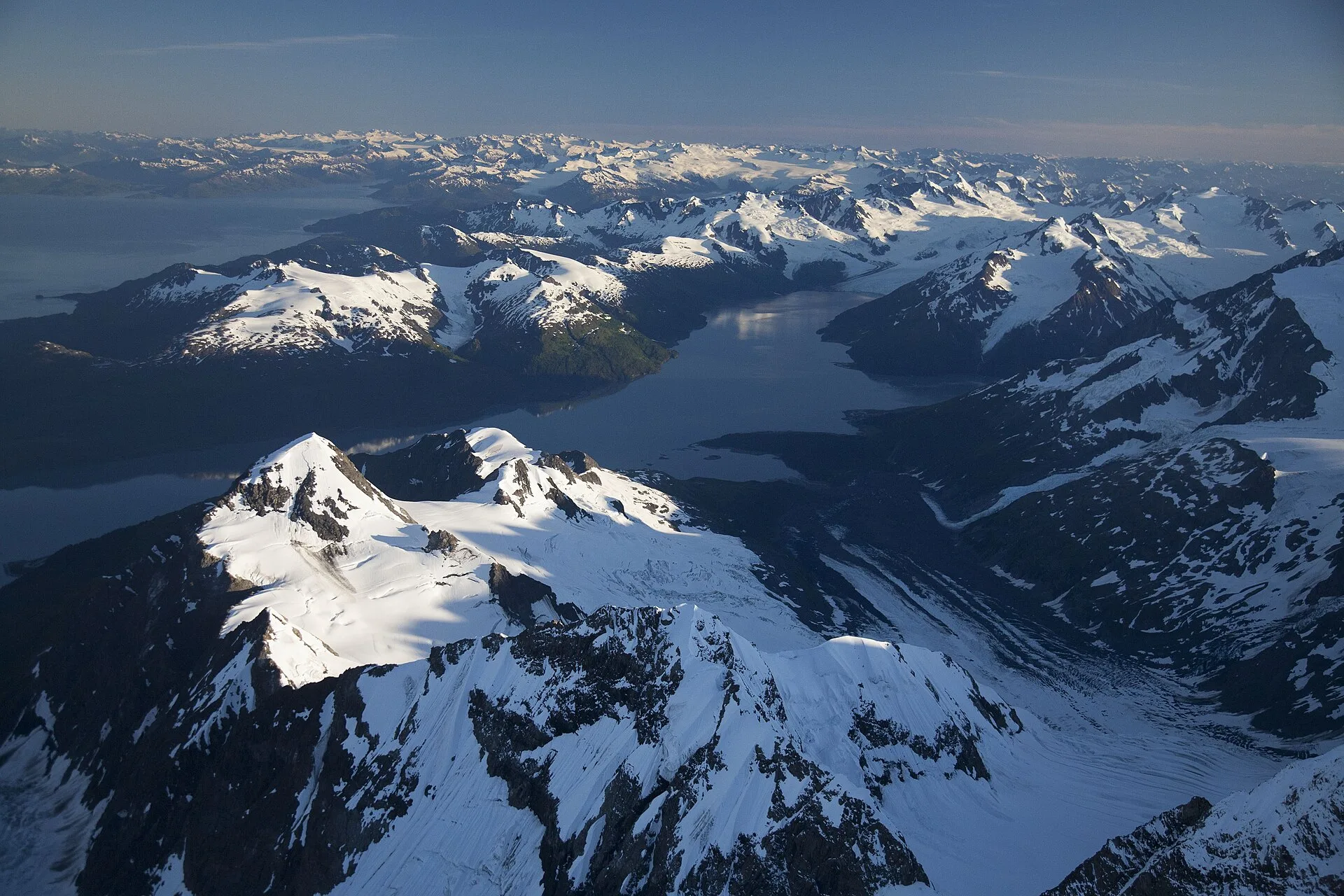
Draw a line from Anchorage to Juneau, another from Juneau north to Utqiaġvik on the Arctic coast, and a third back to Anchorage, and you have the Alaska Triangle, sometimes sold under names like the Devil’s Graveyard. Inside it, the story goes, more than 20,000 people have vanished since the 1970s, at a rate twice the national average, taken by energy vortices, by aliens or by the Kushtaka, the shape-shifting otter-man of Tlingit and Tsimshian tradition. The founding disappearance is always the same: the plane that carried two members of Congress into the clouds in October 1972.
What happened
Hale Boggs of Louisiana was Majority Leader of the House of Representatives. Nick Begich was Alaska’s only congressman, three weeks from an election, and Boggs had come north to campaign for him. On the morning of October 16, 1972 they boarded a twin-engine Cessna 310C, registration N1812H, at Anchorage with Begich’s aide Russell Brown and the pilot, Don Jonz, president and chief pilot of Pan Alaska Airways. The flight service briefer had told Jonz at 6:56 am that Portage Pass, the usual low route through the mountains to Prince William Sound, was forecast to be closed by cloud. He took off anyway at 8:59 and at 9:09 filed a visual flight plan by radio: down the V-317 airway to Yakutat, then direct to Juneau, three and a half hours, four aboard, fuel for six. Asked whether he carried emergency gear and a locator beacon, he answered yes. That was the last anyone heard from the aircraft.
At 1:15 pm Juneau reported the flight overdue and the Air Force rescue center at Elmendorf diverted an HC-130 to begin looking. What followed was one of the largest searches for a missing aircraft ever mounted: 1,033 sorties and 3,602 flying hours by Air Force, Army, Coast Guard, Civil Air Patrol and civilian aircraft over roughly 325,755 square miles, while cutters and fishing boats combed Prince William Sound, the Gulf of Alaska and Icy Strait and ground teams walked Portage Pass twice. It was called off on November 24, after 39 days. Not a single piece of the aircraft or its occupants was found. Begich was re-elected while the search was still running and was declared dead on December 29.
The investigation
The National Transportation Safety Board adopted its report on January 31, 1973 and declined to name a probable cause, since there was no wreckage to examine. What it did establish was sobering. An Air Force helicopter over Turnagain Arm at 8:40 that morning, on the Cessna’s route, had met severe turbulence at 500 feet, 55-knot headwinds and a cloud ceiling a few hundred feet above it, and had turned back. Moderate icing was forecast in cloud over Cook Inlet, and the Cessna had no de-icing equipment and no autopilot. It also had no emergency locator transmitter: Alaska law had required one since the previous month, and Pan Alaska pilots complied by carrying a portable unit, but Jonz’s was found afterward in another company aircraft at Fairbanks, as were all three of the company’s survival kits. Rumors of a bomb and an assassination circulated for years and were never substantiated.
The triangle itself did not exist in 1972. Brian Dunning of the Skeptoid podcast searched the printed record and found the phrase first used in 2001, in a History Channel episode titled Alaska’s Bermuda Triangle; the poet Sheila Nickerson had applied that older comparison in 1996 to the glacier country where a colleague’s plane was lost. The area usually quoted for it, 200,000 to 300,000 square miles, is bigger than the largest triangle the three cities can enclose.
The explanations
The numbers are the heart of the legend, and they are wrong. The Alaska Department of Public Safety runs a statutory Missing Persons Clearinghouse and publishes its figures. The state receives on the order of 1,250 missing-person reports a year and resolves about 96 percent of them; the quarterly report for July to September 2024 lists 346 people reported missing and 190 located by the agencies it covers. The total of unsolved cases on the books, going back to 1948, is about 1,334. That is a high rate for a state of 740,000 people, roughly ten times Hawaii’s per head, but it is fifteen times smaller than 20,000, and most of the gap between Alaska and everywhere else is geography. The state is a fifth the size of the Lower 48 with a few thousand miles of road, and people hunt, fish, fly and boat across glaciers, crevasse fields, cold rivers and the Bering Sea. Three quarters of missing Alaska Natives were last seen in remote wilderness. Aircraft tell the same story: only five planes lost over Alaska have never been found, in 1947, 1951, 1972, 1992 and 2013, and few of their routes crossed the triangle.
Where it stands
N1812H is still missing, somewhere in the mountains, the sound or the gulf, under half a century of snow or water. That is a real mystery with an ordinary explanation: a small plane flown visually into weather that had already turned back a military helicopter. The Alaska Triangle is a television shape drawn around it.