
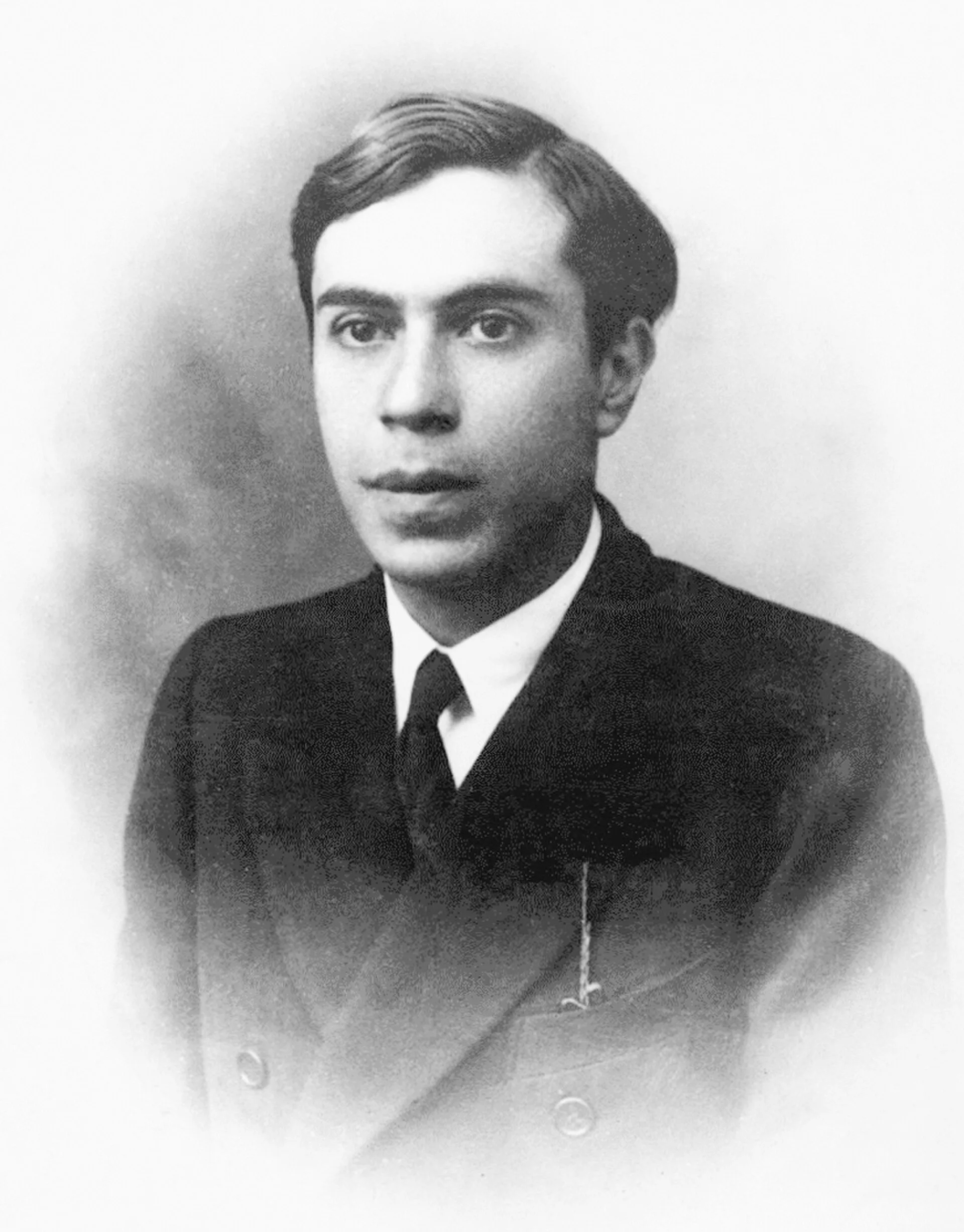
Ettore Majorana was born in Catania, Sicily, on August 5, 1906, into a prominent family with several scientists and politicians in it. He switched from engineering to physics in Rome at the end of the 1920s and joined the circle around Enrico Fermi, the group later remembered as the boys of Via Panisperna. Colleagues regarded him as the sharpest mind among them. He worked out an account of the forces holding the atomic nucleus together before Werner Heisenberg published his own, spent part of 1933 with Heisenberg in Leipzig, and in 1937 published the paper that gave physics the Majorana neutrino, a particle that would be its own antiparticle. Physicists are still testing that idea today.
He was also withdrawn. After Leipzig he stopped going to the institute in Rome and spent several years working mostly at home. In 1937 a national competition for chairs in theoretical physics prompted the selection board, chaired by Fermi, to recommend that he be appointed outside the competition on grounds of exceptional standing. He took up a professorship at the University of Naples in November 1937 and gave his first lecture in January 1938.
What happened
Majorana taught until March 23, 1938. The next day he handed a folder of lecture notes and papers to one of his students, Gilda Senatore, without saying why. On March 25 he left one letter addressed to his family in his Naples hotel room and posted another to Antonio Carrelli, director of the physics institute. In it he said he had reached a decision that had become unavoidable, apologized for the trouble his sudden disappearance would cause, and said he would remember his colleagues at least until eleven that night. He had drawn several months of salary and, it appears, taken his passport. That evening he boarded the overnight Tirrenia mail steamer for Palermo.
The following day, a Saturday, Carrelli received an urgent telegram from Palermo canceling the first letter, then a second letter written on the paper of the Hotel Sole there. In it Majorana wrote that the sea had refused him, that he would return the next day, and that he still meant to give up teaching. He bought a cabin berth on the boat back to Naples. That is the last firm trace of him. Whether he left the ship at sea, landed in Naples, or never boarded at all has never been settled.
The investigation
His family pressed the police and placed appeals with his photograph in the press. In July 1938 Fermi wrote personally to Mussolini asking that the search be stepped up, describing Majorana as the most impressive mind he had met. No body was found.
The case was reopened in 2011 by prosecutors in Rome after a caller to the RAI missing-persons program Chi l’ha visto? said he had known a man called Bini in Valencia, Venezuela, in the 1950s who was really Majorana. On February 4, 2015, as reported by the ANSA news agency, the prosecutors announced their conclusion. Police experts had compared the face of a man photographed in Venezuela in 1955 with pictures of Majorana’s father and found a close match. The witness also said he had found in Bini’s car a 1920 postcard from a physicist in the Majorana family to an American correspondent. The prosecutors said Majorana had been alive and living in Valencia of his own will between 1955 and 1959, that no crime had been committed, and that the file should be closed. Venezuelan authorities did not answer their requests for records, so nothing could be traced after 1959.
The explanations
Fermi’s colleagues Edoardo Amaldi and Emilio Segrè believed he took his own life at sea. The novelist Leonardo Sciascia argued in 1975 that Majorana had retreated to a monastery, possibly because he foresaw where nuclear physics was leading; his family likewise rejected suicide and favored the idea of a religious retreat. The physicist and historian Erasmo Recami, who spent decades collecting Majorana’s letters and manuscripts, gathered testimony suggesting he had gone to Argentina. Others proposed kidnapping by a foreign power, or a life as a beggar in Sicily. The 2015 finding favored a planned departure, but it rests on a photograph comparison and a single witness, and it was produced to close a criminal file rather than tested before a court.
Where it stands
No body, grave or later document has been found. In December 2024 a Rome court ordered the formal notices needed to declare Majorana presumed dead, and the Gazzetta Ufficiale published them in early 2025 with a six-month window for anyone with information to come forward. That he chose to disappear is the prevailing view; where he went, and when he died, remain unproven.