
By late 1944 Alton Glenn Miller, who had broken up his hugely successful civilian orchestra in 1942 to join the war effort, was a major in the US Army Air Forces, where he led a large service orchestra broadcasting to Allied troops from England. With Paris liberated, the band was due to move to France and play a Christmas broadcast from there. Miller wanted to go ahead of his musicians to make arrangements, but fog had grounded the regular transport flights for days.
What happened
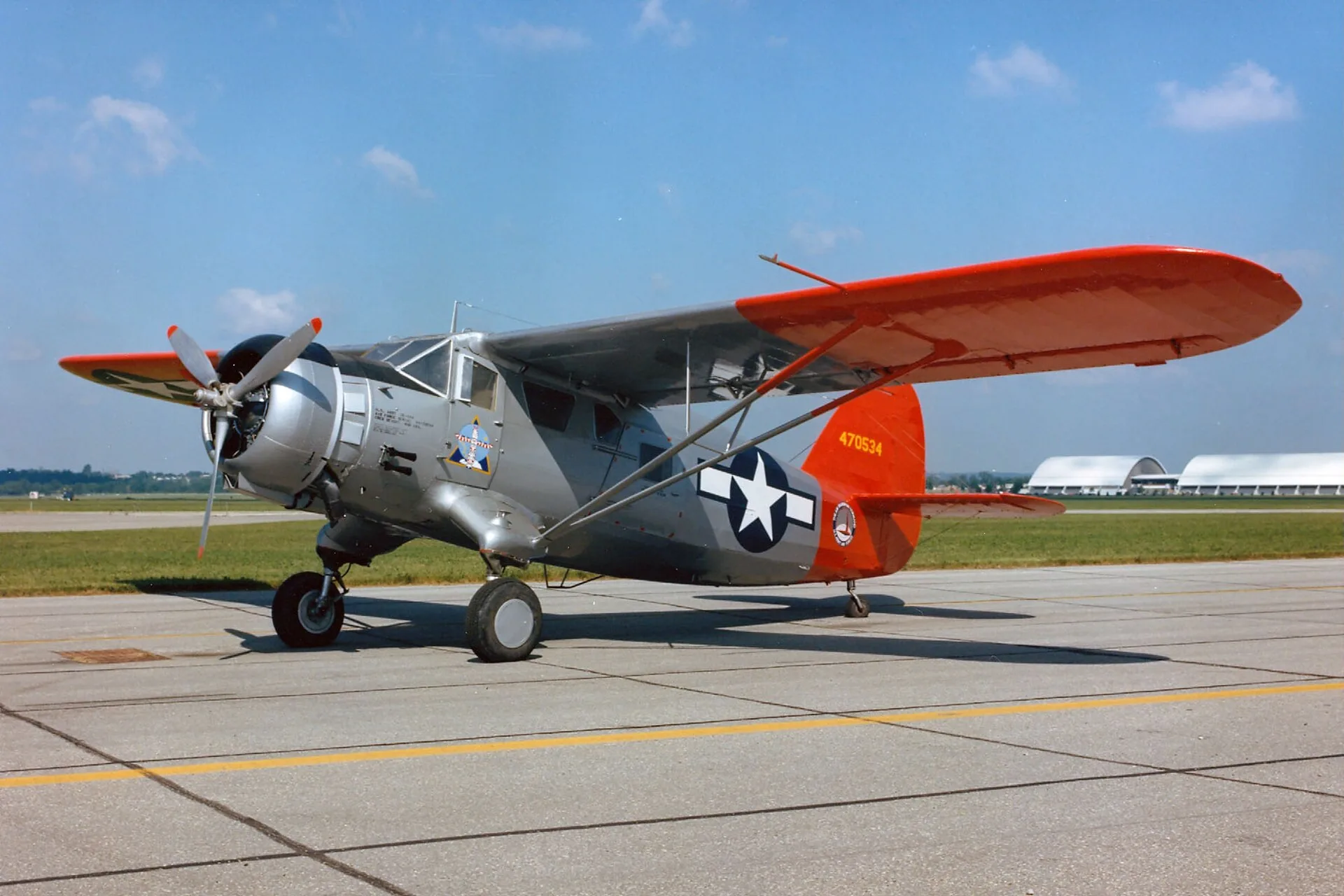
An acquaintance, Lieutenant Colonel Norman Baessell, a supply officer with the Eighth Air Force, offered him a seat on a light transport he was using to fly to France on Friday December 15. The aircraft was a Noorduyn UC-64 Norseman, a single-engine high-wing utility plane, serial 44-70285, flown by Flight Officer John R. S. Morgan. Morgan landed at RAF Twinwood Farm near Bedford to collect his two passengers and took off again a few minutes before two in the afternoon, bound for Villacoublay outside Paris. The weather was cold and overcast. Observers on the ground tracked a single Norseman heading south toward Beachy Head, the point where the air route left the English coast. The plane never arrived.
Because the flight was informal and Miller had not told his chain of command, nobody missed him for three days; the German offensive in the Ardennes began the next morning and absorbed everyone’s attention. When the musicians themselves flew to France a few days later, their leader was not there to meet them. Supreme Headquarters announced him missing on Christmas Eve, and the band played the Christmas broadcast under its arranger Jerry Gray.
The investigation
Major General Orvil Anderson, the Eighth Air Force’s deputy for operations and a relative of Miller’s by marriage, ordered a search and an inquiry. Its report, dated January 20, 1945 and classified for decades, concluded that the Norseman had gone down in the Channel through some mix of weather, mechanical failure and pilot error. Miller, Baessell and Morgan were declared dead a year and a day after the flight, and all three names are carved among the missing at the American military cemetery outside Cambridge. No wreckage was ever positively identified.
Dennis Spragg, a historian working with the Glenn Miller Archive at the University of Colorado Boulder, spent years from 2009 going through the inquiry papers at the US Air Force’s historical archive at Maxwell Air Force Base and RAF squadron records in Britain. His conclusion, published in the 2017 book Glenn Miller Declassified, is that Morgan was flying low under heavy cloud in freezing conditions, that the Norseman’s carburetor heating was a known weak point, and that icing or disorientation put the plane into the sea within seconds. In his view the wood-and-fabric airframe would have broken apart on impact while the heavy engine sank, which would explain why nothing was found.
The explanations
The theory that dominates popular retellings came from Fred Shaw, a navigator on one of more than a hundred RAF Lancasters sent to bomb Siegen in Germany that day. The raid was called off, and the bombers dumped their loads over a designated jettison area in the Channel before landing. Shaw said that while watching the bombs burst he saw a small high-winged monoplane below them flip over and dive into the sea. The account surfaced in the 1980s, after decades in which no such link had been made, and it was the basis of a 2001 Channel 4 documentary. Another Lancaster crewman, Ron Brown, later wrote that the cloud was so thick nobody could have seen anything below.
Spragg’s reading of the records is that the Lancasters jettisoned between about one and one-thirty in the afternoon, well before the Norseman could have reached the Channel, and that the jettison report usually cited was actually a complaint from a ferry flight of small American planes that had been bombed earlier. He also notes that the lowest Lancaster drop was reported at around 5,000 feet, almost a mile above a Norseman flying under the clouds. Earlier researchers, including the RAF historian Roy Nesbit, had argued the timings could be reconciled once differences between British and American clock settings were allowed for, so the argument has not been entirely one-sided.
Other stories are less grounded. A claim that Miller reached Paris and died in a brothel, and another that he was captured and killed by the Germans, have no documentary support. Spragg traces the brothel tale to German wartime propaganda, and a 1997 report in the German tabloid Bild revived it.
Where it stands
The Norseman and the three men aboard are still listed as lost at sea. That they died in the Channel that afternoon is not seriously disputed. The specific claim that RAF bombs brought them down depends on a single witness speaking long after the event and conflicts with the surviving flight records, while the more mundane explanation, a small plane in bad winter weather, fits everything that is known.