
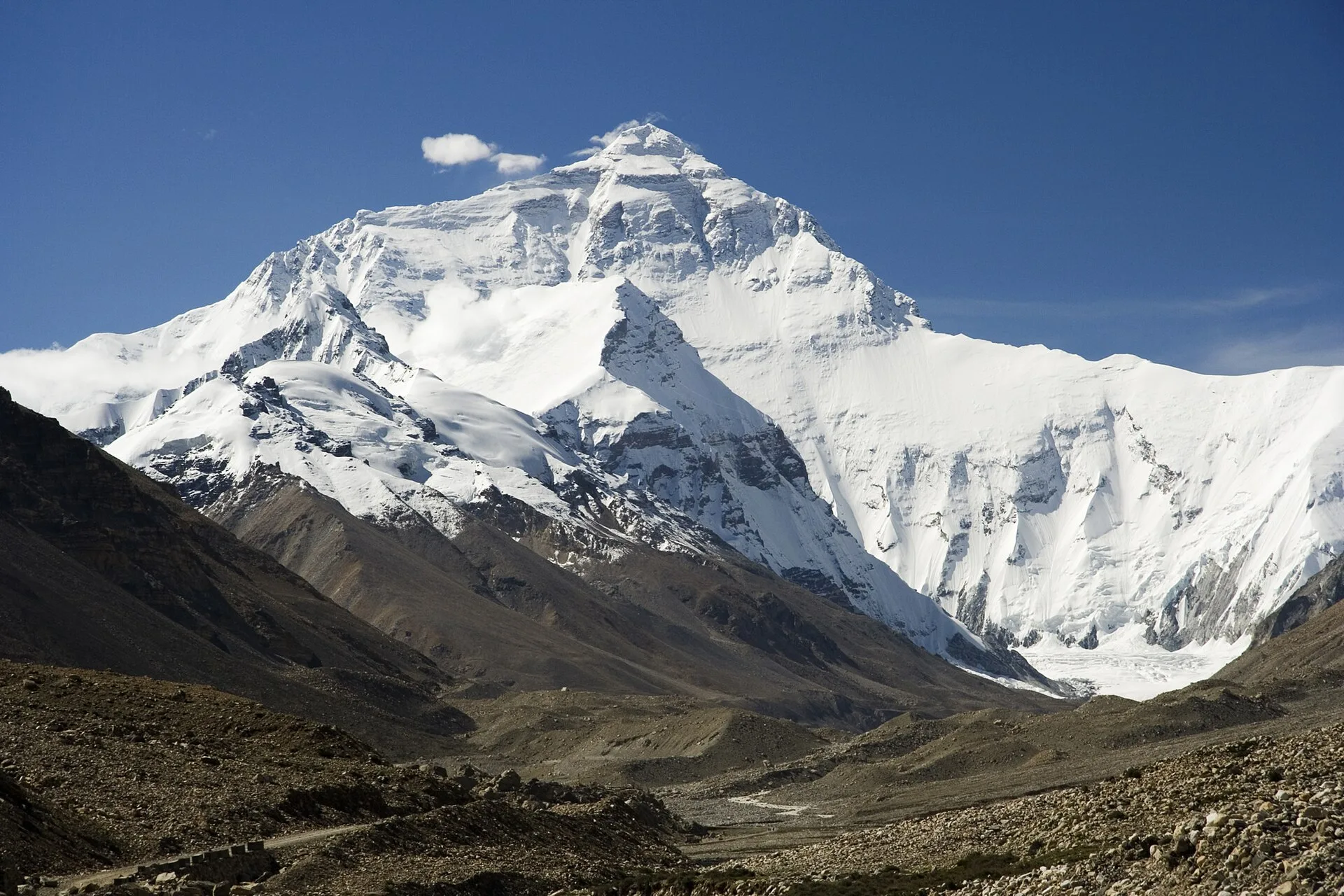
On June 8, 1924 George Mallory and Andrew Irvine set out from a tiny tent at about 26,800 feet on the north side of Mount Everest, carrying oxygen and aiming for a summit no one had reached. A teammate glimpsed them high on the ridge shortly before one in the afternoon. They never came back. Mallory’s body was found in 1999, and what appears to be Irvine’s foot turned up in 2024, but the question that has made the case famous for a century, whether either of them stood on top before they died, is still open.
What happened
The 1924 expedition was the third British attempt on Everest, approaching through Tibet. Mallory, 37, a former schoolmaster and the best-known climber of the group, had been on both earlier trips. Irvine, 22, an Oxford engineering student with no Himalayan experience, had made himself indispensable by rebuilding the expedition’s temperamental oxygen sets. Earlier attempts that season had failed; on June 4 Edward Norton, the expedition leader, reached roughly 28,100 feet without oxygen before turning back.
Mallory and Irvine left the North Col on June 6 and moved up through the high camps. On the 8th the geologist Noel Odell, climbing below them in support, saw the clouds part at 12:50. Far up the northeast ridge he watched one small figure move up to a rock step and climb it, and a second follow. Then the mist closed in. Odell first believed they were on the Second Step, the last major obstacle before the summit pyramid, and later conceded he could not be sure it was not the lower First Step. Either way they were hours behind schedule. A snow squall swept the upper mountain that afternoon. When Odell reached the top camp two days later it was empty.
The investigation
For decades the evidence was thin. In 1933 a British climber found an ice axe on the ridge at about 27,750 feet, marked with three nicks in the pattern Irvine used on his belongings. In 1975 a Chinese climber, Wang Hongbao, came across an old body in the area he called an “English dead,” and reported it a few years later, but he was killed in an avalanche before he could lead anyone to it.
In 1999 a search organized by the German researcher Jochen Hemmleb and led by the American guide Eric Simonson, with the PBS series NOVA among its backers, went looking for that body in the hope of finding Irvine and the Kodak Vest Pocket camera the pair were believed to carry. On May 1 Conrad Anker found a frozen, sun-bleached climber lying face down below the ridge. The team assumed it was Irvine until they read the labels sewn into the clothing: G. Leigh Mallory. His right leg was broken, rope had left heavy bruising around his waist, and he lay with arms outstretched as if he had tried to stop a slide. In his pocket were snow goggles, an altimeter, a tin of beef lozenges and a pocketknife. There was no camera.
The foot came 25 years later. In September 2024 a National Geographic film team led by Jimmy Chin found a worn leather boot melting out of the Central Rongbuk Glacier, below the north face, with a foot still inside. The sock carried a red tag stitched A.C. IRVINE. The team kept a DNA sample for the British consulate, to confirm the identification, and handed the remains to the China Tibet Mountaineering Association.
The explanations
The case for a summit rests mainly on Odell’s sighting, Mallory’s determination, and the fact that the goggles in his pocket could mean he was descending after dark, which would suggest a long day spent high on the mountain. The case against rests on the Second Step itself. When a Chinese team made the first confirmed ascent of the north ridge in 1960, one climber had to take off his boots and stand on a partner’s shoulders to get up it, and a ladder has been fixed there since 1975. Modern climbers rate the step a hard rock pitch at an altitude where few people can climb well. The rope injury suggests the two were tied together when one or both fell, which does not tell anyone where they were going.
Where it stands
Neither find has answered the central question. Mallory’s body showed how he died, not how high he got, and the boot was found far down the glacier, having moved with the ice. The camera, if it exists and was with Irvine, has never been found, and a developed photograph from the summit is the only evidence most historians would accept. The first confirmed ascent of Everest remains Edmund Hillary and Tenzing Norgay’s in 1953.