
In the autumn of 2000 Pakistan announced what would have been one of the great archaeological finds of the century: the mummy of a Persian princess, dressed in gold and lying in a carved coffin, from a civilization that was not known to have mummified anyone. For a few weeks it set off a diplomatic quarrel between three governments. Then the experts examining it found that it was not ancient at all, and the story turned into a death investigation that has never been closed.
What happened
According to Pakistani press reports summarized by Archaeology magazine, police in Karachi received a tip in mid-October that a man named Ali Akbar had a videotape advertising a mummy for sale. Under questioning he led them to the house of a tribal leader, Wali Mohammad Reeki, in Balochistan; accounts place it in Quetta or in Kharan. Reeki said an Iranian, Sharif Shah Bakhi, had brought him the body after finding it following an earthquake, and that they had planned to split the proceeds. The asking price was reported as 600 million rupees, about $11 million. Reeki and Akbar were charged under Pakistan’s antiquities law. Bakhi was never found.
The find was spectacular. The body lay wrapped in Egyptian fashion on a mat, under a stone slab, inside a wooden coffin carved with images of the Zoroastrian god Ahura Mazda. It wore a gold crown and mask, and a gold breastplate carried an Old Persian cuneiform text announcing that she was a daughter of the great King Xerxes and that her name was Rhodugune. On October 26 the eminent Pakistani archaeologist Ahmad Hasan Dani presented it at a press conference as a princess of about 600 BC. Iran’s cultural heritage agency demanded its return and said it would go through UNESCO and Interpol; Pakistani officials replied that it had been found on Pakistani soil; the Taliban said smugglers had confessed to digging it up in Afghanistan’s Nimruz province; and a Balochistan tribe claimed it as an ancestor.
The investigation
Doubts had existed before the raid. In March 2000 Oscar White Muscarella of the Metropolitan Museum of Art in New York, a specialist in ancient Near Eastern forgeries, had been sent Polaroids of the same mummy by a New Jersey intermediary, with a translation of the breastplate by a university cuneiform expert. Muscarella obtained the expert’s full report, which the seller had left out: the text lifted a long passage from the Behistun inscription of Darius the Great, handled Old Persian in ways no genuine royal text does, and was probably written no earlier than the 1930s. A sample of the coffin wood sent to a lab by the seller’s agent came back about 250 years old, which the agent offered as proof of age. Archaeology passed Muscarella’s file to federal authorities, who forwarded it to Interpol.
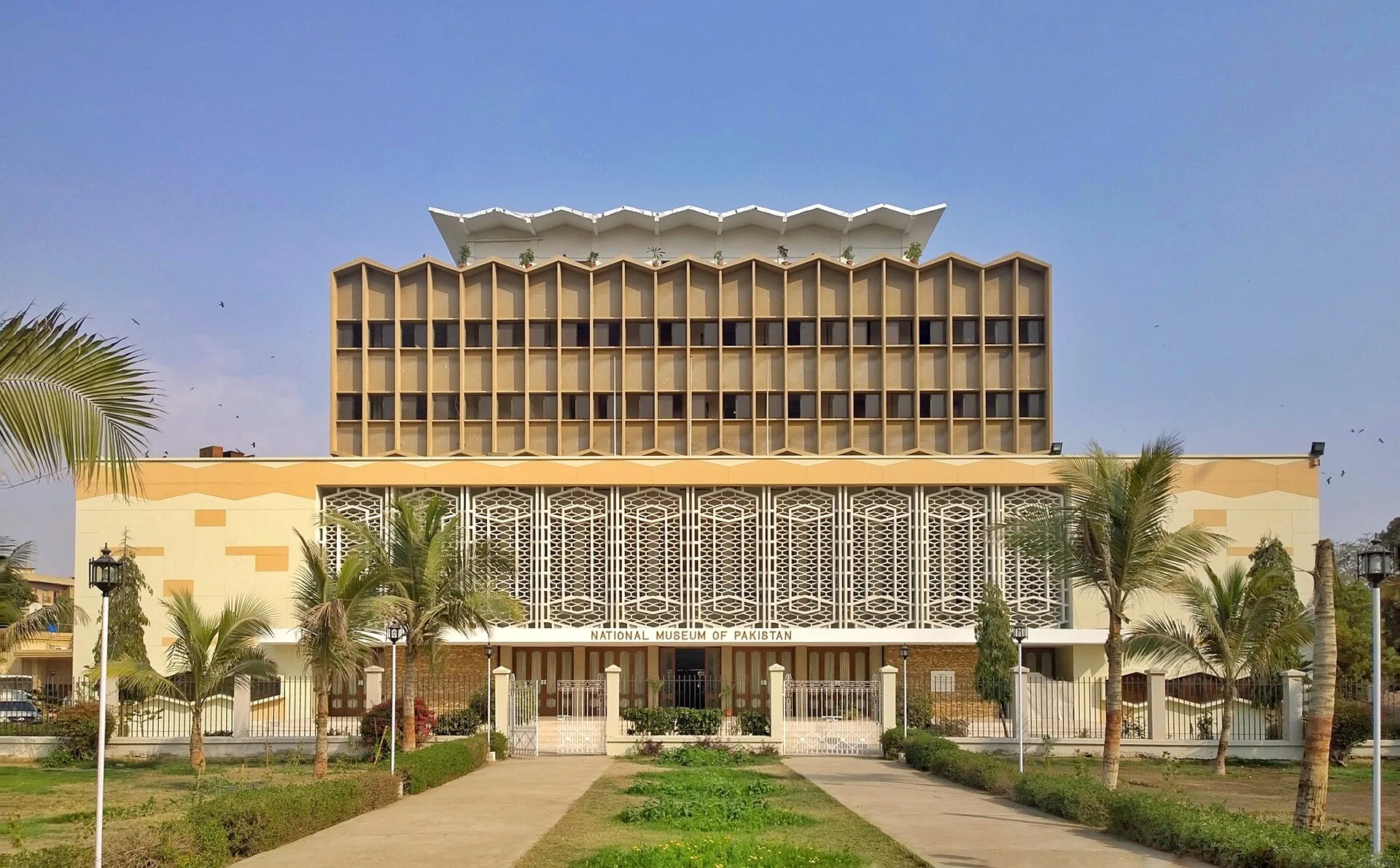
In Karachi the curator of the National Museum, Asma Ibrahim, led a detailed examination. Lead-pencil guide lines were visible under the carving on the coffin. The philologist Rüdiger Schmitt confirmed the grammatical mistakes and pointed out that the name was a Greek form rather than the Old Persian one a royal scribe would have used. CT scans at Aga Khan University Hospital showed the internal organs, including the heart, had been taken out, which departs from Egyptian practice, and that the soft tissue was far too well preserved. The reed mat dated to within the last few decades. By April 2001 Ibrahim reported that the body was that of a woman in her early twenties who had died around 1996, with a broken spine and damage to the hip and pelvis. The BBC’s Horizon program, which followed the case, said the body had been treated with drying chemicals soon after death and suggested the fabrication required an embalmer, a carpenter, a stonecutter, a goldsmith and someone with a smattering of cuneiform.
The questions left
Whether she was killed for the purpose is unknown. The autopsy could not show whether her injuries were inflicted deliberately or came from an accident such as a vehicle strike, and accounts differ on whether the fatal injury was to the neck or the lower back. Police opened a murder inquiry, but by 2008 it had made no reported progress and no one had been tried for her death. Horizon reported evidence that the same network may have produced as many as three such mummies.
Where it stands
In January 2008 the BBC reported that the body was still lying in a mortuary of the Edhi charity in Karachi, unburied after seven years because neither provincial police force would release it from a dormant criminal case. It was reportedly buried later that year. The forgery is fully explained. The woman inside it, her name, her origin and the manner of her death, is not.