
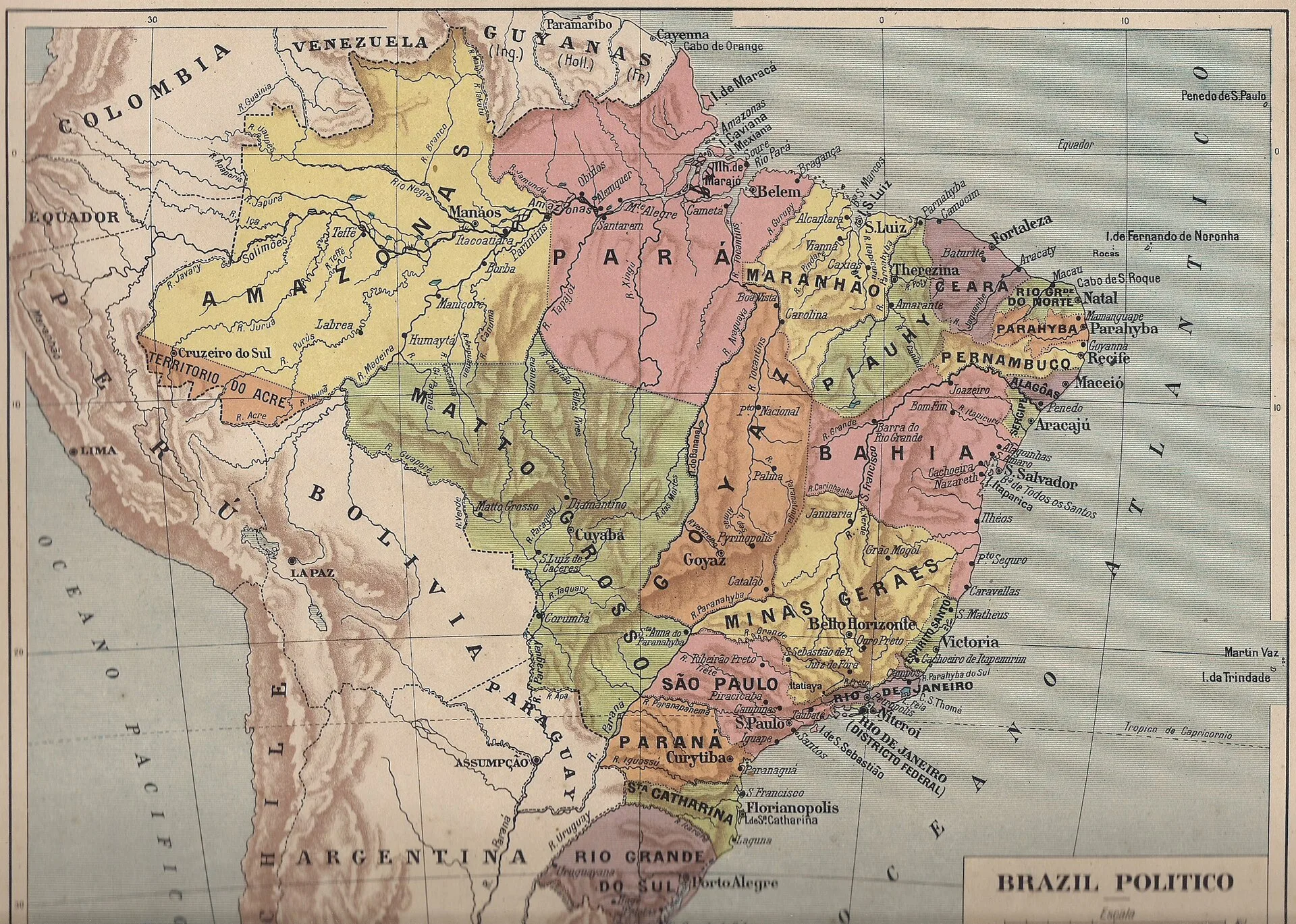
Lists of the world’s strangest disappearances often include a Brazilian village called Hoer Verde. The story is short and chilling: on February 5, 1923, visitors arrived to find the place empty. Some 600 people were gone, homes and belongings untouched, with no sign of a struggle. In the schoolhouse lay a gun that had recently been fired, and on the blackboard someone had written “There is no salvation.” No one was ever found. It is a good story. Tracing where it comes from shows how little lies beneath it.
What happened
As far as anyone has been able to establish, nothing happened in 1923 that matches the tale. Writers who have gone looking, including the adventure-news site ExplorersWeb in 2022 and the mystery blog The Ghost in My Machine in 2024, report that no village called Hoer Verde turns up in Brazilian census records or archives, and that no Brazilian newspaper or official report of the period mentions a mass disappearance. ExplorersWeb found that most Brazilians had never heard of the story. The name itself is a warning sign. Verde is Portuguese for green and is common in Brazilian place names, but hoer is not a Portuguese word. It is Dutch, and it is a crude term for a prostitute.
The investigation
The trail runs backward to the internet of the early 2000s. The oldest version using the name Hoer Verde that anyone has found is an English-language article posted on the Russian news site Pravda.ru on April 26, 2004, under the headline “Black Holes” Devour People. It is still readable through the Internet Archive. The Brazilian episode occupies a single paragraph: 600 inhabitants of the settlement of Hoer-Verde vanished on February 5, 1923, police searched the empty town, a recently used gun lay on the school floor, and “there is no salvation” was chalked on the board.
The rest of the article explains a great deal. It strings together a series of famous mass disappearances, including a British battalion said to have vanished into a cloud at Gallipoli in 1915, the lost colony of Roanoke, 3,000 Chinese soldiers who supposedly evaporated near Nanking in 1937, a company of Soviet security troops in 1945 and a passenger train lost between Guangdong and Shanghai. It quotes a “Doctor of History from Harbin” and a researcher who blames meteorites that lift people away by electrostatic levitation, and it closes with the ancient Greek sea god Proteus. No sources are given. The podcast Myths, Mysteries & Monsters, which traced the story to this article in 2021, concluded that its experts and much of its content were invented.
A second clue came later. In January 2023 the same podcast’s host, Hector Navarro, pointed out a passage in Dean Koontz’s horror novel Phantoms, first published in 1983. In it a character recounts the disappearance of a village called Joya Verde, with 605 people gone and a cryptic message left behind. The Ghost in My Machine has suggested that the name may have passed from Koontz’s Joya Verde through Russian into English as Hoer Verde, since Russian has no direct equivalent of the Portuguese soft J. That link is a hypothesis, but the resemblance in scale and staging is close.
The explanations
Supporters of the story point to Brazil’s turbulence in the 1920s, and the period was certainly unsettled: an armed uprising divided Rio Grande do Sul through most of 1923, and military revolts broke out in 1922 and 1924. None of those conflicts is recorded as emptying a village or leaving a mystery of this kind. Others propose black holes, alien abduction or the meteorite theory from the 2004 article itself. All of them assume the event took place, which is the one thing no evidence shows.
What the record does show is a familiar pattern. A sensational web article with no sources, written in English for a foreign audience, was copied into lists of unexplained vanishings, then into videos, blogs and podcasts, each repetition adding confidence. By the 2010s the tale was circulating with photographs whose origins no one could confirm and with ever more confident narration.
Where it stands
There is no evidence that a village called Hoer Verde existed or that anyone disappeared from it. The earliest known version dates from 2004, eighty-one years after the supposed event, in an article that mixes folklore with apparent invention, and the details echo a best-selling novel published two decades earlier. Unless a Brazilian record from 1923 turns up, Hoer Verde belongs with the many vanished towns that exist only in print.