
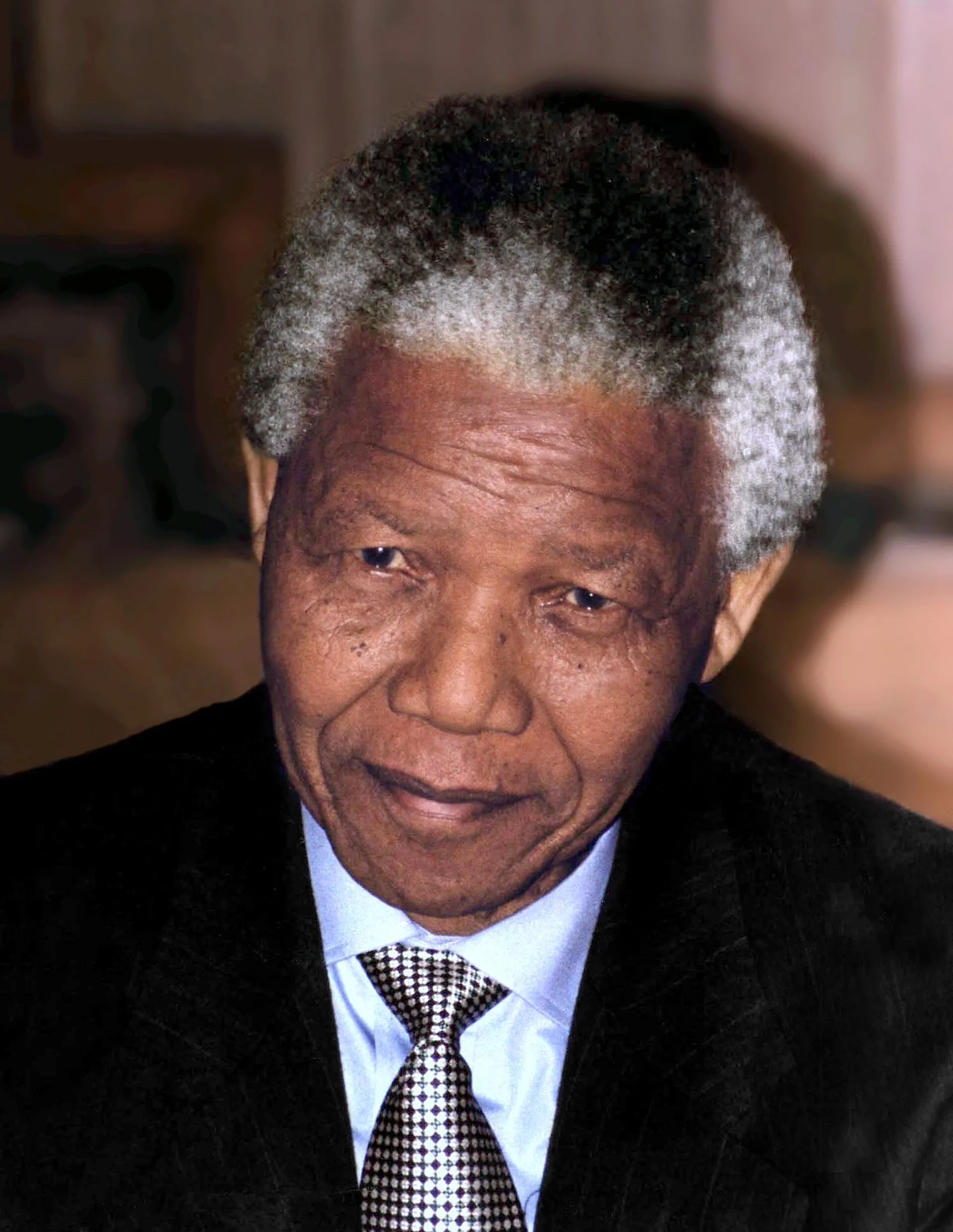
Ask a room of people whether the Monopoly mascot wears a monocle, and many will say yes without hesitation. He does not, and never has. The Mandela effect is the name the internet gave to this kind of shared mistake: a false memory held, often confidently, by large numbers of strangers. Its originator proposed that the mistakes might not be mistakes at all, but traces of other realities. Psychologists have since turned it into an object of laboratory study.
Where the name came from
The term comes from Fiona Broome, an American writer on ghosts and the paranormal. Around 2009 and 2010 she found that she and a number of other people shared a clear memory of the South African leader Nelson Mandela dying in prison in the 1980s; some even recalled seeing his funeral on television. In reality Mandela, jailed for life in 1964, walked free on February 11, 1990, was elected president in 1994, served one term and died in 2013. Broome set up a website to collect similar cases and suggested that people might be slipping between parallel realities without noticing, insisting that what she described was not simply false memory.
The idea spread through blogs and forums during the 2010s. The most discussed example is the children’s book series The Berenstain Bears, which many people remember as the Berenstein Bears. Others include a genie comedy supposedly called Shazaam and starring the comedian Sinbad, which does not exist, and famous film lines that are widely misquoted. Lists of these cases spread from Broome’s site to a dedicated Reddit forum, Snopes and countless other pages.
The research
In 2022 the journal Psychological Science published the first controlled study of the visual version of the effect, by Deepasri Prasad and Wilma Bainbridge of the University of Chicago. They gathered 40 familiar characters and logos, many drawn from online lists of supposed Mandela effects, and for each made two altered versions. In the first experiment 100 adults were asked to pick the correct image from three. For a handful of icons, among them Pikachu, the Monopoly man, the Volkswagen badge, Curious George, the Star Wars robot C-3PO and the Fruit of the Loom logo, many participants picked the same wrong version, often with high confidence and while saying they knew the image well. People remembered Pikachu’s tail with a black tip, Curious George with a tail and the Fruit of the Loom fruit spilling from a cornucopia.
Further experiments tried to explain why. Tracking where participants looked showed no difference in attention between the icons that caused errors and those that did not, so the mistakes were not simply a matter of never noticing the relevant part. A search of online images found that the correct versions dominate what people actually see. When participants drew the icons from memory, many reproduced the same errors unprompted. The authors also argued that schema theory, the idea that memory fills gaps with what is typical, cannot explain every case: people chose the cornucopia over a plate, even though fruit far more often sits on a plate. The researchers concluded that certain images reliably produce the same false memory across people, but that no single cause yet accounts for all of them.
The explanations
Skeptics such as Brian Dunning of Skeptoid point out that nothing in the effect requires another universe. Memory is reconstructive, and everyday recall blends what was seen with what was expected and what was later heard. A name like Berenstain is easily overwritten by the far more common ending, and Kazaam, a real film in which the basketball star Shaquille O’Neal played a genie, is a plausible seed for Shazaam. For Mandela himself, many people half-remember a solemn, widely televised event involving his name around 1990, which was his release from prison. Once such errors are shared online, social reinforcement makes them feel more certain.
Where it stands
The shared memories are real in the sense that many people genuinely hold them, and the 2022 study shows that some images trigger the same error with striking consistency. The explanation Broome offered for them is another matter. Every documented example corresponds to a recognizable memory error, and the occasional physical trace of a remembered version, such as a videotape label misprinted Berenstein, points to ordinary mistakes in this world rather than to shifts between worlds. The verdict on the parallel-reality explanation is that it misattributes a familiar, if still imperfectly understood, feature of human memory.