
In 1982 the New York book packager Byron Preiss published a slim, lavishly painted volume called The Secret: A Treasure Hunt. It is not to be confused with the later self-help bestseller of the same name. Preiss’s book was a game. Its twelve paintings and twelve short verses, he promised, could be paired and decoded to lead readers to twelve parks in North America, and in each park he had buried a ceramic casque sealed inside a plexiglass box. Each casque held a key that could be traded in for a gemstone worth roughly a thousand dollars, kept in a New York safe-deposit box.
What happened
Before publication Preiss had crisscrossed the continent with a long shovel, burying the casques himself. The text was written by Sean Kelly and Ted Mann, and the paintings, chiefly by the fantasy artist John Jude Palencar, were packed with symbols. A loose story about newcomers to the New World ran through the book, with each image nodding to a different immigrant people. Preiss never said which cities he had chosen. He expected the puzzles to fall quickly.
They did not. The first casque came up in 1983, when three teenagers dug in Chicago’s Grant Park after matching a verse to local landmarks. Even they needed help: after a run of empty holes they phoned Preiss, who nudged them toward the right spot. Then nothing happened for 21 years.
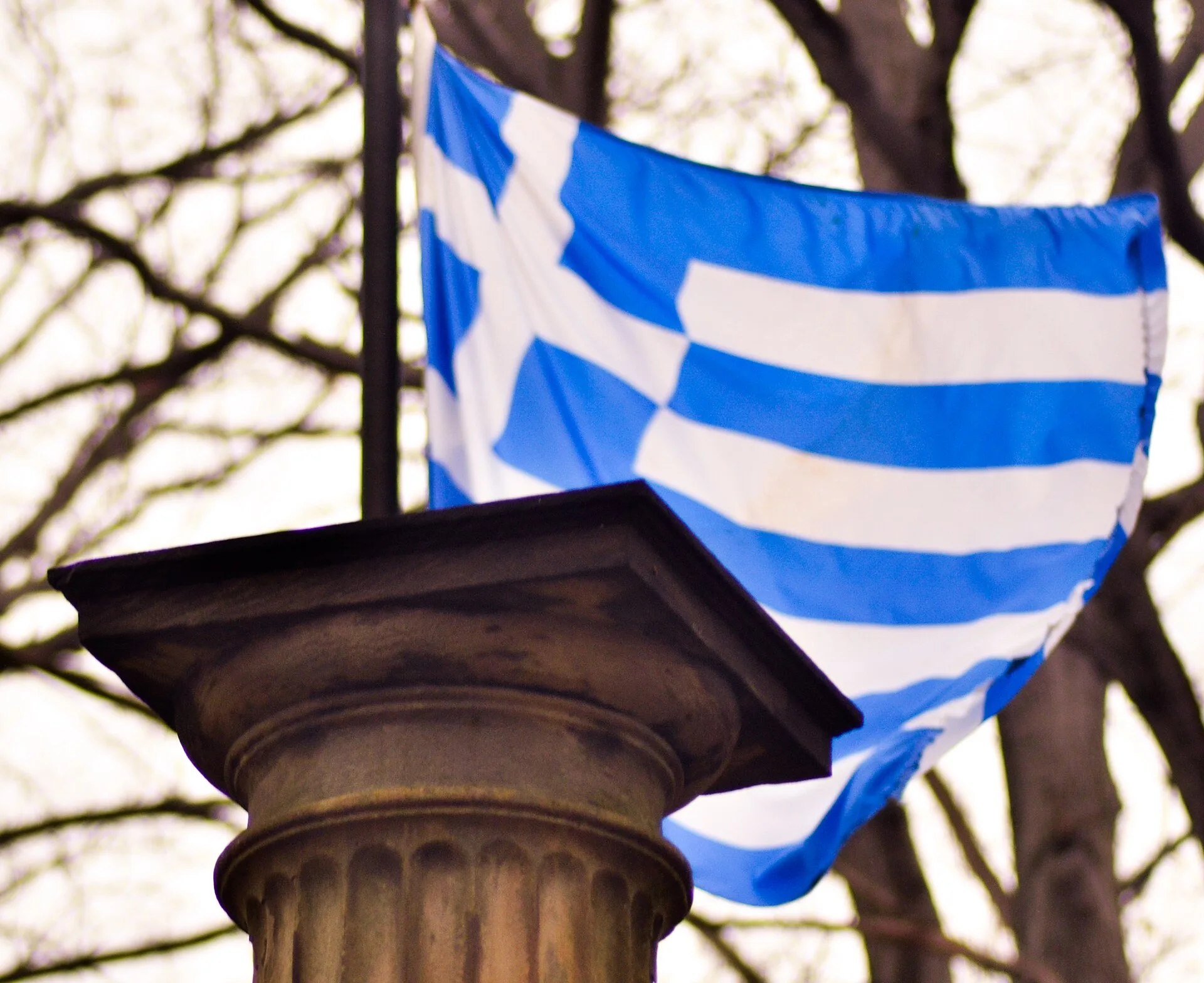
The second success came out of the internet era. Brian Zinn, a New Jersey lawyer who had been hooked on the book since college, joined other solvers on online forums where theories were pooled and checked against maps and search engines. In 2004 he connected a verse naming Socrates, Pindar and Apelles to the Greek Cultural Garden in Cleveland’s chain of ethnic gardens, where those names are carved in stone. With his friend Andy Abrams he spent hours digging near the garden’s boundary wall before the casque turned up. When Zinn went to New York to claim the gem, Preiss discovered that he had not, as he believed, stored the hunt’s solutions in his safe-deposit box. They were not there.
The investigation
That gap became permanent in 2005, when Preiss was killed in a car crash at 52. No complete record of the hiding places has surfaced since, so every remaining casque now has to be found from the puzzles alone. Preiss’s widow has said she still holds the gems for future finders.
Interest surged again in 2018 after the Travel Channel’s Expedition Unknown devoted an episode to the book. In Boston, the puzzle and game designer Jason Krupat and his family worked on the long-debated Boston verse. Most solvers had started at the Boston Public Library, whose facade carries the names Thucydides and Xenophon. The Krupats read later lines about the eighteenth day, the twelfth hour and lamplight as Paul Revere’s ride of April 18, 1775, which began in the North End, and they settled on home plate of the softball field in Langone Park, by the harbor.
In July 2019 Krupat saw that the park was being rebuilt and told the contractor’s foreman, who thought he was joking. In early October an excavator operator working around home plate felt his bucket crunch into something and found broken plexiglass and pieces of decorated ceramic. The company dug out Krupat’s email and called him. The key was recovered, the find was filmed for Expedition Unknown, and it was redeemed for its jewel. It was the third casque in 37 years.
The explanations
Nothing about the hunt is supernatural; the mystery is practical. The book’s own logic is sound, since each solved verse has led to the spot it described. What works against searchers is time. Parks are relandscaped, trees fall, paths move, and a box buried in 1981 may have been bulldozed, carted away with fill or simply sealed under new paving. City officials in Milwaukee, where many solvers place a casque in Lake Park near a staircase of 92 steps, require a permit before anyone digs, and the official who grants them doubts anything is still there. Other cities have complained about unauthorized holes.
Where it stands
Nine casques remain unaccounted for. Solvers have long argued for Milwaukee, New York, New Orleans and St. Augustine, among others, but none of these has been confirmed. Active forums still debate each verse line by line, and solvers who think they have an answer now have to persuade park departments to let them dig. Whether the rest of Preiss’s game can still be won depends less on cleverness than on whether the boxes survived the decades.