
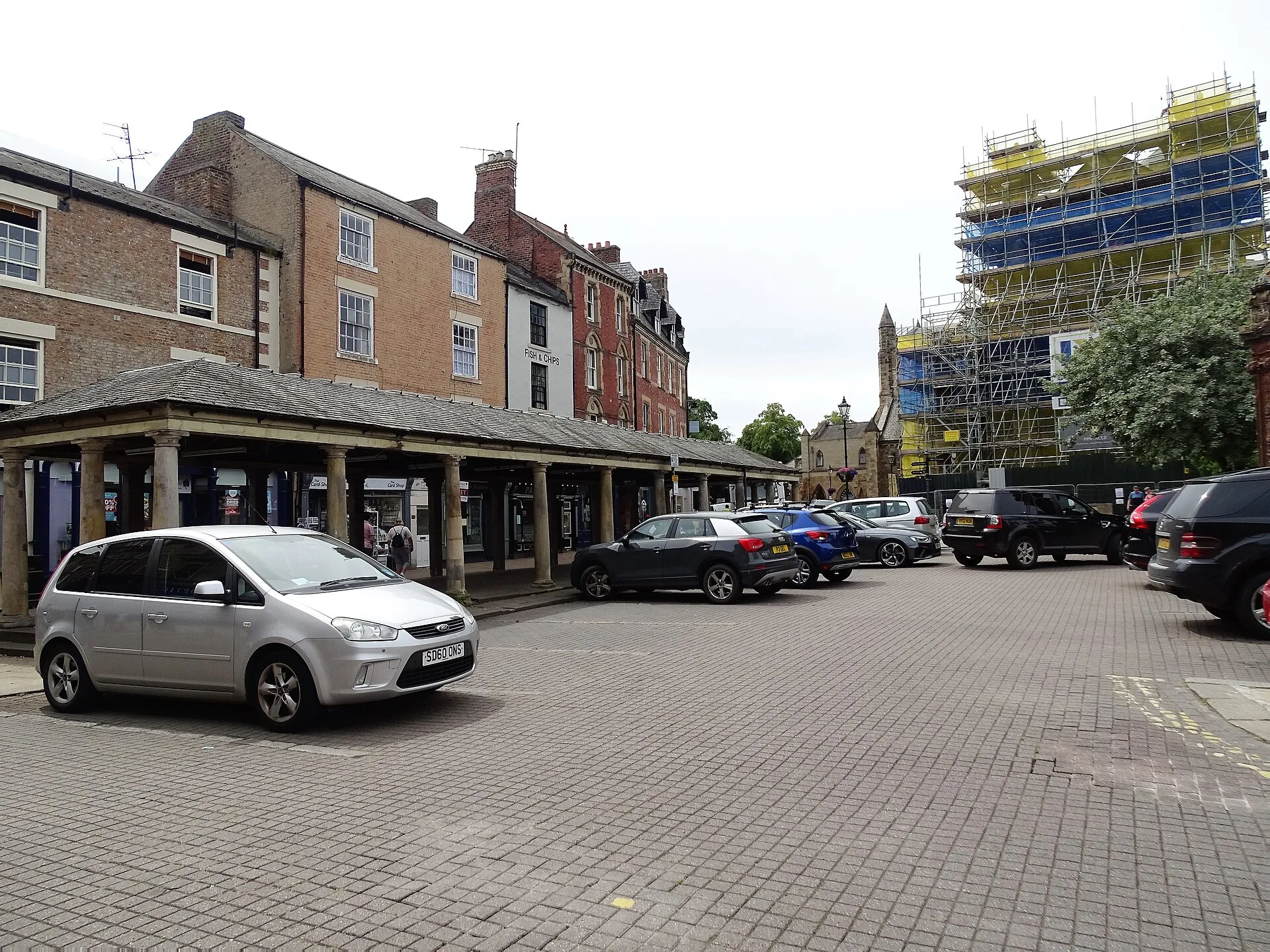
The Pollock case is one of the best known claims of reincarnation in Britain, and an unusual one, because two sisters were said to have returned together, as twins, to the same parents. It began with a road death in Hexham, the Northumberland market town on the Tyne, in the spring of 1957, and it reached a wider audience through the American psychiatrist Ian Stevenson, who followed the family for more than twenty years.
What happened
John and Florence Pollock ran a grocery and milk delivery business in Hexham. Their two daughters, Joanna, aged eleven, and Jacqueline, aged six, were walking to church with a friend in May 1957 when a car came at them along a stretch of pavement hemmed in by a wall, leaving them nowhere to go. Both girls died at the scene. The driver, a local woman, had swallowed what she believed was a lethal dose of drugs before getting behind the wheel, and the case was widely reported.
John Pollock had been raised in the Church of England and had become a Catholic on marriage, but he had held a private belief in reincarnation since boyhood. After the funeral he became convinced that his daughters would be born again to him, and when Florence became pregnant the following year he predicted twins, although her doctor expected a single baby and neither side of the family had twins. On October 4, 1958 Florence gave birth to identical girls, Gillian and Jennifer. Jennifer had a mark on her forehead in the place where Jacqueline had carried a scar from a fall against a bucket, and a brown mark on her left side where Jacqueline had a birthmark. Gillian had neither.
The family left Hexham when the twins were babies. Between the ages of about three and seven, according to their parents, the girls said and did things that seemed to belong to their dead sisters. When the dead girls’ toys were brought down from the attic, each twin picked out the doll once owned by her counterpart and said Father Christmas had brought it. Florence said she overheard the twins acting out the accident, one cradling the other’s head and saying blood was coming from her eyes where the car hit her. On a first return visit to Hexham, the parents said, the girls pointed out a park and swings before they came into view. Both were terrified of cars, Jennifer gripped a pencil in her fist as Jacqueline had, and Gillian took the protective, motherly role toward her twin that Joanna had taken toward Jacqueline. By about the age of seven the apparent memories had faded, and as adults the twins said they remembered nothing of a previous life.
The investigation
Stevenson, a University of Virginia psychiatrist whose research unit there later became the Division of Perceptual Studies, read about the family in 1963 and visited them that year. He returned in 1967 and 1978, examined the girls’ marks, saw a photograph of Jacqueline’s scar and arranged blood tests that confirmed the twins were monozygotic. He published the case at length in his 1997 work on birthmarks and reincarnation, arguing that because the twins share the same genes, genetics could not explain why only Jennifer carried marks matching Jacqueline’s. He thought it unlikely that the parents could have shaped the girls’ behavior so precisely to resemble their dead sisters.
The explanations
The weakness of the case is its witnesses. Almost everything rests on what John and Florence Pollock recalled, often years later, and John had expected and hoped for exactly this outcome before the twins were born. The British writer Ian Wilson, who examined the case in his 1982 survey of reincarnation claims, pointed out that the only witnesses were the parents, one of them a committed believer, and that because both sets of daughters shared a home and a family, knowledge of Joanna and Jacqueline could have reached the twins by ordinary means. Other critics have suggested that grieving parents read too much into ordinary childish remarks. Wilson suggested that the forehead mark, if not coincidence, might reflect the mother’s intense preoccupation during pregnancy, an idea Stevenson himself regarded as unlikely. The Society for Psychical Research’s encyclopedia, which treats the case sympathetically, still records that normal transmission within the family cannot be ruled out.
The case also lacks the kind of check that strengthens other reincarnation reports, where a child names strangers and places that the family could not have known and investigators record the statements before verifying them. Here the past life belonged to the parents’ own children, and no one outside the family recorded the twins’ remarks as they were made.
Where it stands
Stevenson’s division at the University of Virginia has since gathered more than 2,500 cases of children who report past lives, and says about 30 percent involve birthmarks or birth defects like those reported for Jennifer. Skeptics regard it as a case of grief, expectation and family memory. The deaths, the twins’ births and Jennifer’s marks are documented; whether the twins remembered anything is a question the evidence cannot settle, and the case remains unproven.