
The Conqueror is remembered for two things. One is John Wayne, of all people, cast as the young Genghis Khan in a picture that critics have long counted among Hollywood’s worst big-budget films. The other is the cast list’s grim afterlife. The film was shot in the desert of southwestern Utah in 1954, downwind of the government’s atomic proving ground in Nevada, and over the next quarter century a striking number of the people who made it died of cancer. Whether the location killed them has been argued ever since.
What happened
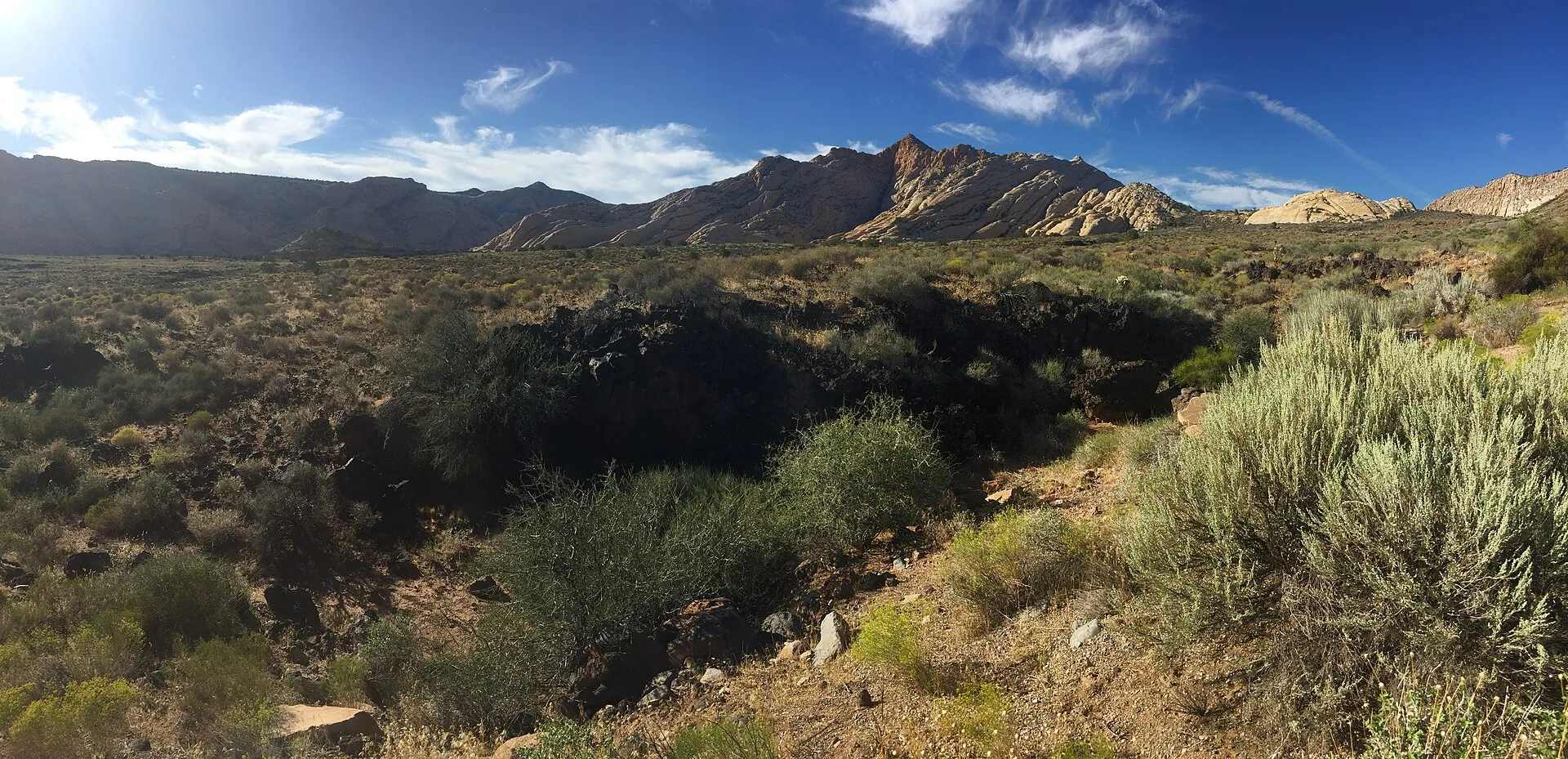
RKO, then owned by Howard Hughes, spent about $6 million on the picture, its most expensive production. Dick Powell directed; Wayne starred opposite Susan Hayward, with Pedro Armendáriz, Agnes Moorehead and John Hoyt in support. The American Film Institute’s catalog records location shooting from mid-May to early August 1954 around St. George in the Escalante Desert of Utah, with hundreds of extras recruited from the Shivwits reservation. The red-rock country around Snow Canyon stood in for the steppes of Mongolia. Hughes later had some 60 tons of the local dirt shipped to Hollywood so that studio reshoots would match.
St. George had already been dusted with fallout. On May 19, 1953, the Atomic Energy Commission fired a 32-kiloton device code-named Harry from a tower at the Nevada Test Site, roughly 140 miles to the west. The wind carried the cloud over southern Utah. As the Deseret News later reconstructed it, the government’s monitor in town watched his survey meter run off its scale, above 300 milliroentgens per hour, between about 9:15 and 9:30 that morning. A radio warning went out later, and the test site’s safety plan amounted to getting people indoors and washing down cars. Harry became known locally as Dirty Harry. It was one of more than 100 nuclear devices set off in the open air there between 1951 and 1962.
The investigation
No formal study of the film crew has ever been carried out. The figures that made the story famous came from People magazine in November 1980, which counted 91 cancers among the roughly 220 cast and crew and 46 deaths from the disease. The names were well known. Powell died of lymphoma in 1963. Armendáriz, diagnosed with cancer, shot himself the same year. Moorehead, a nonsmoker, died in 1974, Hayward of cancer that had spread from her lung to her brain in 1975, and Wayne, who had survived lung cancer in 1964, of stomach cancer in 1979 at 72. Robert Pendleton, a radiation specialist at the University of Utah, was widely quoted as saying a group that size should have produced only about 30 cancers and that the numbers could qualify as an epidemic. He added that proving fallout caused any one person’s illness was practically impossible.
The explanations
The case for fallout rests on real exposure. Southern Utah’s downwinders were dosed repeatedly through the 1950s, and in 1990 Congress passed the Radiation Exposure Compensation Act. It pays people who lived in designated areas downwind during the testing years and later developed any of a long list of cancers, including leukemia, lymphoma and cancers of the lung, stomach and brain, the very diseases that killed several of the film’s stars. Congress extended and widened the program in 2025. The crew spent about three months working in the dust of that region, a year after its worst contamination.
The case against a cluster is statistical. The 91 cases were gathered over more than 25 years, in an era when smoking was common among American adults. Wayne himself smoked several packs a day, and he and his wife blamed cigarettes for his illness. By today’s American Cancer Society figures, close to two in five Americans will be diagnosed with cancer at some point in their lives, which puts 91 out of 220 in the range ordinary risk could produce. Pendleton’s estimate of 30 was never set out with its assumptions, and no one compared the crew against a similar group of film workers who stayed home. Powell’s widow later said his illness began in his lungs and blamed his chain smoking. A group of 220 people cannot settle the question in either direction.
Where it stands
Hughes later bought the film back, reportedly for $12 million, and kept it largely out of circulation until his estate sold it in 1979, which helped its reputation as a cursed production. The cancers among its stars were real, and so was the fallout over St. George. What has never been shown is that the second caused the first. The downwinders’ grievance against the testing program is documented and has been compensated; the Conqueror cluster remains a striking anecdote that cannot be separated from the habits and ordinary risks of the people involved.