
For more than two decades, a few agencies of the United States government paid people to sit in quiet rooms, close their eyes and try to describe places they had never been. The effort went by a string of code names before it was finally called Stargate, and it ended in 1995 when the CIA, after commissioning an outside review, decided that it had never once produced information an intelligence officer could act on. The program was real. Whether the ability it was built around exists is a separate question, and the scientists hired to answer it disagreed.
What happened
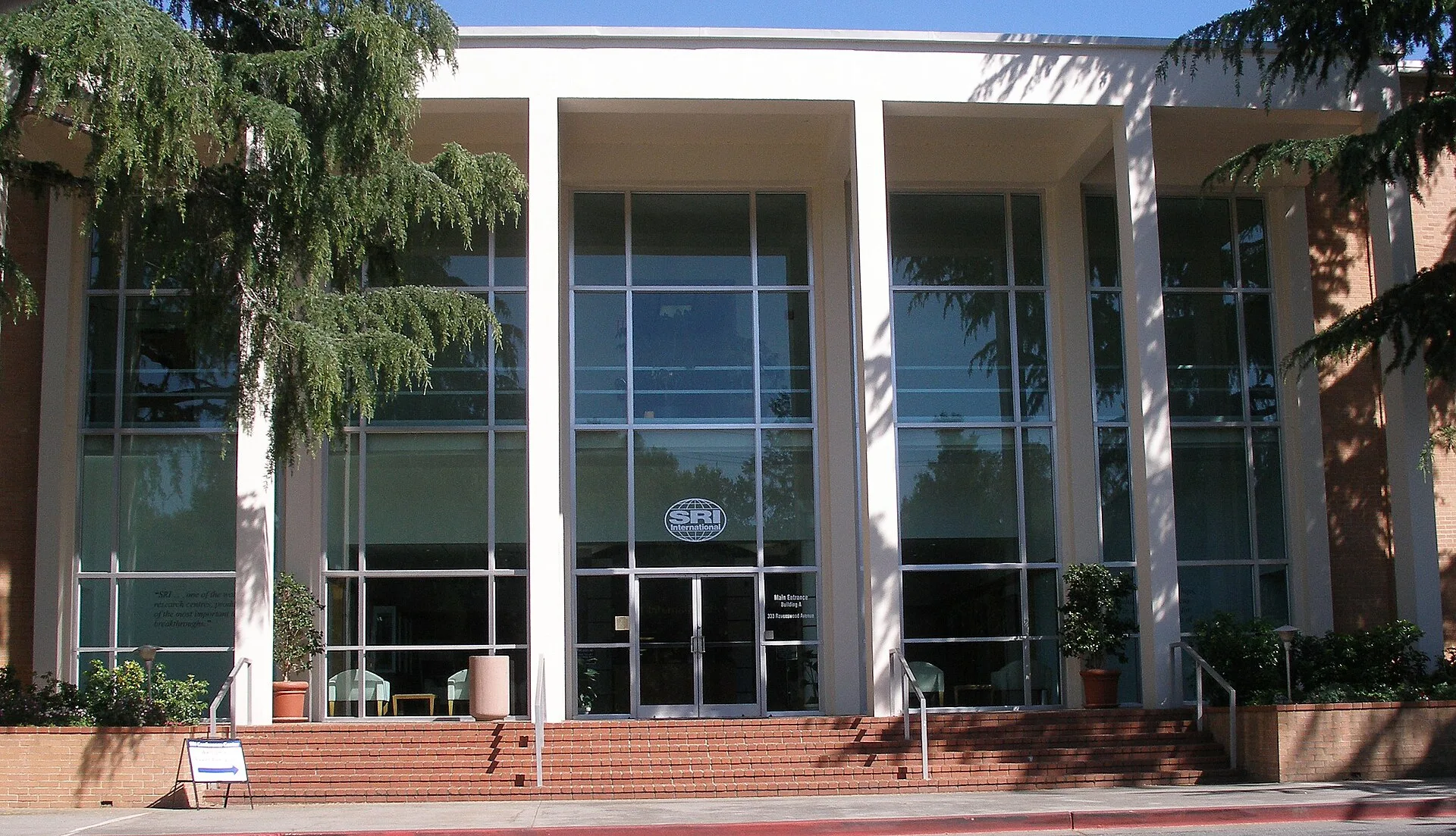
The work started at the Stanford Research Institute in Menlo Park, California, later renamed SRI International, in 1972. Two physicists there, Russell Targ and Harold Puthoff, began testing people who claimed psychic gifts, among them Ingo Swann and Pat Price, who became the project’s best-known subjects. Intelligence officials were uneasy about reports that the Soviet Union was spending heavily on what it called psychotronics, and the CIA put money into remote-viewing work known as SCANATE, short for “scan by coordinate,” in which subjects were given map coordinates and asked to sketch what lay there.
The Army took a hand in 1977. An intelligence detachment set up a program called Gondola Wish to study how an enemy might use the technique, and the next year it became an operational unit, Grill Flame, housed in two wooden buildings at Fort Meade, Maryland. The names changed with the sponsors: Center Lane in 1983, Sun Streak after the Defense Intelligence Agency took over funding in 1985, and finally Stargate in 1991, when most of the research contract went to a new contractor, Science Applications International Corporation (SAIC), under the physicist Edwin May. The Fort Meade unit was never large, with perhaps 15 to 20 people at its peak, and by the end only a handful of viewers remained.
In the laboratory version of the task, one person, called the beacon or sender, looked at a target, often a photograph drawn from a pool of National Geographic pictures. The viewer, kept apart, described or sketched whatever came to mind. A judge then compared the description with the real target and several decoys. If the target was ranked first more often than chance allowed, the session counted as a hit. In operational sessions, intelligence customers supplied real targets and later rated the reports.
The investigation
In 1995 Congress directed that the program pass from the DIA to the CIA, and the agency asked the American Institutes for Research, a nonprofit social-science firm, to evaluate it before deciding its future. AIR assembled a panel that deliberately included one believer and one skeptic: Jessica Utts, a statistician at the University of California, Davis, who had published work sympathetic to psychic research, and Ray Hyman, a University of Oregon psychologist who had looked at SRI’s tests of Uri Geller for the government two decades earlier. The panel read about 80 reports, and AIR staff separately interviewed the analysts who had received the viewers’ output.
The two experts reached opposite conclusions from the same experiments. Utts argued that, judged by the standards of any other science, the statistics showed psychic functioning to be well established, with an effect of small to medium size, and that precognition seemed to work as well as anything else. Hyman, concentrating on the ten experiments run at SAIC, accepted that the results departed from chance and said he had no ready explanation. But he pointed out that the same few viewers, the same target pool and a single judge, May himself, ran through all the free-response studies, so the experiments were not independent of one another. Statistical oddities, he wrote, were a long way from proof, and only replication by outside laboratories with new viewers and new judges could settle it.
The explanations
The AIR report, dated September 1995, sided with caution on the science and was blunt about the practice. It agreed that hits had occurred more often than chance in the laboratory, but said nobody could tell whether that reflected a paranormal ability or quirks of the judging, the targets and the methods. On the operational side, the people who had received the reports described them as vague, inconsistent and wrong on specifics, useful only after heavy interpretation. In no case, the report found, had remote viewing guided an intelligence operation. Its recommendation was that the intelligence community stop.
The CIA closed the program that year and declassified it. Estimates put its total cost at about $20 million over roughly two decades.
Where it stands
The records went online in 2017 as part of the CIA’s CREST archive, and former viewers, including Joseph McMoneagle, have written books defending their results. The facts of the case are settled: the government did run a psychic intelligence program for more than twenty years. What the program never delivered was evidence strong enough to convince its own evaluators that the ability works, or a single piece of actionable intelligence, which is why the claim that Stargate proved remote viewing is better described as a mixture of a true history and an unproven idea.