
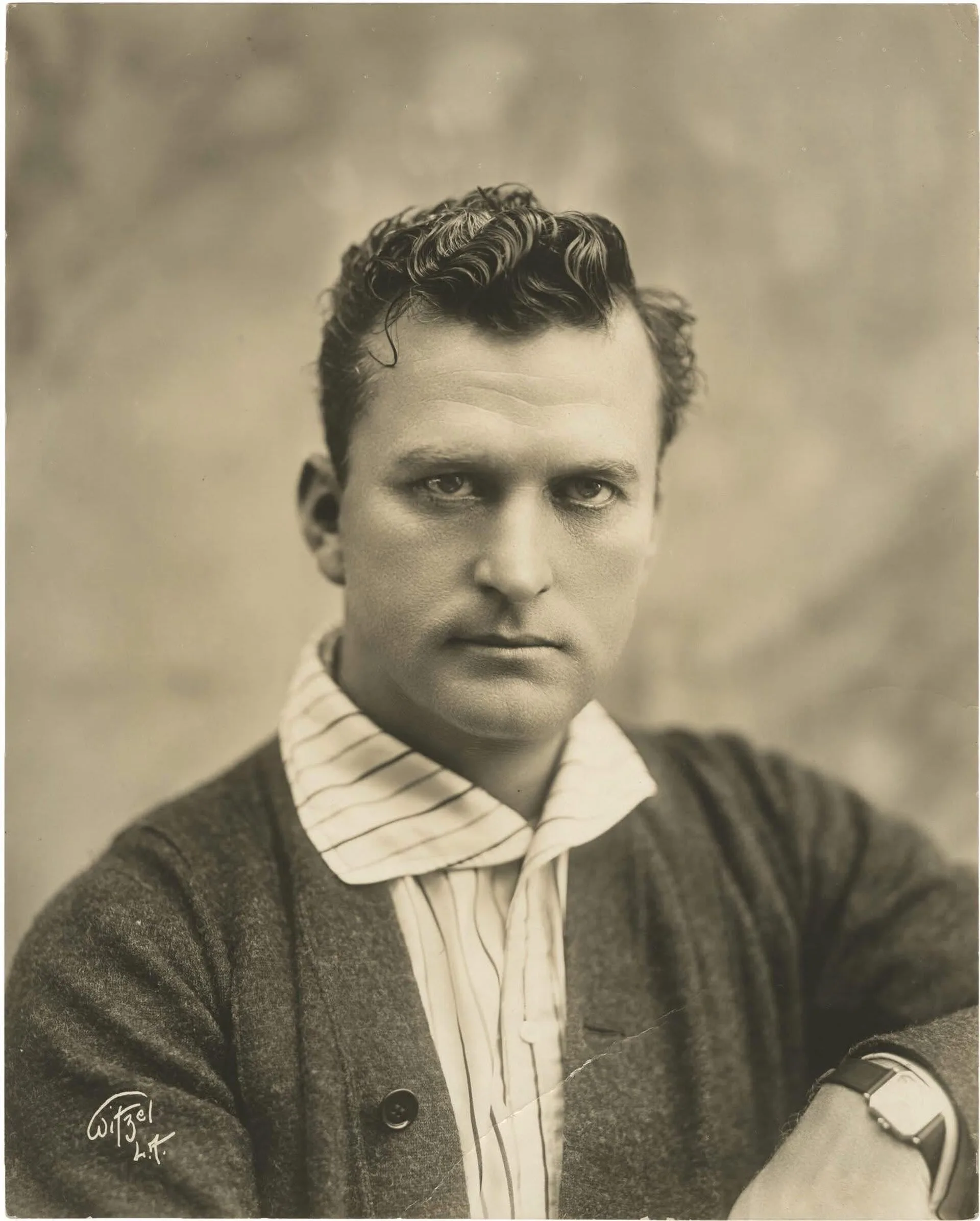
Thomas Ince did as much as anyone to turn moviemaking into an industry. In the 1910s he built a studio on the coast above Santa Monica that locals called Inceville, and he pioneered the practice of shooting from a detailed written script on a fixed budget and schedule, with the producer rather than the director in command. By 1924, though, independent producers were being squeezed by the big studio chains, and Ince was in talks with William Randolph Hearst, the newspaper owner, whose Cosmopolitan Productions made pictures starring his companion, the actress Marion Davies.
What happened
In mid-November Hearst invited Ince on a weekend cruise aboard the Oneida, his private yacht, partly to mark Ince’s birthday on November 16 and partly to settle a deal. The guest list, as later reconstructed, included Davies, the novelist Elinor Glyn and, by most accounts, Charlie Chaplin, who was rumored to be close to Davies. Ince, delayed by work, came down to San Diego by train and joined the party a day late. That Sunday night, after a birthday dinner, he fell badly ill. His widow, Elinor, later said he had eaten salted almonds and drunk champagne despite a stomach ulcer that ruled out both.
On Monday morning Ince was taken ashore at San Diego in the company of Dr. Daniel Carson Goodman, a physician who worked for Hearst’s film company. They traveled by train toward Los Angeles, but Ince grew worse and was taken off at Del Mar, where a local doctor and a nurse looked after him in a hotel. His wife and his own physician, Dr. Ida Cowan Glasgow, came down, and he was brought home to Dias Dorados, his estate in Beverly Hills. He died there on Wednesday, November 19, 1924. Dr. Glasgow certified angina pectoris as the cause.
The investigation
There was no inquest. Ince was cremated at Hollywood Forever within days, after a funeral at which his casket was opened for mourners to file past. The press handled the story badly. One version, carried in Hearst-connected outlets, had Ince falling ill at Hearst’s ranch rather than on the yacht; others had him stricken on a train. A rumor spread, still repeated and never documented, that an early edition of the Los Angeles Times had run a headline about a producer shot on the Hearst yacht. When the gossip grew loud enough, the San Diego district attorney, Chester Kempley, interviewed Goodman, who described chest pains on the train and a history of similar attacks, and in December announced that heart failure following acute indigestion had killed Ince and that no further inquiry was needed. Nobody else from the yacht was questioned.
The explanations
The murder story runs as follows: Hearst caught Davies with Chaplin, went for a pistol he kept aboard, and in a struggle hit Ince instead. Its sources are all at one remove. Chaplin’s secretary, Toraichi Kono, was said to have glimpsed a head wound as Ince was carried off; Davies’s nephew Charles Lederer told Orson Welles, who told the director Peter Bogdanovich, whose 2001 film The Cat’s Meow dramatized the tale. Louella Parsons, later Hearst’s powerful film columnist, was said to have been aboard and rewarded for her silence, though the record of her career shows she already held a Hearst post before the cruise, and accounts disagree on whether she was on the yacht at all. Davies, in her memoir, denied any shooting but also left Chaplin off the guest list.
Against the rumor stand the open casket, the treating doctors, a death certificate from Ince’s own physician, and a widow who said publicly that she would not have kept quiet had she suspected anything. Ince’s biographer Brian Taves concluded that a digestive attack on top of the ulcer was too much for his heart. Hearst himself told a reporter years later that nobody had murdered Ince. What does look likely is that the yacht carried liquor during Prohibition, a reason for everyone aboard to say as little as possible.
Where it stands
The quick cremation means no examination can ever settle the matter, and Snopes rates the claim undetermined on that ground. The weight of the documented evidence, however, points to a sick man who should not have been drinking, a natural death, and an evasive host whose own newspapers made the confusion worse.