
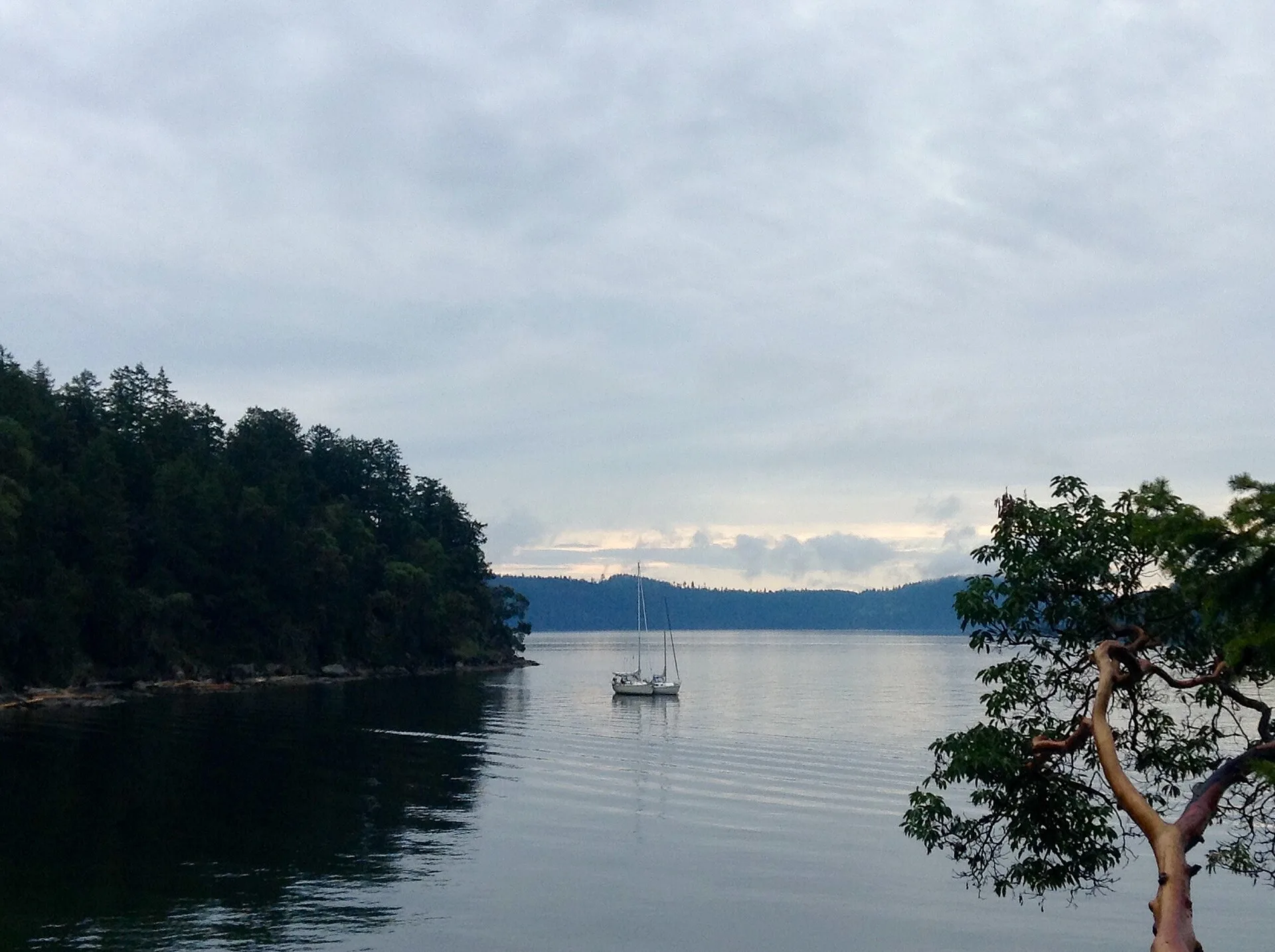
De Courcy Island is a small wooded island in the Gulf Islands southeast of Nanaimo, British Columbia, reached only by boat. Its southern tip is now Pirates Cove Marine Provincial Park, which has a trail named for the man who once ran the place. From 1929 to 1932 the island was the guarded center of the Aquarian Foundation, led by a former sea captain who called himself Brother XII, and many people still believe he buried a fortune there.
The man and the movement
Edward Arthur Wilson was born in Birmingham, England, on July 25, 1878, raised in the apocalyptic Catholic Apostolic Church, and went to sea as a youth, working his way up to captain. He became a student of Theosophy, and in the autumn of 1924, ill and broke in the south of France, he said an Egyptian deity had told him to prepare for a great task. Messages followed from a being who identified himself as one of the Masters of the Great White Lodge, and Wilson took the name The Brother, XII, as spokesman for its twelfth brother. His booklets and his articles in the Occult Review drew a following, and in 1927 he made Cedar-by-the-Sea, a few miles south of Nanaimo, the headquarters of his new Aquarian Foundation. The province granted it a charter on May 16. By that summer, according to his biographer John Oliphant, the society counted some 1,250 members across Canada and the US, with a few dozen in residence; BC Parks puts the wider body of supporters at 8,000.
The gold
Money broke the movement. In October 1928 the foundation’s governors accused Wilson of misusing $25,000 donated by Mary Connally, a wealthy American supporter. The charge collapsed when she testified that the money was a gift, and her funds helped buy land on De Courcy and neighboring Valdes Island. There, from 1929, Wilson and his new consort, Mabel Skottowe, who styled herself Madame Zee, ran a closed settlement where disciples labored long hours on the farm under conditions Oliphant compares to slavery, and an armed guard kept watch. Wilson converted contributions into gold coin. The Canadian Encyclopedia says the coins were sealed in glass jars, and the local historian John Mitchell told Global News in 2019 that Wilson “had over 40 cases of gold in quart jars,” mostly American $20 pieces. Oliphant estimates the total in the hundreds of thousands.
In the spring of 1932 the remaining disciples revolted, and Wilson drove them off the islands. Connally and another former follower, Alfred Barley, sued to recover what they had given. The suits came to trial in Nanaimo in April 1933. One witness swore that Wilson had used black magic against his enemies, and Chief Justice Aulay Morrison described the proceedings as “the strangest cases ever to come before a Canadian court of law.” The plaintiffs won, but there was nothing to collect. Wilson and Skottowe had left the province in October 1932, smashing buildings and equipment, scuttling his sailboat, the Lady Royal, and taking the money.
Where it went
The trail leads to England, where Wilson lived quietly under the name Julian Churton Skottowe, and then to Neuchâtel, Switzerland. A death certificate records that Edward Arthur Wilson died there of angina on November 7, 1934. It was signed by Dr. Roger Schmidt, his doctor, who had once lived at the colony himself, and Oliphant regards as credible a report that Wilson was seen alive in San Francisco in 1936. If the death was staged, the gold most likely went where he did. If it was real, nothing in the record says what became of the money or of Skottowe.
Where it stands
The Canadian Encyclopedia notes that the old compound still draws treasure hunters convinced that some jars were buried on the islands, and Global News reported in 2019 that the fortune has never been accounted for. No find has ever been documented, and the islands’ shell middens and park land are now protected. The movement, the lawsuits and the gold are real history. That any of the gold still lies under De Courcy Island is unproven, and the plainest reading of the record is that Brother XII took it with him.