
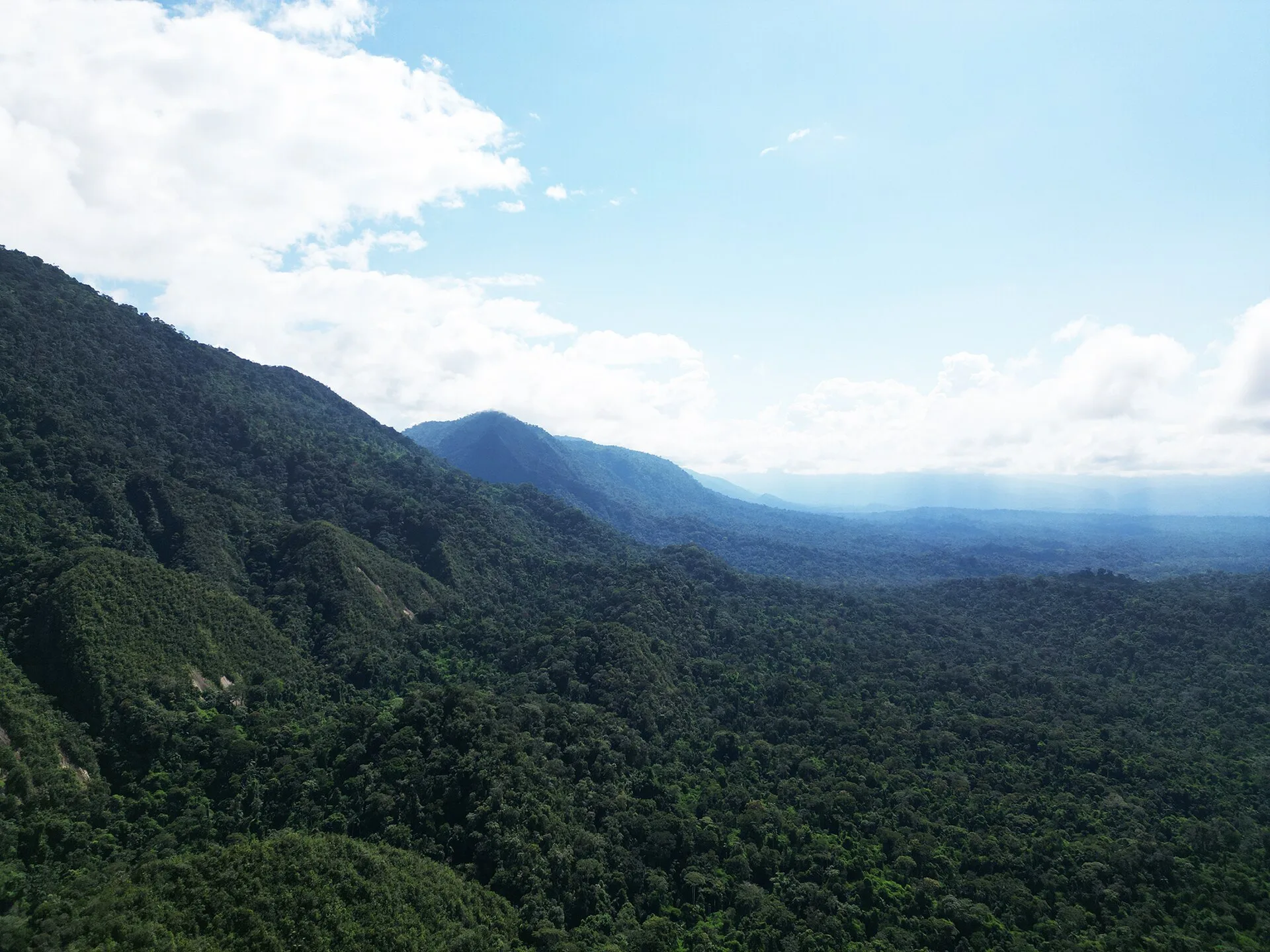
East of Cusco the Andes fall away in a few dozen miles from glaciers to cloud forest and then to the lowland rainforest of the Madre de Dios basin. Somewhere in that descent, according to a story told for more than four centuries, lies Paititi: a kingdom, or a city, full of gold. It has been placed in Peru, Bolivia and Brazil, and it has never been found.
What happened
The name is older than the conquest legend attached to it. In a book published in 2018 by the Catholic University of Peru, the historian Vera Tyuleneva traces the earliest known written mention to an account of Inca conquests taken down from the testimony of Inca record-keepers, possibly as early as 1542, which says the emperor Pachacuti kept forts and garrisons by a river called the Patite. Within a generation the Spanish were hunting a rich land of that name. Juan Álvarez Maldonado led an expedition into the eastern lowlands in 1567–69, and through the 1600s missionaries, soldiers and adventurers followed rumors of a powerful king, abundant metal and great towns beyond the mountains.
One of those rumors resurfaced in 2001, when the Italian scholar Mario Polia announced a document he had found in the Jesuit archive in Rome. It is an Italian retelling of a story by Andrés López, rector of the Jesuit college in Cusco in the late 1570s, and it describes a vast kingdom ten days from Peru, so rich that its people cooked in pots of gold and silver. The press treated it as a treasure map. Tyuleneva points out that it is nothing of the kind: its subject is a miracle worked by a crucifix carried there by baptized fugitives, and its account of the place is hearsay.
The searchers
The version most explorers chase took shape in the 20th century: that after the Spanish captured the last Inca stronghold at Vilcabamba in 1572, survivors took their treasure into the forests of Pantiacolla, northeast of Cusco, and built a refuge city there. Expeditions in pursuit of it multiplied from the late 1950s, peaking in the 1960s and 1980s.
The search has had a human cost. In 1970, by the account of his editor (some sources say 1971), Bob Nichols, an American reporter for the Peruvian Times, set out with two French companions up a river from the mission at Shintuya. Their guides refused to go farther and turned back; the three men went on and were never seen again. The editor, Nicholas Asheshov, searched for six months without success. A young Japanese explorer, Yoshiharu Sekino, later reached Machiguenga people in the area who told him they had killed the three, and gave him belongings to prove it.
Others came back with real finds that were not Paititi. In 1979 Herbert and Nicole Cartagena located Mameria, an Inca site in the forests of what is now Manu National Park. The American explorer Gregory Deyermenjian spent decades recording Inca roads and ruins between the upper Madre de Dios and the Yavero River. The British explorer John Blashford-Snell searched in Bolivia in 2001, and the writer Tahir Shah described his own jungle quest in a 2004 book. The Polish traveler Jacek Pałkiewicz led a much-publicized search in 2002. At the end of 2007 villagers near Kimbiri found a walled stone complex that their mayor suggested might be Paititi; Peru’s National Institute of Culture concluded the blocks were natural sandstone. Pyramid-shaped hills at Paratoari, spotted on satellite photographs, drew searchers as well, and they too are natural formations.
The explanations
Tyuleneva’s study, the most detailed work on the colonial sources, concludes that the original rich land of Paititi was probably the northern Llanos de Mojos in Bolivia, a densely settled savanna whose ancient earthworks archaeologists now recognize, and where one people had a chief named Paititi. In her reading, the idea of Incas hiding in the forest is optional or absent in the earliest sources and grew later from memories of Inca frontier forts in the lowlands. A Finnish-Bolivian excavation at one candidate fort, Las Piedras near Riberalta, found some Inca-style pottery in 2001–2003, though whether the site was Inca is still debated.
Where it stands
Paititi remains on maps of the imagination rather than on any archaeological map. The forests east of Cusco do hold Inca roads and outposts, and more will surely be found, but no city of gold has emerged from a century of searching. The likeliest Paititi was a real place that Spanish newcomers misread as treasure, and the lost city is the legend that grew around that misreading.