
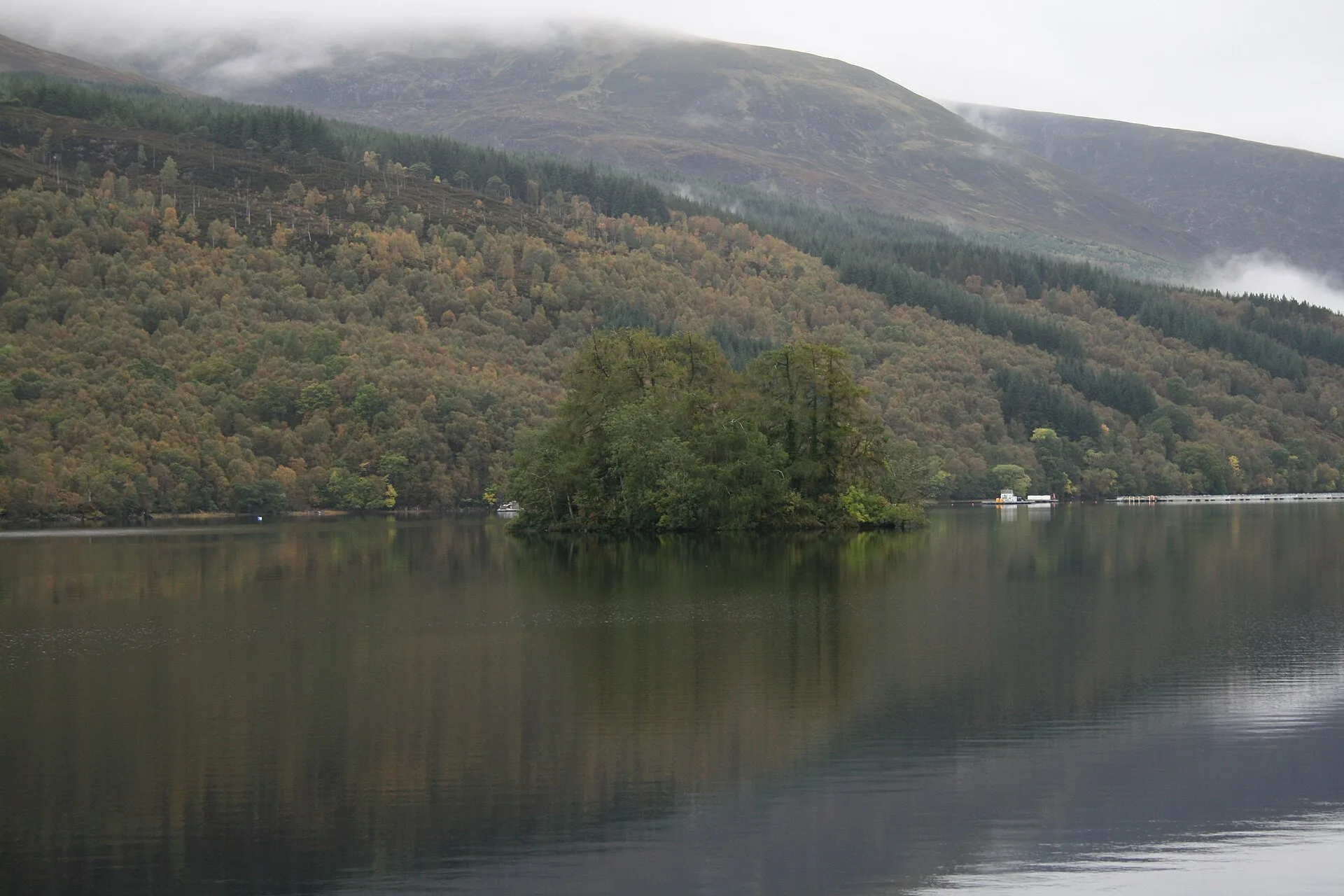
Loch Arkaig is a long, narrow freshwater loch in Lochaber, running west from Achnacarry, the home of the Cameron chiefs, into empty hill country north of Fort William. Since the summer of 1746 its shores have been tied to a cargo of French gold coin that arrived for Prince Charles Edward Stuart after his cause was already lost, and that, in local tradition, was never completely dug up again.
What happened
Charles had come ashore in the west Highlands in July 1745 promising that a French army would follow. What came instead was money, and little of it reached him. Spain had agreed to subsidize the rising, but one cargo of coin was taken in the far north by the government-supporting Mackays in March 1746. By the time the next shipment came, the war was over: the Jacobite army had been destroyed at Culloden on April 16. Around the end of the month two French ships, the Mars and the Bellone, entered Loch nan Uamh, the sea loch where the prince had first landed, and put the Spanish money ashore before Royal Navy ships caught them in the loch in early May. The fight left the Mars badly holed.
How much was landed depends on the source. Andrew Lang, who worked through the exiled Stuarts’ papers in the 1890s, put it at 40,000 louis d’or and remarked that part of the coin proved to be counterfeit. The West Highland Museum gives about 36,000 coins, and research published by the auction house Spink in 2020 roughly £35,000 in the money of the day. Seven casks came ashore. Men of Macdonald of Barisdale made off with one almost at once. The other six were carried inland and hidden near the head of Loch Arkaig.
Where the money went
The gold was meant to relieve the clans, then suffering under the Duke of Cumberland’s troops, and to get leading Jacobites out of the country. John Murray of Broughton, the prince’s secretary, began paying it out, but he was arrested that summer and became a witness for the Crown. Keeping of the hoard passed to Donald Cameron of Lochiel and then to Ewen Macpherson of Cluny, who would spend nine years hiding on his own lands, for a time in a hut on Ben Alder known as the Cage. Charles sheltered there with him before escaping to France in September 1746.
What survives afterward is a paper trail of claims and accusations. In an account sent to the prince at the start of 1751, Cluny reported that only £12,981 was left. Lord Elcho reckoned that young Glengarry and Lochgarry had taken 1,200 louis d’or between them, and Lang later showed that young Glengarry was the government spy known as Pickle. Charles came to believe Cluny had kept the balance. In 1753 Dr. Archibald Cameron, Lochiel’s brother, returned to Scotland partly to settle the matter of the money; he was betrayed, captured and hanged at Tyburn on June 7, 1753, the last Jacobite to be executed. A letter written from Lille that spring, which Lang quotes, laments that the prince’s money had divided clans and even families against one another. Lang’s own conclusion was that Cluny eventually carried the small remainder to France.
The explanations
The best-documented exit route was traced in 2020 by the historian Martyn Downer while researching a silver cup for Spink. In his reconstruction the prince sent coded word from France about two years after the burial, and part of the gold was recovered and taken to Charles Selby, an English Catholic sympathizer, at his farm near Wooler in Northumberland. Selby and a trusted servant then rode it to London in two trips, where Jacobite bankers turned it into notes for the prince. Downer estimated that about £6,000 reached Charles this way and that most of the rest was lost to pilfering or given away in the Highlands. Spink was offering the cup for sale, so the finding comes from an interested party, but on the central point it agrees with the Stuart papers: the money was moved, spent and fought over rather than left in the ground.
Where it stands
That still leaves room for a remnant. Clan Cameron records from the 1850s mention French coins found in woods near the loch. The legend has also drawn fakes: in 2005 the West Highland Museum was sent a supposed 1746 eyewitness description of the burial that turned out to be a forgery. In November 2020 an amateur group found musket balls and coins on the north side of Loch nan Uamh, almost certainly debris from the naval fight rather than treasure. No cache has ever been located at Arkaig. The landing and the hiding are history; a hoard still waiting there is, on the surviving documents, unlikely.