
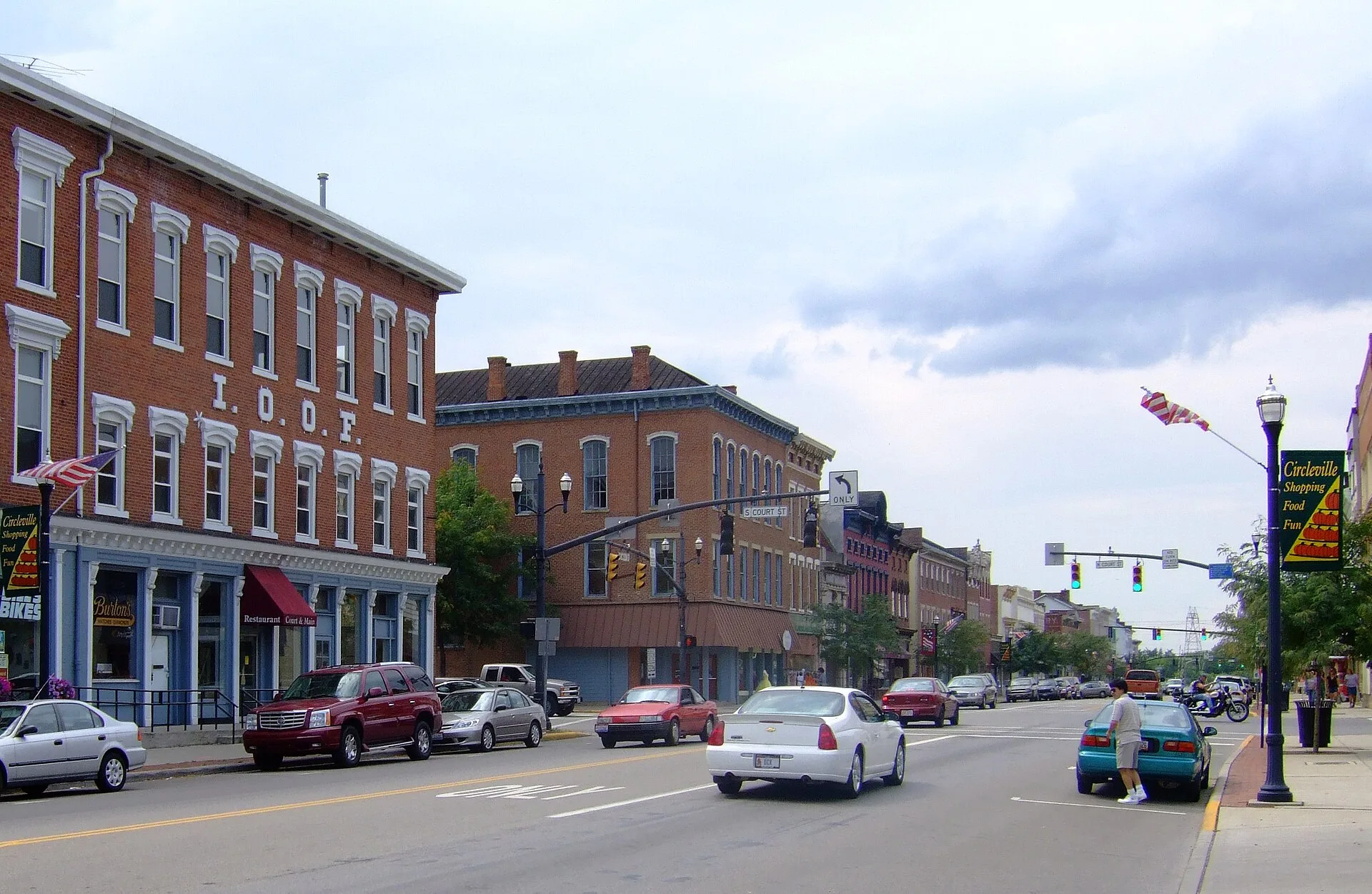
Circleville is the seat of Pickaway County, Ohio, a small town about 25 miles south of Columbus. In 1976 its residents began receiving anonymous handwritten letters that seemed to know a great deal about their private lives. The letters kept coming, in their hundreds, for the better part of two decades, and the one man ever convicted in connection with them spent ten years in prison insisting he had nothing to do with it.
What happened
The first target was Mary Gillispie, a bus driver for the Westfall school district. In 1976 she received a letter, postmarked Columbus, accusing her of an affair with the district superintendent, Gordon Massie, and warning her to end it. Her husband, Ron, then received letters telling him to deal with the affair or be killed. The couple confided in Ron’s sister, Karen, and her husband, Paul Freshour, and at first suspected a fellow bus driver. Signs later went up along local roads repeating the allegations and dragging in the Gillispies’ 12-year-old daughter.
On August 19, 1977 Ron took a phone call from a man who said he was watching the house. He drove off in his pickup with a gun and was later found dead after hitting a tree. One shot had been fired from his own gun, and tests put his blood-alcohol level at 0.16 percent. Sheriff Dwight Radcliff ruled the death an accident, a finding Ron’s family never fully accepted. New letters accused the sheriff of covering up a murder, and over the next years the mail spread to officials and residents across the county. Mary later acknowledged an affair with Massie, but said it began after the letters did.
On February 7, 1983 she spotted a hand-lettered sign with an obscene remark about her daughter fixed to a post along her bus route. Tugging at it exposed a box behind the post with a loaded .25-caliber pistol inside, rigged with string to fire at whoever pulled the sign away. It did not go off. The serial number had been filed down, but investigators recovered it and traced the gun to Paul Freshour.
The investigation
Freshour, an Anheuser-Busch manager with no criminal record, had bought the gun from a co-worker for $35 but said it had gone missing weeks earlier. He had taken that day off work. The sheriff had him provide handwriting samples, and examiners said the writing could be his, although the journalist Martin Yant later called the testing improper. His estranged wife told investigators she believed he was the letter writer. At his trial in October 1983 he was charged with attempted murder, not with writing letters, though 39 of them were admitted as evidence. A report of an unidentified man standing by a yellow El Camino near the spot that day was never followed up. The jury convicted him after about two and a half hours, and he was sentenced to seven to 25 years, with three more for the firearm.
The letters did not stop. Mail postmarked Columbus kept arriving while Freshour was held in prison at Lima, more than a hundred miles away. He was put in solitary confinement, and a letter was even sent to him in prison mocking his failed bid for parole. Investigators suggested he had an accomplice outside. He was paroled in May 1994 after about ten years, and the letters faded out around the same time.
The explanations
The jury’s reading is that Freshour wrote the letters and set the trap, with help from someone outside while he was locked up. In 2021 the CBS program 48 Hours asked a forensic document examiner to compare 49 letters with his known handwriting; she said she was confident they matched, and the program reported his fingerprints on some letters mailed while he was in prison. The opposing reading is that he was framed by someone who knew where to find his gun. It points to the lack of physical evidence linking him to the device, his partial alibi for the day, the ignored sighting near the site, and letters that outlasted his arrest. A former FBI profiler consulted by 48 Hours doubted his guilt and suggested the trap might have been set by someone exploiting the letter campaign rather than by its author.
Where it stands
Unsolved Mysteries brought the case to a national audience in the 1990s. Freshour maintained his innocence until he died in 2012. The authorities consider the matter closed, but nobody has proven who wrote the letters, whether Ron Gillispie’s death was anything other than an accident, or who built the trap on the bus route.