
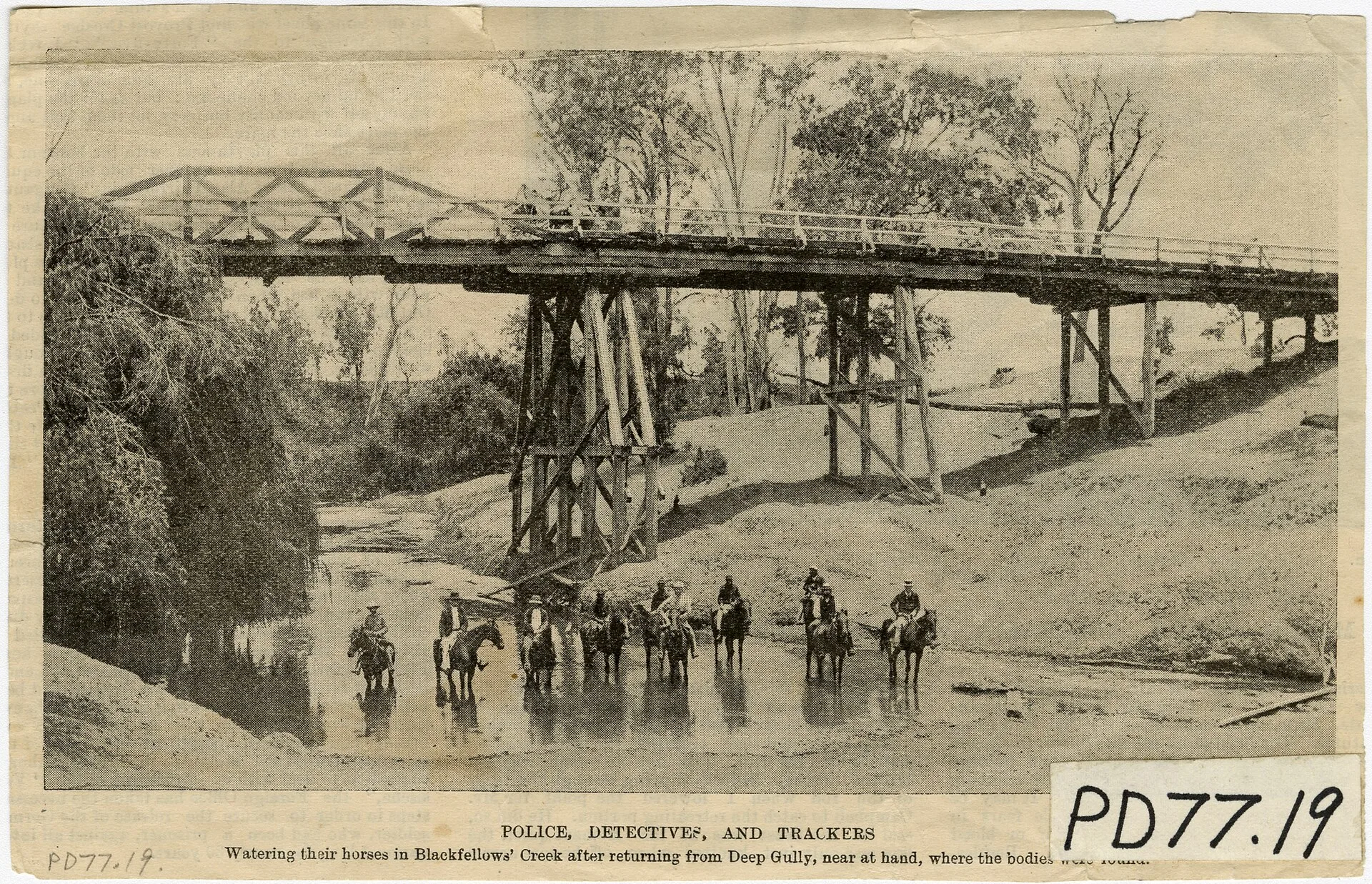
Gatton is a farming town in the Lockyer Valley, about 100 kilometers west of Brisbane. On the night after Christmas 1898, three young adults from a local farming family, Michael, Norah and Ellen Murphy, set out for a dance in town and never came home. They were found the next morning in a paddock off the road, beaten and shot. More than a century later the Queensland Police Museum still describes the case as one of the most baffling unsolved murders in Australian history.
What happened
December 26 was Boxing Day, a holiday. Michael Murphy, 29, who worked away from home and was back for Christmas, had taken his sister Ellen, 18, to the races at Mount Sylvia. That evening he drove Ellen and their sister Norah, 27, into Gatton in a sulky borrowed from their brother-in-law, William McNeill, only to find the dance had been called off. They turned for home and disappeared somewhere on the Tent Hill road.
When they had not returned by morning, McNeill went looking. About three kilometers from town he picked out the tracks of his own sulky, easy to recognize because one wheel wobbled, turning off the road through a set of sliprails into a paddock. At the end of them lay the three siblings and the horse, shot in the head and still in its harness. Both women had been raped and had their hands tied, and all three had crushing head injuries. It was only later, after the bodies were exhumed, that a bullet was found in Michael’s skull.
The investigation
Almost everything that could go wrong did. McNeill rode back to Gatton and spread the news before the police had seen the scene, and dozens of townspeople went out to look, trampling the ground. The local sergeant sent a telegram to Brisbane, but because of the holiday, headquarters did not act on it for about two days, and the detectives sent from the city arrived long after the bodies had been moved. Queensland had a single police photographer for the whole colony, so no pictures were taken where the victims lay. The first autopsy was so cursory that it missed the gunshot wound.
Police interviewed more than a thousand people. The museum’s account names two main suspects. Richard Burgess, a recently released prisoner tramping the district, had an alibi. Thomas Day, a newcomer working for the town butcher and living in a hut near the paddock, had blood on his clothes, which he said came from animals, and scrubbed and boiled a sweater his employer had told him not to wash. In 1898 there was no test that could tell animal blood from human, and no charge followed; Day left the district within weeks. The colonial government offered a reward of £1,000 on January 3, 1899, without result.
Public anger over the handling of this case and another unsolved killing at Oxley led to a royal commission into the Queensland police in 1899. It criticized the detective branch and its head, Inspector Frederic Urquhart, who had blamed the press for silly and unreliable reporting. Urquhart nevertheless kept his post for years and rose to commissioner.
The explanations
The files at Queensland State Archives show how far the case spread beyond Gatton. Hundreds of people across Australia and New Zealand wrote to the police with solutions, and officers filed the letters under the heading “Astrologers, Dreamers, Theorists, etc.” Some writers said the killers’ names had come to them from the spirit world or in trance sessions; two dreamers sent sketches of the men they had seen in their sleep; others offered to go undercover or asked for payment first. Many letters accused McNeill, the brother-in-law, of acting from greed or lust; others proposed revenge over a local pregnancy, rejected suitors, priests or the police. Rumors of dark family secrets also went around, and were never substantiated.
Later writers have mostly returned to Day, pointing to his proximity, his bloody clothing and his disappearance, but nothing tying him to the paddock has ever been produced. Several of the dreamers who wrote in saw two or three attackers, and the idea that one man could have overpowered three adults has troubled readers of the case ever since.
Where it stands
No one was ever charged, and no court or inquest has named the killer. Every principal is long dead, the scene was compromised within hours, and the physical evidence is gone. The Gatton murders remain officially unsolved, and they are remembered as much for what they exposed about policing in colonial Queensland as for the crime itself.