
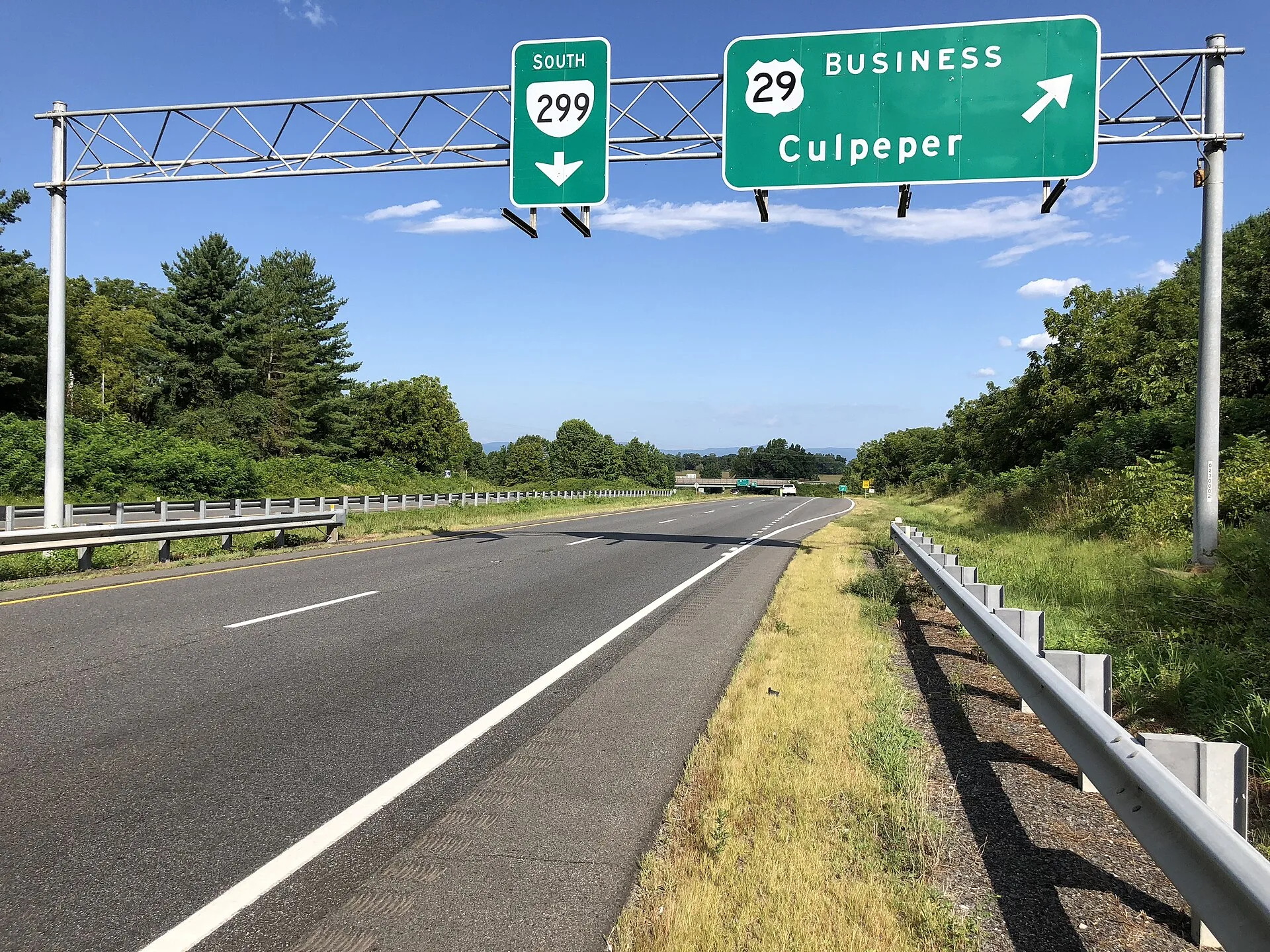
U.S. Route 29 runs north and south through the Virginia Piedmont, linking the Washington suburbs with Culpeper, Charlottesville and points beyond. Since the late 1990s a stretch of it has carried a dark reputation, fed by a series of young women who went missing in the counties it crosses and by the memory of a man who, one winter, seemed to be hunting lone female drivers along it. That man has never been identified. The stalker reports date from early 1996; the best-known 2009 case on the corridor is a separate one that has since been solved.
What happened
On the morning of March 2, 1996, Alicia Showalter Reynolds, a Harrisonburg native working toward a doctorate at Johns Hopkins University, left Baltimore to drive to Charlottesville, where she had arranged to meet her mother at a shopping mall and spend the day together. She never arrived. Her Mercury Tracer was found abandoned beside Route 29 about three miles outside the town of Culpeper, with a white napkin tucked under the windshield wiper, the signal of a motorist in trouble. Her mother kept waiting at the mall for hours, until it was clear she was not coming.
Witnesses told Virginia State Police they had seen the car on the southbound shoulder in Culpeper County, with a man standing beside it. They described him as white, between about 35 and 45, of medium build with light to medium brown hair and standing five feet ten to six feet tall, and said he was driving a dark pickup truck, possibly a green Nissan. Investigators believe he told her something was wrong with her car and that she got into his truck. A composite sketch was released several weeks later. On May 7, 1996, her remains were found in a field being cleared for timber near Lignum, north of where she was taken.
The stalker
As news of the abduction spread, other women came forward. According to the state police, several said that a white man had stopped them, or tried to, as they drove the same part of Route 29 in Culpeper County, often by signaling that something was wrong with their vehicle. Later reporting put the number of women approached in the dozens, and one woman who was targeted escaped with a broken ankle. Residents began calling him the Route 29 Stalker. Reynolds’s mother has said it seems to her that he had been practicing how to stop women before he took her daughter.
The investigation
The case has produced more than 10,000 tips, and state police say they still follow up even on leads first phoned in during the 1990s. No suspect has ever been publicly named. It has been suggested that the stalker was Richard Evonitz, a serial killer who abducted and murdered girls in nearby Spotsylvania County in the same period and killed himself in 2002 as police closed in, but that link has never been confirmed. On March 2, 2026, the thirtieth anniversary, the state police issued a fresh appeal with the composite sketch.
The corridor legend
Over the following two decades other cases were added to the story of Route 29. Morgan Harrington, a Virginia Tech student, vanished after a concert in Charlottesville in October 2009 and was found dead on a farm months later. Samantha Clarke disappeared from Orange in 2010, Sage Smith from Charlottesville in 2012. Lists of the corridor’s victims have circulated online and on television, and with them the idea of a single predator working the highway for years.
The record does not support that idea. In 2013 Richmond television reporters noted that nothing connected the Reynolds case to any of the others. Harrington’s murder, along with the later killing of Hannah Graham, was ultimately traced to a different man, who was convicted, and other cases on the list have different circumstances or no suspect at all. A highway that carries heavy traffic through a large region will be the last known road for many people, and that geography alone can make unrelated tragedies look like a pattern.
Where it stands
The Route 29 Stalker was real in the sense that matters most: a man who flagged down women on a rural highway in early 1996 and, police believe, abducted and killed Alicia Showalter Reynolds. Who he was remains unknown, and the case is still open. The larger legend of one man behind every disappearance along the corridor is not borne out by the cases that have been solved.