
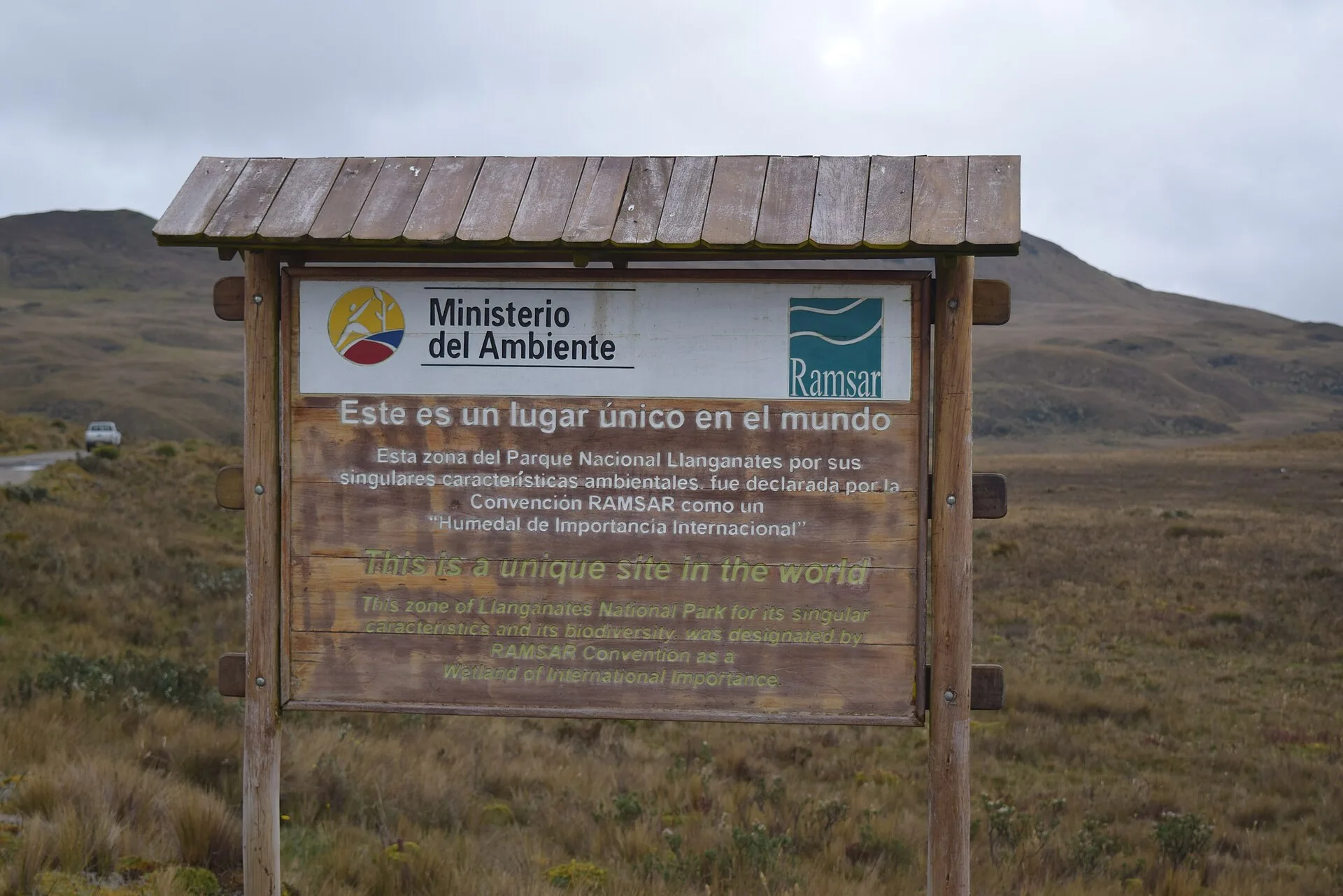
The Llanganates are a maze of high grassland, bog and cloud forest on the eastern side of the Andes in central Ecuador, between the highland towns of Píllaro and Ambato and the Amazon lowlands. For more than four centuries they have been said to hide the gold that the Inca general Rumiñahui was bringing to ransom his ruler, Atahualpa. Most of the range now lies inside Llanganates National Park. No part of the treasure has ever come out of it.
The legend
Francisco Pizarro seized Atahualpa at Cajamarca in November 1532 and had him killed in July 1533, after the Inca had begun filling a room with gold to buy his freedom. The version told in Ecuador holds that a further convoy of ransom was on its way south when the news of the execution reached it, and that Rumiñahui, Atahualpa’s commander in the north, had the loads carried east into the mountains and hidden, sunk in a man-made lake in some tellings and sealed in a cave in others. Rumiñahui went on fighting the Spanish until he was captured and put to death, and he never gave up the secret. Estimates of the hoard swing widely; one popular history puts it at 750 tons of gold, a figure with no document behind it.
Valverde’s guide
What turned the rumor into a route was a Spaniard remembered only as Valverde. The story the English botanist Richard Spruce heard in Baños in 1857 was that Valverde had been poor, married a local Indigenous woman, and became rich after her father led him to the gold on several trips. Back in Spain and dying, he left the secret to the king. Spruce went on to collect what he called indisputable evidence that the king had then sent Valverde’s derrotero, or route, to the corregidors of Latacunga and Ambato with a royal order to search. One official party, led by the corregidor of Latacunga with a respected friar, Padre Longo, followed it nearly to its end before Longo vanished from camp one evening and was never seen again. The originals were later stolen from the Latacunga archive. Spruce obtained a copy dated August 14, 1827, and published his translation, with a map by the Spanish botanist and prospector Atanasio Guzmán, in the Journal of the Royal Geographical Society in 1861.
The guide is a chain of landmarks. Start in Píllaro, find the Moya farm, climb the hill of Guapa, and look east for three peaks in a triangle with a lake on their slope where the ancients threw the gold. Then comes a wide morass, two little lakes known as Los Anteojos (“the spectacles”) for the nose of land that divides them, and a great black lake to be kept on the left, followed by ravines and further marks. Spruce, who had dismissed the story at first, judged that the opening stages fit the ground too well to have been written by anyone who had not walked it.
The searchers
Guzmán, working out of Píllaro around 1800, found old silver and copper workings rather than treasure, and died about 1806 or 1808 after walking off a drop in his sleep. Two veterans of earlier parties told Spruce at Baños that they had spent a month lost on the high grassland and had almost starved and frozen. Spruce’s paper drew a new wave of hunters. A sailor called Barth Blake is said to have written letters about a cave of Inca gold and vases full of emeralds, then gone overboard on the way to New York, though accounts of his story disagree even on the decade. The British journalist Mark Honigsbaum tried the route in the early 2000s and told the story in Valverde’s Gold (2004) without reaching the site; he came away suspecting the gold had been removed long ago, if it was ever there.
Where it stands
The skeptical points are simple. No record shows that Valverde existed, the royal order is known only from Spruce’s informants, and the later directions are vague enough that every party reads them differently. Spruce’s editor noted that most expeditions abandoned the guide early, going the wrong way around the black lake. The archaeologist Johan Reinhard, interviewed by National Geographic, observed that most searchers had followed Guzmán’s map toward mines at the north end of the range rather than the ground Valverde describes; he doubted any gold would be found but thought a careful survey might turn up Inca sites. The lakes, bogs and peaks of the guide are real. The hoard at the end of it is a legend.