
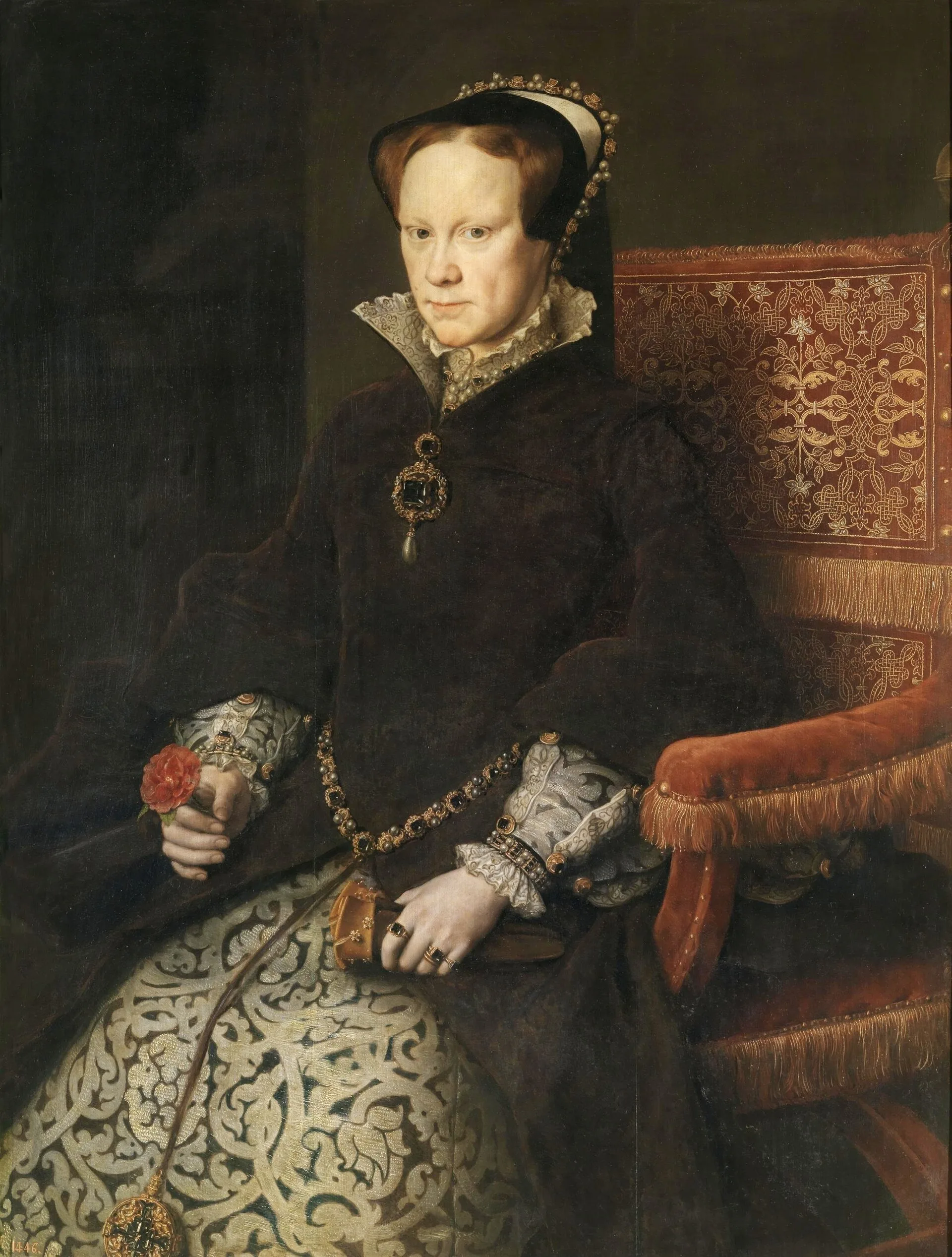
The instructions vary by school and by decade, but the shape is always the same. Go into a bathroom, switch off the light, perhaps light a candle, face the mirror and say the name. Three times, or thirteen, or until the mirror turns red. Then she appears: a woman’s face behind your own, who may scratch you, drive you mad, pull you through the glass, or simply look back. Bloody Mary is the most widely performed piece of American children’s folklore, and folklorists have been collecting it for nearly fifty years.
What happened
The first scholarly account was published in 1978 by Janet Langlois, who had collected versions of the ritual from schoolchildren in Indianapolis. There the figure was usually called Mary Whales, sometimes Mary Worth, and the children already disagreed about who she had been: a girl killed in a car crash whose face was ruined, a witch, a woman who had lost or murdered a child. Langlois’s paper, “Mary Whales, I Believe in You”, was reprinted in Indiana University Press’s 1980 reader on the state’s folklore and established the ritual as a subject worth studying rather than a playground oddity. Later collections show the same game under dozens of names, among them Bloody Mary, Mary Johnson, Hell Mary, Kathy, Agnes and, in Sweden, the Black Madame.
When Snopes examined the legend in 2001 it found belief in summoning the mirror-witch widespread across the United States, usually among girls at sleepovers, with the key details endlessly renegotiated: the number of repetitions, the candle, whether the summoner spins, what she must say, and what Mary does when she comes. Entries in the USC Digital Folklore Archive from the 2010s show the same thing still being taught by older girls to younger ones, now with the warning that it kills you.
The investigation
The best-known interpretation belongs to Alan Dundes of the University of California, Berkeley, the leading American folklorist of his generation and a committed Freudian. In a 1998 paper in Western Folklore, later the title essay of his 2002 book “Bloody Mary in the Mirror”, he noted the things that the stories themselves emphasize: the ritual is performed almost entirely by girls between about seven and twelve, in a bathroom, in front of a mirror, and the thing they expect to see is blood on a woman’s face. He read it as a rehearsal, in play, for the arrival of menstruation, something the children could not discuss directly but could stage as a dare. The argument is not universally accepted, but no rival explanation has displaced it, and the pattern of who plays and where is not in dispute.
Psychology offers the mechanism. Staring at your own face in a dim mirror for a minute or more makes it appear to shift, blur and sometimes become someone else’s; add a chant, a dark room, a candle and a crowd of friends expecting the worst, and a glimpse of something is very likely. The game works because perception is doing exactly what it is asked to do.
The explanations
The attempts to find a real Bloody Mary are the weakest part of the story. The obvious candidate is Mary I of England, who reigned from 1553 to 1558 and earned the nickname by burning Protestants in her effort to restore Catholicism after her father and brother. Nothing about her life involves mirrors, girls or blood baths; she was a devout, unglamorous woman in her forties whose cruelty was legal and religious. The second candidate, Elizabeth Báthory, a Hungarian countess who lived from 1560 to 1614 and was walled up in her castle after accusations that she had tortured and killed young women, is where the blood-bathing story properly belongs, and even in her case it is a later embellishment. Neither woman was called Mary Worth, and the children who summon Mary Worth have generally never heard of either.
The name Mary Worth itself is sometimes traced to the newspaper comic strip of that title, which began in the 1930s, though no one has shown a connection beyond the coincidence. The likeliest truth is that the legend came first and the biographies were attached later, by children and then by adults who wanted the ghost to have been somebody.
Where it stands
Bloody Mary has never been documented appearing to anyone, and no one has been scratched, killed or pulled through a mirror in a way that reached a newspaper. As a ghost she is a legend. As a ritual she is one of the most durable and most studied in the English-speaking world, performed by each new cohort of ten-year-olds and carried into films from “Candyman” onwards. The academic reading, that it is a game about growing up dressed as a game about the dead, explains why it has survived every change in what children watch and read.