
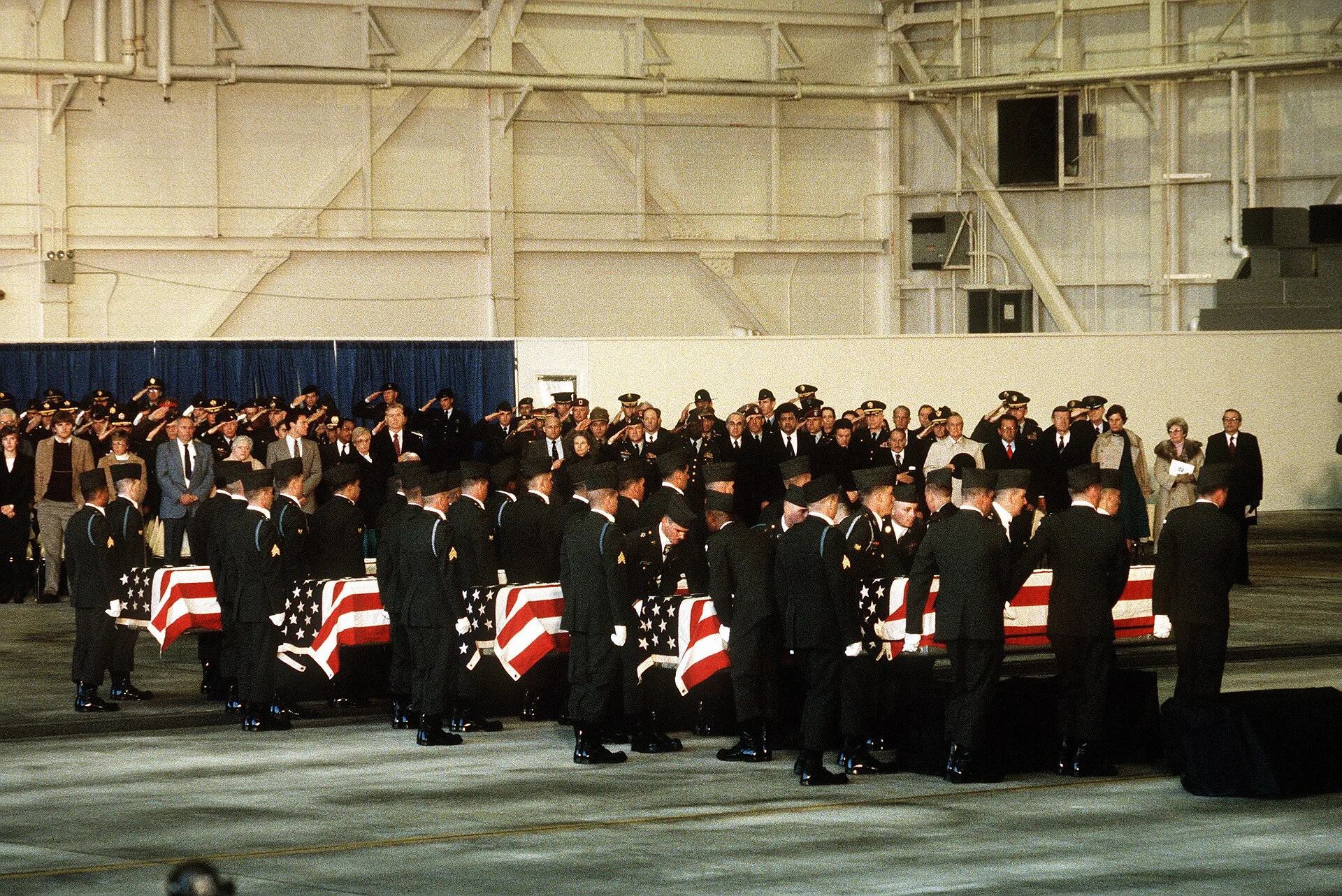
Shortly before seven on the dark winter morning of December 12, 1985, a chartered Arrow Air DC-8 lifted off from Gander, Newfoundland, on the last leg of a long trip home. On board were 248 American soldiers, nearly all from the 101st Airborne Division, returning to Fort Campbell, Kentucky, after six months with the Multinational Force and Observers in the Sinai, plus a civilian crew of eight. The jet had flown from Cairo via Cologne and stopped at Gander to refuel. It barely climbed. Less than a minute after leaving the runway it came down on a wooded slope short of Gander Lake, broke apart and burned. Everyone aboard died. It is still the deadliest air crash on Canadian soil and the worst peacetime air disaster in the US Army’s history.
What happened
Witnesses saw the aircraft struggle to gain height, cross the Trans-Canada Highway very low and sink toward the trees. Some drivers on the highway reported a glow or flames before impact. Within hours a caller to a news agency in Beirut, claiming to speak for Islamic Jihad, said the group had destroyed the plane; US and Canadian officials dismissed the claim, and the White House said there was no evidence of sabotage. The flight recorders gave investigators little to work with. The cockpit voice recorder’s microphone had not been working, so it captured nothing useful, and the old foil-tape data recorder logged only four basic parameters.
The split report
The Canadian Aviation Safety Board, which led the inquiry, took nearly three years and ended in open division. In 1988 five of its nine members signed a report concluding that the DC-8 had stalled at low altitude because of extra drag and lost lift, most probably from a thin roughening of ice on the leading edges and upper wing surfaces picked up in freezing drizzle at Gander. The aircraft had not been de-iced, its weight had been underestimated and the crew used takeoff reference speeds unsuited to its true weight; a possible loss of power in one engine may have made matters worse. Even the majority conceded it could not establish the exact sequence of events.
The other four members, two of them aeronautical engineers, wrote their own report. They said no evidence showed that ice had actually been present and pointed instead to an in-flight fire, possibly caused by detonations of undetermined origin, that led to catastrophic system failures. One dissenter, Les Filotas, later wrote a 553-page book, Improbable Cause, accusing the board of ignoring evidence that did not fit the ice theory. The government asked a retired Supreme Court of Canada justice, Willard Estey, to review the case. In 1989 he concluded that the evidence did not support ice contamination but that it did not prove the dissenters’ case either, and he advised against reopening the inquiry, saying further probing would be unfair to the families. Confidence in the board collapsed, and in 1990 Canada replaced it with the independent Transportation Safety Board.
The theories
In the United States the doubts grew into a cover-up theory. Families of the dead formed a group, Families for Truth About Gander, and hired a private investigator. A 1992 Time magazine article, entered into the Congressional Record by Representative Robin Tallon of South Carolina, set out their case: Arrow Air had flown arms shipments for Oliver North’s Iran-Contra network, crates were said to have been loaded in Cairo without customs inspection, firefighters reported dozens of secondary explosions, and witnesses described flames before the crash. Some suggested the target was special-operations soldiers aboard. A House Judiciary subcommittee held hearings in December 1990, and a congressional staff report quoted by the columnists Jack Anderson and Dale Van Atta called the FBI’s brief stay in Gander unacceptable and criticized the National Transportation Safety Board’s role. Tallon’s bill for a new commission went nowhere.
Where it stands
No investigator has produced bomb components or explosive residue, the Islamic Jihad call was never corroborated, and the secondary blasts firefighters reported could have come from a fully fueled airliner and its cargo burning on the ground. On the other side, the majority finding rests on ice that nobody saw and that left no physical trace, which is why a judge would not endorse it. Later accidents, including Air Ontario Flight 1363 at Dryden in 1989, showed how little ice it takes to bring down a jet on takeoff, and de-icing rules changed. Memorials at Gander, Fort Campbell and Hopkinsville, Kentucky, mark the loss. The official cause remains icing; the case for an explosion remains unproven.