
The Bilderberg Meeting is an annual, invitation-only conference of about 130 people from politics, business, finance, academia and the press, held under rules that forbid attribution. It has met almost every year since 1954, and for most of that time it declined to say even that much. The silence left a vacuum, and a world government moved in to fill it.
What happened
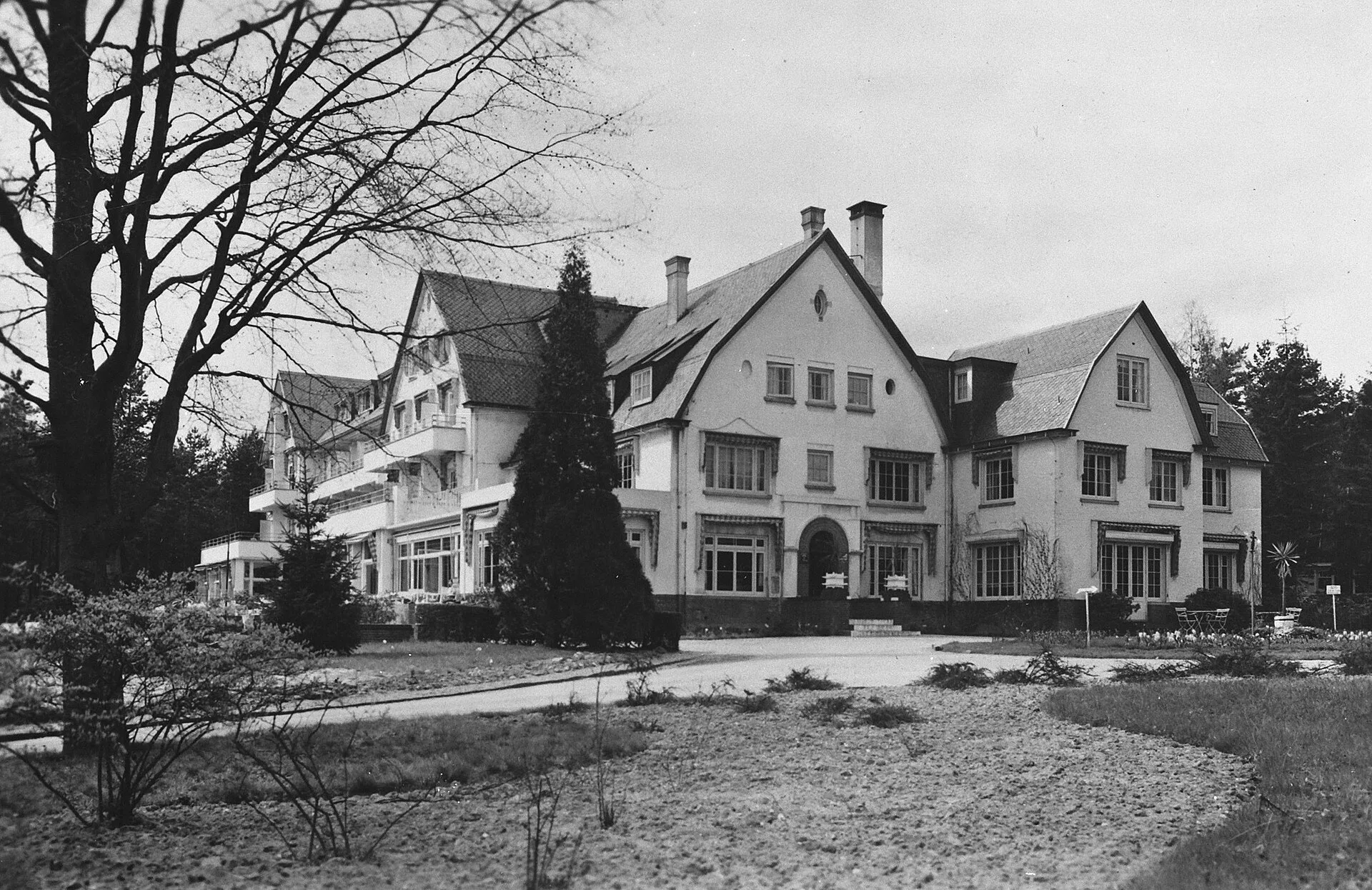
The first meeting ran from 29 to May 31, 1954 at the Hotel de Bilderberg in Oosterbeek, near Arnhem in the Netherlands, and took its name from the building. The organizer was Józef Retinger, a Polish émigré and advocate of European union, who was worried by anti-American feeling in Western Europe and by American impatience with Europe. He recruited Prince Bernhard of the Netherlands to chair it, enlisted the Belgian former premier Paul van Zeeland and the Unilever chairman Paul Rijkens, and secured American participation through contacts in the Eisenhower administration. Delegates came from eleven Western European countries and the United States. The format set then has barely changed: a long weekend in a sealed hotel, no detailed agenda, no resolutions, no votes and no statement at the end.
Bernhard chaired until 1976, when the Lockheed bribery scandal forced him out and the meeting was canceled; it has been skipped only once since, in 2020. Later chairmen included Alec Douglas-Home, Lord Carrington and the Belgian commissioner Étienne Davignon; since 2012 the French insurance executive Henri de Castries has led the steering committee, the body of around thirty regulars that chooses the venue, the topics and the guest list. Meetings have moved around Europe and North America: Watford in 2013, where David Cameron attended; Montreux in 2019.
The investigation
The public record is thinner than for most conferences but not empty. Since 2010 the organization has run a website that publishes, each year, a press release with the list of topics and the full list of participants, together with the names of the steering committee. Its own description, archived in 2019, puts roughly two in three attendees in Europe and the remainder in North America, with about a third drawn from politics and government, and says the meeting runs under the Chatham House Rule: what is said may be repeated, who said it may not. Academic work has followed. The political scientist Lukas Kantor, interviewed by the Georgetown Journal of International Affairs in 2025, describes a club whose membership confers social capital, and lists guests who rose after attending: Bill Clinton in 1991, two years before his presidency; Ursula von der Leyen, Mark Rutte and Jens Stoltenberg before their European and NATO posts.
The explanations
The conspiracy version is older than the website. In 1964 Phyllis Schlafly’s campaign pamphlet A Choice Not an Echo accused “secret kingmakers” of fixing Republican nominations at Bilderberg; the John Birch Society made the meeting a fixture of its literature; from the 1970s the American journalist Jim Tucker spent decades staking out its hotels, and the theme passed to Alex Jones and to Daniel Estulin’s bestselling The True Story of the Bilderberg Group. The claim in all of them is that the meeting is where wars are decided, markets rigged and presidents chosen.
What the record supports is narrower. People who later held high office attended Bilderberg; so did many people who never did. An invitation is a sign of being thought promising by the steering committee, which is a form of influence, and Kantor argues that this is a legitimate concern about inequality and access rather than a plot. No participant, leak or document in seven decades has shown a decision taken there, and the meeting’s own rules make one hard to imagine: there is nothing to vote on. The group’s refusal for years to confirm its existence, its guarded hotels and its police cordons did the conspiracy theorists’ work for them.
Where it stands
Bilderberg is a private conference with a public guest list. Its secrecy covers what was said, not who was there or what was on the table. That is enough to keep a great many people interested, and not enough to make a government.