
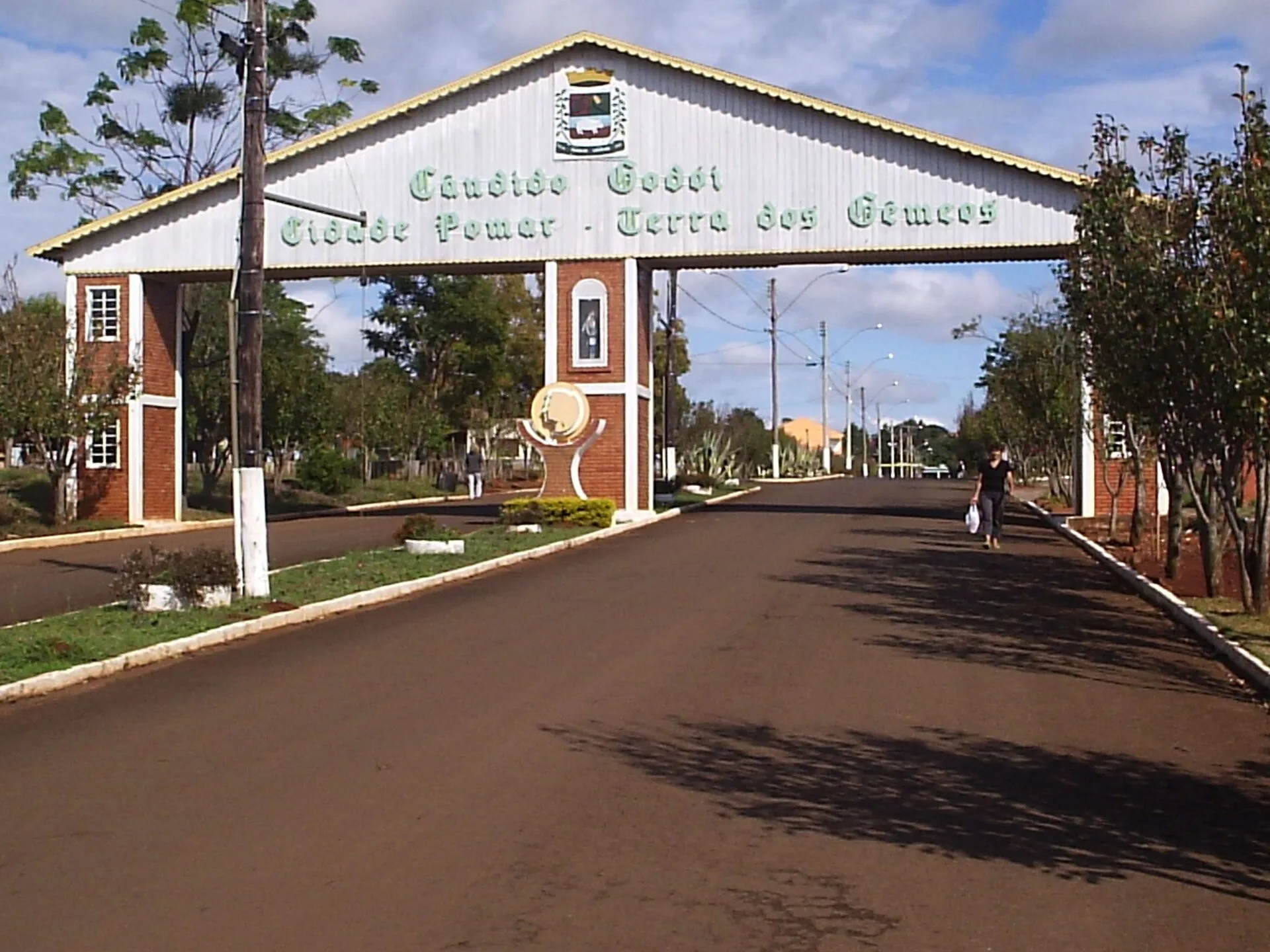
Cândido Godói is a small municipality in the far northwest of Rio Grande do Sul, Brazil’s southernmost state, a few kilometers from the Argentine border. It was settled in the early twentieth century by German-speaking immigrants, many of whose families came from the Hunsrück, and it has about 6,000 inhabitants. A sign at the entrance calls it Terra dos Gêmeos, the Land of Twins, and the name is earned: in the district of Linha São Pedro the proportion of twin births is several times the national figure.
What happened
The town’s reputation is old. Local tradition holds that the first settlers already included an unusual number of twins. The first scientific look came in 1994, when the community itself invited geneticists from the Federal University of Rio Grande do Sul in Porto Alegre to find out why. Their 1996 paper reported that between 1990 and 1994 one birth in ten in Linha São Pedro was a twin birth, against 1.8 percent across the state, that twinning ran strongly in families, and that the community was highly inbred. Of 17 pairs typed, nine were fraternal and eight identical, a higher share of identical twins than usual.
The story went global in 2008, when the Argentine journalist Jorge Camarasa published a book on Josef Mengele’s years in South America. Mengele, the Auschwitz doctor whose camp experiments on twins made him a byword for Nazi medicine, lived in hiding in Paraguay and Brazil from 1959 until he drowned in 1979. Camarasa suggested that in the early 1960s Mengele had traveled the region posing as a vet, treating local women, and that the twins were the result. Some residents recalled a German doctor who had visited farms. Newspapers from the Telegraph to the New York Times picked it up, and the town acquired a mystery to go with its name.
The investigation
The same Porto Alegre group tested the claim directly. In a 2011 paper in PLoS ONE, Alice Tagliani-Ribeiro, Ursula Matte, Lavinia Schuler-Faccini and colleagues went through 6,262 baptism records in the town’s Catholic churches from 1959 to 2008 and found 91 pairs of twins and one set of triplets. If Mengele had been dosing women with something in the mid-1960s, the twin rate should have spiked in 1964 to 1968 and then declined as his supposed treatment wore off. It did neither: there was no surge in those years and no downward trend since, and the rate was the same across the town’s districts both before and after 1959. The twins also predated his arrival in South America.
The alternative they proposed is a founder effect. A town settled by a handful of families carries whatever rare traits those families happened to have, and if the families then marry among themselves the traits concentrate. An analysis of surnames showed that women who had borne twins had a markedly higher inbreeding coefficient than women who had not, 0.0148 against 0.0081. A 2012 study by the same group reported an association between twinning in the town and a variant of the TP53 gene, and a 2018 study ruled out two other candidate genes. In 2019 the group summarized a quarter-century of work under the title Solving the Twins Mystery, noting that the Nazi theory had received the most media attention despite having no scientific basis.
The explanations
The Mengele story survives because it is a better story, and because Mengele really was in Brazil. But the people who have made it are journalists, and their evidence is recollection: an unnamed German who visited farms, decades ago, in a region full of German speakers. Camarasa’s book offered no documents placing Mengele in Cândido Godói, and the records show the twins were there before he was. The genetic explanation is less dramatic and better supported: Cândido Godói is one of several isolated communities in the world, with Igbo-Ora in Nigeria and Kodinhi in India, where small founding populations and local marriage have produced a twin rate far above the average.
Where it stands
The twin rate is real, documented and continuing, and the town has made it part of its identity. The research group that has worked there since 1994 regards the Nazi hypothesis as excluded by the records and the founder effect as the most likely cause, with work ongoing on the genetics of twinning that the community’s unusual history makes possible. The mystery, in the sense the headlines meant it, is solved; the science of why some families have twins and others do not is still open.