
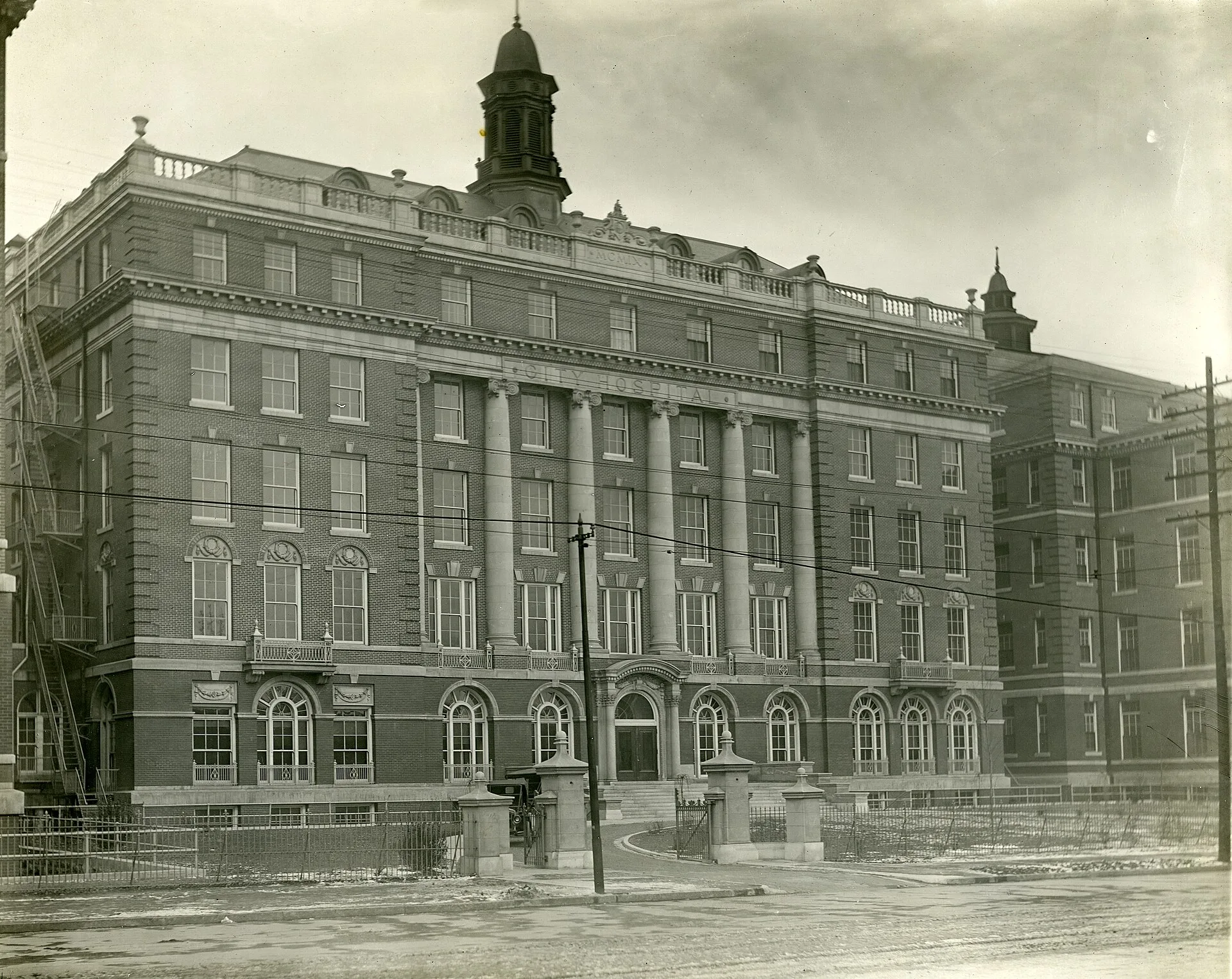
In 1968 a fifteen-year-old from the Old North neighborhood of St. Louis walked into City Hospital on Lafayette Avenue on his own. His legs and genitals were grossly swollen, he was thin and pale, and he said the trouble had been building for well over a year. His family was poor, he spoke very little, and in the ordinary run of a charity ward his case would have been forgotten. Instead a handful of young doctors at Washington University became fixated on it, kept his tissue in a freezer, and nearly twenty years later his name entered the history of AIDS. In the medical literature he is Robert R.; he was Robert Rayford, born February 3, 1953.
What happened
Nothing his doctors tried worked. Weeks of antibiotics did not touch the swelling, which spread until fluid filled much of his body. The lymphologist Marlys Witte suspected a chlamydial disease, and the microbiologist Memory Elvin-Lewis, newly hired at the university’s dental school, spent weeks culturing his blood and body fluids. She found Chlamydia throughout his system, including in the bloodstream, where it had never been isolated, yet his body mounted almost no antibody response to it. He was moved to Barnes Hospital and later to Deaconess. Tests showed a collapsing count of the white blood cells that coordinate immunity. Elvin-Lewis later described a wasted, frightened boy who would not say a word while she was in the room.
He died of pneumonia on May 15, 1969, at sixteen. At the autopsy the pathologist William Drake found purple lesions on the left thigh and inside the body, including the rectum, and identified them as Kaposi’s sarcoma, a cancer then associated with elderly men of Mediterranean or Jewish descent and with a form seen in African children. Asked about his history, Rayford had mentioned only one girlfriend; scarring found after death led some doctors to wonder about sexual abuse or sex work. In 1973 Witte, Elvin-Lewis and colleagues described the case in the journal Lymphology as a systemic chlamydial infection, and it went into the file of unsolved puzzles.
The investigation
In 1981 the Centers for Disease Control began recording unusual pneumonias and Kaposi’s sarcoma in young gay men, and the syndrome soon called AIDS was traced to a new retrovirus, HIV. Witte noticed the resemblance to her patient and said so in a 1984 letter to the Journal of the American Medical Association. Samples Elvin-Lewis had kept from the autopsy went to Robert F. Garry, a retrovirologist at Tulane University in New Orleans.
The news leaked before any paper appeared. On October 25, 1987 the Chicago Tribune reported that Rayford’s blood reacted to all nine HIV proteins on Garry’s Western blot, and the St. Louis Post-Dispatch followed with a front-page headline asking whether a local teen had died of AIDS in 1969. The formal report, signed by Garry, Witte, Elvin-Lewis, Drake and others, came out in JAMA on October 14, 1988. It described a sixteen-month illness ending in aggressive, widespread Kaposi’s sarcoma, and Western blot and antigen tests on serum and tissue frozen since 1969 showing infection with a virus closely related or identical to HIV-1. Garry later said that genetic material had been detected and that the strain resembled one first isolated in France, but no sequence was ever published in a peer-reviewed journal. That French strain was also a standard laboratory virus in the 1980s, which complicates the claim more than it settles it.
The explanations
If the result is sound, HIV was killing people in the American Midwest more than a decade before the epidemic was noticed. That is difficult to square with later work. A 2016 genetic study led by Michael Worobey, using blood stored from the 1970s, placed the virus’s arrival in the United States from the Caribbean at about 1970, with New York City as the early hub. Rayford would then represent a separate, earlier introduction that died out, perhaps one of several that never took hold. Garry favored that view; James Curran of the CDC told Time in 1987 that a single entry made little sense. How a boy who had never left the St. Louis area, had no record of a transfusion and did not use drugs could have been infected has never been answered. Claims spread online that a relative abused him are unsupported, and both of his grandparents died in 1966 of unrelated causes.
Where it stands
The question cannot be reopened. Garry’s freezers in New Orleans lost power after Hurricane Katrina in 2005 and the last samples were compromised. Anthony Fauci summed up the scientific position as likely but not nailed down. No confirmed photograph of Rayford exists. He remains, on the strength of a single set of 1980s tests, the earliest proposed case of AIDS in North America, and the question of how he caught it is still unanswered.