
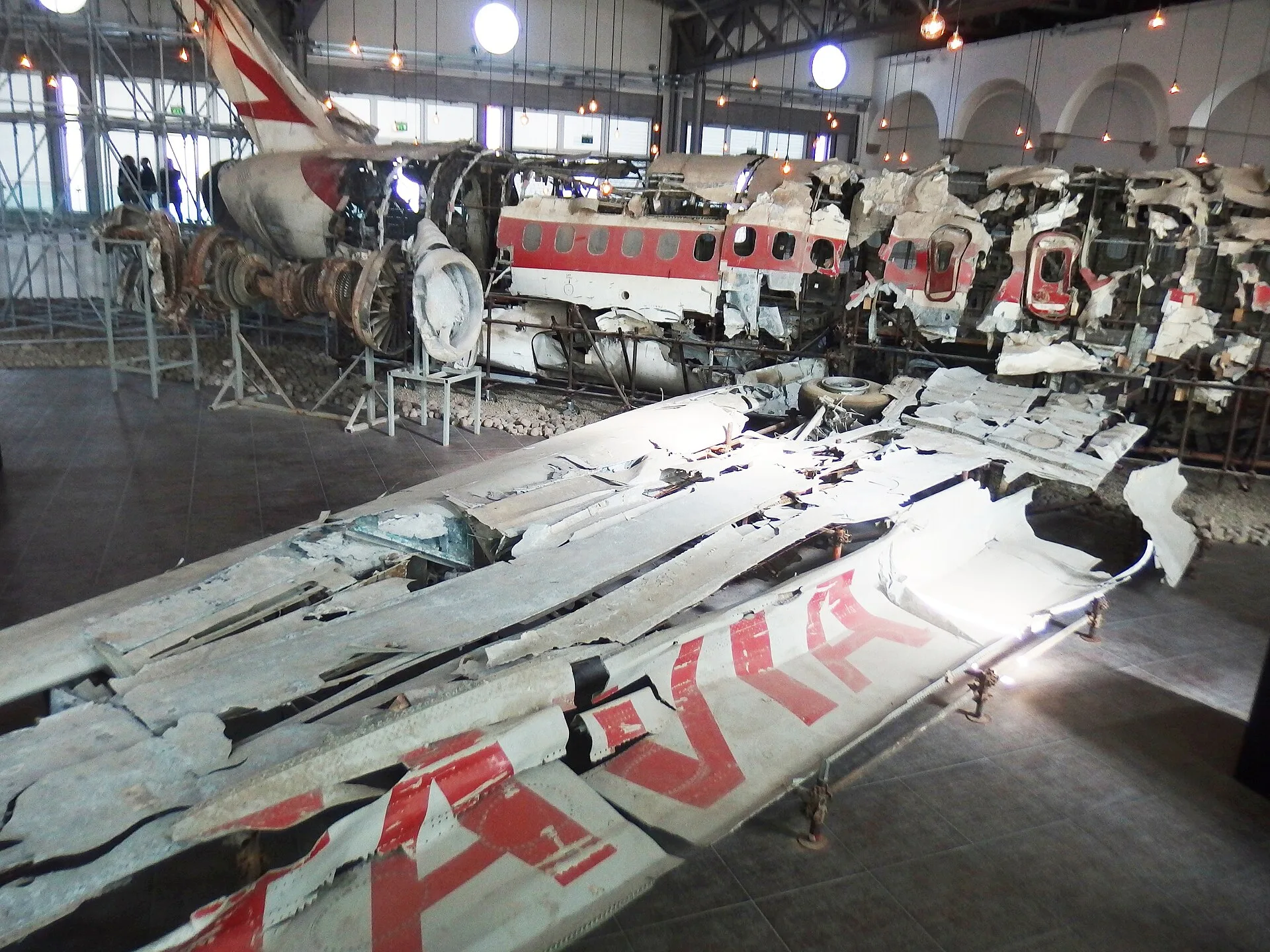
On the evening of June 27, 1980 an Itavia DC-9 left Bologna almost two hours behind schedule for the short hop to Palermo. Aboard were 77 passengers, eleven of them children, and a crew of four. The flight was routine until shortly before 9 p.m., when the jet disappeared from radar over the Tyrrhenian Sea north of Ustica, a small volcanic island off Sicily. Searchers found an oil slick, floating debris and some of the dead the next morning. Nobody survived. In Italy the event is known simply as the Ustica massacre, and after more than four decades of inquiries, trials and civil suits, nobody has been held criminally responsible for it.
What happened
The airliner broke up at cruising altitude without a distress call. Most of the wreck lay on the seabed more than 3,000 meters down, out of reach until a deep-water salvage operation in the late 1980s and early 1990s brought most of the fuselage to the surface. The fragments were laid out in a hangar at Pratica di Mare air base near Rome and later moved to Bologna, where since 2007 they have been displayed in a museum built around the reconstructed aircraft.
Two broad explanations have competed ever since. One is that a bomb exploded on board, most likely in the rear lavatory, in a decade when Italy suffered repeated terrorist bombings; the late departure from Bologna could explain why a timed device went off over the sea instead of on the ground. The other is that the DC-9 was hit by a missile, or brought down by a near-collision, during a clandestine air engagement involving NATO and Libyan aircraft. That theory gained force from Italian air defense radar records that showed unidentified tracks near the airliner, from logbooks and tapes that went missing, and from a Libyan MiG-23 found crashed in the Sila mountains of Calabria three weeks later.
The investigation
The technical work produced opposite answers. An international panel of experts appointed by the investigating magistrate, which included the British accident investigator Frank Taylor, reported in 1994 that the damage pattern pointed to an internal explosion in the rear toilet and excluded a missile. Critics noted that the toilet seat had been recovered intact and that British laboratory tests found no explosive residue. In 1999 Judge Rosario Priore closed his long investigation with a ruling that rejected the bomb finding, described the loss as the result of a military interception in what he called an undeclared act of war, and said his work had been deliberately obstructed. Senior air force officers were then tried for obstructing the inquiry. All were acquitted or saw charges lapse, and Italy’s Court of Cassation closed that criminal case in 2007.
The civil courts went further. In 2011 a Palermo tribunal ordered the defense and transport ministries to compensate victims’ families for failing to protect the flight. In January 2013 the Court of Cassation held that a missile fired from an unknown source was the cause, a conclusion a Palermo appeals court restated in April 2015, rejecting the bomb and structural-failure theories. According to ANSA, when the supreme court upheld a 265-million-euro award to the bankrupt airline in December 2018, it described the cover-ups surrounding the disaster as definitively established.
Who fired
The courts never said whose missile it was. In 2008 Francesco Cossiga, who was prime minister in 1980, told an interviewer he had been informed by the Italian intelligence services that French aircraft were responsible, and Rome prosecutors opened a new file. In 2023 another former prime minister, Giuliano Amato, said publicly that a French missile meant for a jet believed to be carrying Muammar Gaddafi had struck the airliner. France, the United States and NATO have long denied any military activity in the area that night, and neither former prime minister offered documentary proof.
Where it stands
In March 2025 Rome prosecutors asked a judge to close the investigations opened in 2008 and 2022. Their request, as reported by Avvenire, still ruled out the bomb and favored an aerial battle, but said they could not identify the aircraft involved or their nationality, and complained of incomplete and sometimes misleading answers from allied governments. Families led by Daria Bonfietti, whose brother died on the flight, opposed the closure. At a hearing on September 30, 2026 the prosecutors withdrew their request after the French embassy said Paris was ready to hand over documents, including two from the French defense ministry, covering 1981 to 1994; the judge has yet to rule. The Ustica case remains open, with a civil finding of a missile and no proven answer to who fired it.