
For three decades a hidden planet has been about to destroy the Earth. It has been called Nibiru, Planet X and a dozen other names, and it has been due in 2003, in 2012, in 2017 and on several dates in between. Each time it failed to appear. The story is a blend of a fringe reading of ancient Mesopotamian texts, a self-described psychic’s website and end-of-days prophecy, kept alive online by the claim that NASA knows the truth and is hiding it.
Where the planet came from
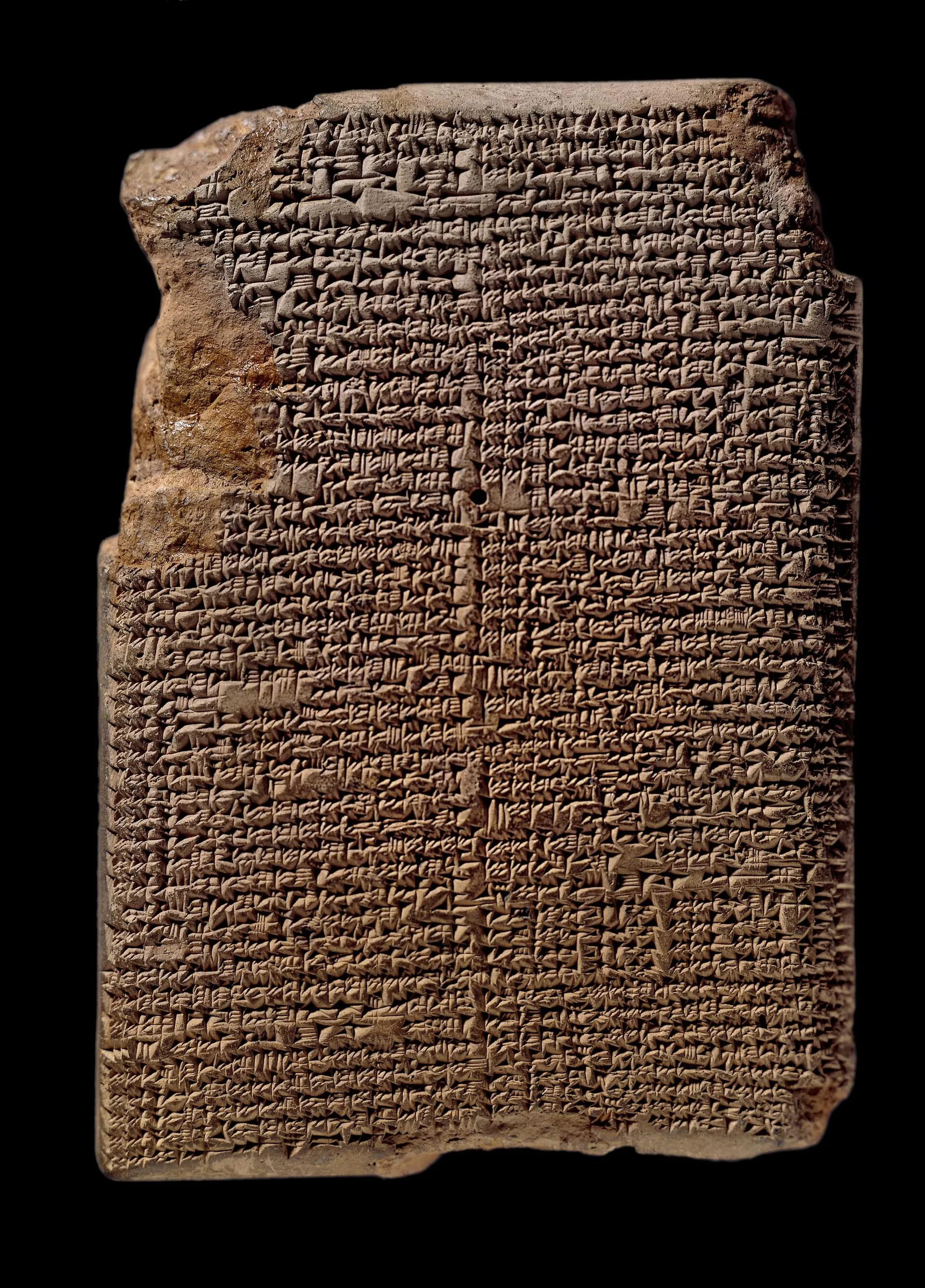
The name comes from Zecharia Sitchin, a writer born in Baku in 1920, raised in Palestine and later settled in New York. In The 12th Planet, published in 1976, he argued that Sumerian and Babylonian texts describe an unseen world called Nibiru that loops through the inner solar system on a 3,600-year orbit. Its inhabitants, the Anunnaki of Mesopotamian myth, had visited Earth in ancient times and engineered the human race. In Sitchin’s version a collision between Nibiru and a planet named Tiamat had long ago produced the Earth and the asteroid belt. The book sold widely and seeded a whole genre of ancient-astronaut writing.
Scholars who read cuneiform rejected the reading from the start. Nibiru does appear in Babylonian sources, but as an astronomical term associated with the god Marduk, and in the creation poem Enuma Elish it is a minor element, recorded long after Sumer had faded. The Sumerians left few astronomical records and had no notion that planets circle the Sun, an idea that came from Greece some two thousand years later. Sitchin himself never predicted that Nibiru would strike in his lifetime; late in life he placed its last pass in the sixth century BCE, which put its return some nine centuries in the future.
The doomsday dates
The catastrophe was added by Nancy Lieder, a Wisconsin woman who said aliens from the star system Zeta Reticuli communicated with her through an implant. On her website, ZetaTalk, launched in 1995, she warned that a planet several times larger than Earth would pass close by in May 2003, halting the planet’s rotation and flipping its poles. She soon identified her Planet X with Sitchin’s Nibiru, though Sitchin rejected the connection.
When May 2003 passed, believers moved the date to December 21, 2012, the end of a cycle in the Maya Long Count calendar that many writers had already turned into an apocalypse. Nibiru became the most common explanation for how the world would end that day, helped by a Hollywood disaster film and a flood of books and videos. After 2012 the theory kept resurfacing. In 2017 David Meade, who called himself a Christian numerologist, said biblical codes and a star pattern in Virgo pointed to September 23. When nothing happened he pushed the date into October. Other writers have announced further arrivals since.
What astronomers say
NASA’s most persistent voice on the subject was David Morrison, a senior scientist at the agency’s Astrobiology Institute, who answered thousands of public questions about Nibiru on the Ask an Astrobiologist site. The basic problem, he pointed out, is visibility. A planet on course to pass near Earth within a few years would by then be one of the brightest objects in the night sky, and amateur and professional astronomers all over the world would have been following it for years. No one was. Photographs said to show Nibiru lurking beside the Sun, he noted, are lens flares, internal reflections that always sit directly opposite the real Sun in the frame. Its gravity would also have shown up long ago in the motions of the other planets, and a world on the orbit Sitchin described would have disturbed the Earth’s own path on any earlier pass.
Morrison also took apart the evidence that believers cited. A 1983 report about unidentified infrared sources found by the IRAS satellite, often presented as the discovery of Planet X, turned out to describe distant galaxies and a wisp of interstellar dust. The dwarf planet Eris, announced in 2005 and sometimes offered as Nibiru, is real but remains far beyond Neptune. Ahead of the 2017 date, NASA repeated that the planet simply does not exist and that there is no credible evidence for it, telescopic or otherwise.
Where it stands
Astronomers do search for unknown worlds at the edge of the solar system. Since 2016 some have argued that the clustered orbits of distant icy bodies point to a large undiscovered planet hundreds of times farther from the Sun than Earth, but such an object, if it exists, would pose no threat and has nothing in common with Nibiru. The doomsday planet has a perfect record of not arriving, and its proponents have answered each failure by moving the date.