
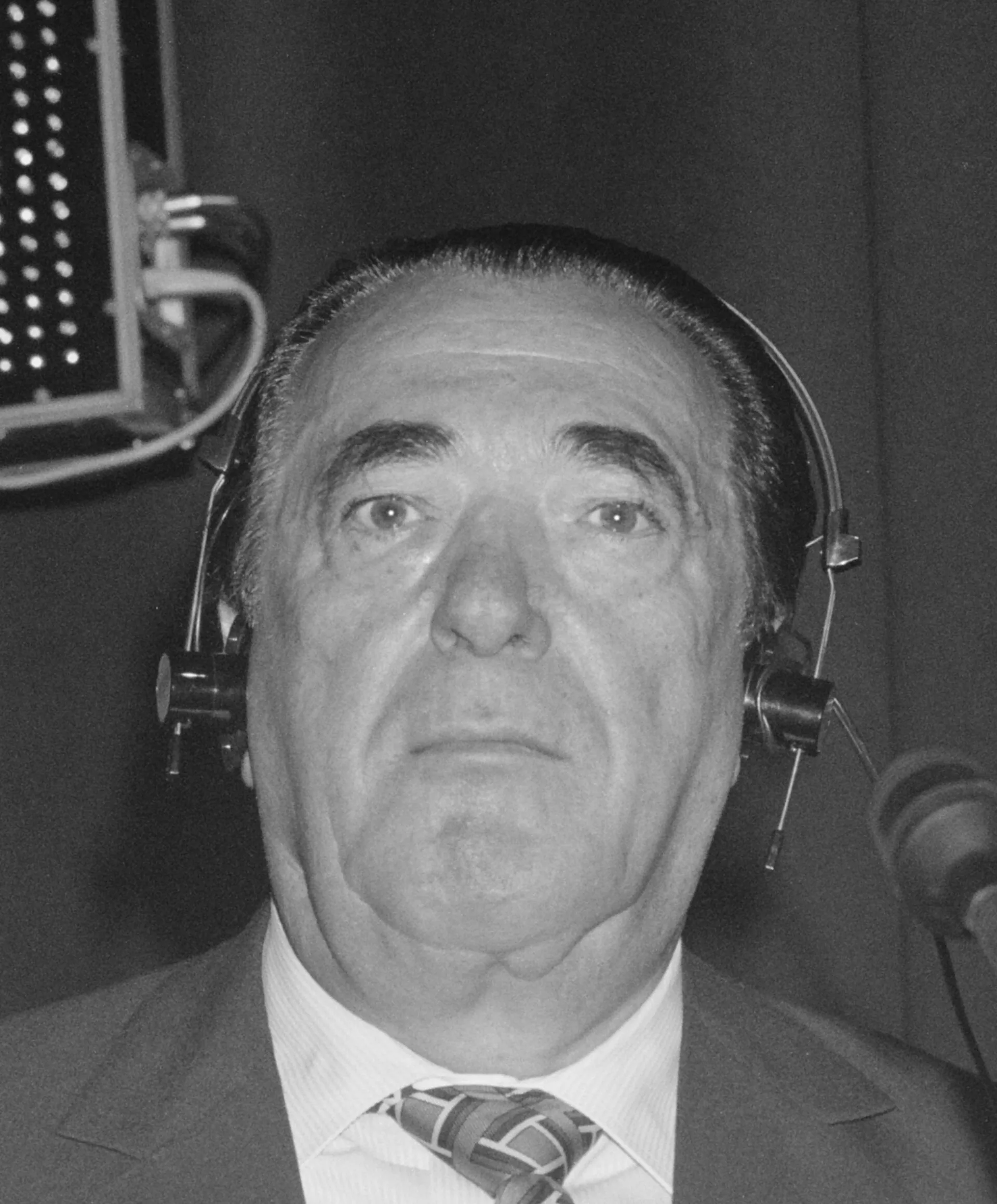
Robert Maxwell was born into a poor Jewish family in Czechoslovakia in 1923, lost most of his relatives in the Holocaust, fought for Britain in the Second World War and built a fortune from scientific publishing. By 1991 he owned the Mirror newspapers in London and the Daily News in New York, commuted by helicopter, and kept a 180-foot yacht named the Lady Ghislaine after his daughter. He was also in deep trouble. His companies owed far more than they could repay, the banks had lost patience, and in October a book by the American journalist Seymour Hersh had alleged links between Maxwell and Israel’s intelligence service, Mossad, which he called a total invention.
What happened
In early November Maxwell was aboard the yacht among the Canary Islands, having skipped a meeting with the Bank of England about loans in default. He had a heavy cold and was, by accounts given to Newsweek, on the phone and the fax late into the night of November 4; one caller found him calm. His last contact with the crew came at about 4:25 a.m. on November 5. Later that morning he could not be found. The crew raised the alarm, and at 6:18 that evening a Spanish search helicopter lifted his naked body from the sea off Gran Canaria. It was taken to Las Palmas.
The investigation
A preliminary autopsy reported only a small amount of water in the lungs and found that Maxwell had probably suffered a heart attack. The investigating judge, Luis Gutiérrez Sanjuan, told reporters it was certain that death had come before the body entered the water. His widow, Elisabeth, called the finding totally provisional, and the family arranged a second examination in Israel, and his funeral in Jerusalem, with burial on the Mount of Olives, drew Israel’s prime minister and president. A British forensic pathologist, Iain West, examined the body for Maxwell’s insurers, for whom the difference between accident and suicide mattered a great deal.
The experts disagreed. As later summarized in the London Review of Books, the Spanish experts blamed a heart attack and the Israeli team blamed drowning brought on by a heart attack. West put the cause down to drowning; he did not exclude murder but judged accident or suicide the likelier. In December 1991 the Spanish authorities closed the inquiry with a finding of a heart attack and accidental drowning, ruling out murder. A year later West said publicly that he thought Maxwell had almost certainly killed himself.
The explanations
Three stories compete. The accident theory notes that Maxwell was elderly, overweight and ill, and that he was reportedly in the habit of relieving himself over the side at night; a stumble or a cardiac event near the rail could have put him in the water without anyone hearing. The suicide theory rests on what happened next. Within weeks his empire collapsed, and investigators found that he had secretly drained the pension funds of his own workers, to the tune of hundreds of millions, to keep his businesses afloat. By the account in John Preston’s 2021 biography, his banks were within days of reporting him to the authorities for fraud.
The murder theory rests on his reputed intelligence links. In 2002 the authors Gordon Thomas and Martin Dillon published a book claiming that Mossad killed him because he threatened to reveal Israeli secrets unless he was rescued financially. No document, witness or forensic finding has been produced to support it. A remark at his funeral that he had done more for Israel than could be said in public is often quoted as a hint of secret service, but it proves nothing about how he died.
Where it stands
The official ruling stands, but it rests on medical evidence its own experts could not agree on. Nobody saw Maxwell enter the sea, and no new evidence has surfaced in more than three decades. Accident and suicide remain the likeliest explanations; murder is a claim, not a finding.