
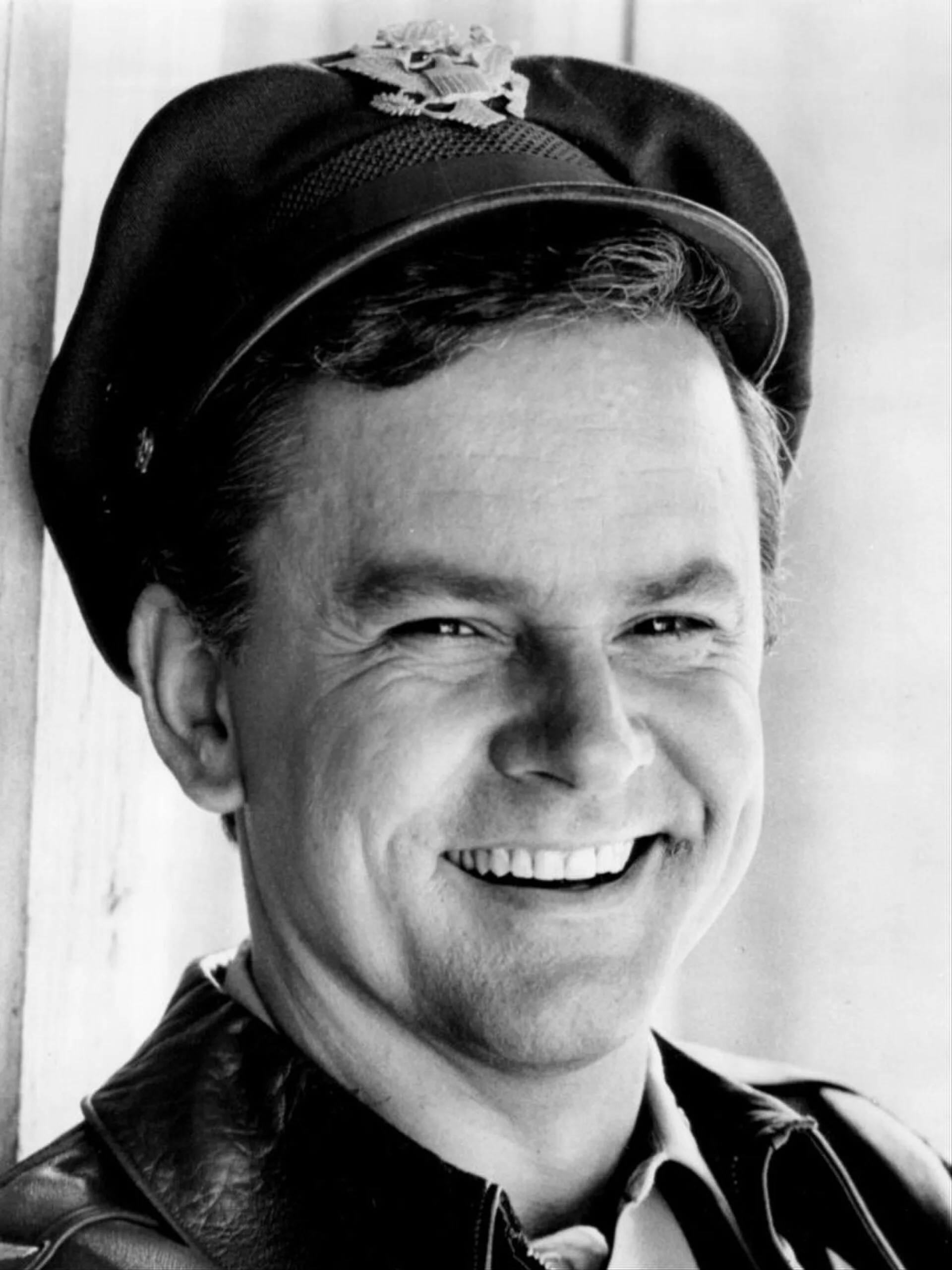
For six seasons, from 1965 to 1971, Bob Crane was Colonel Robert Hogan, the unflappable American who ran a sabotage ring out of a German prisoner-of-war camp in the CBS comedy Hogan’s Heroes. After the show ended, the work thinned out. By 1978 he was touring the dinner-theater circuit in a comedy called Beginner’s Luck, and that June it was playing at the Windmill Dinner Theatre in Scottsdale, Arizona, where he was renting a unit at the Winfield Place Apartments. His second marriage, to the Hogan’s Heroes actress Patricia Olson, was weeks from a final divorce.
What happened
When Crane failed to turn up for an appointment on June 29, a fellow cast member went to the apartment and found him dead in bed. He had been struck on the head with a heavy object, and a length of cord, cut from a video camera, had been knotted around his neck. Police found no forced entry, no sign of a fight and nothing obviously stolen. The weapon was never found. He was 49.
What detectives did find, in quantity, was the private life Crane had kept out of the papers. He had spent years photographing and videotaping his sexual encounters with women he met on tour, often in the company of John Henry Carpenter, a salesman for a consumer electronics company who supplied the equipment and joined in. Carpenter had flown to Phoenix a few days earlier and had been with Crane the evening before he died. Crane’s son Robert later testified that his father had wanted to end the friendship.
The investigation
Scottsdale had no homicide unit in 1978, and the investigation drew criticism for its handling of the scene. Detectives impounded Carpenter’s rental car and found smears of blood inside that matched Crane’s comparatively uncommon blood type. In the days before DNA analysis, that was as far as the science went, and the county attorney’s office decided it was not enough to charge him.
In 1990 a new county attorney, Rick Romley, let investigators Barry Vassall and Jim Raines reopen the file. DNA testing of the car blood proved inconclusive, but Raines found an evidence photograph showing a small speck on a door of the car that prosecutors argued was brain tissue; the speck itself had been lost. Carpenter was arrested in 1992. At the eight-week trial in 1994 the defense said the photograph proved nothing, that the tripod prosecutors proposed as the weapon was a guess drawn from Carpenter’s line of work, and that the tapes offered a long list of other people with reasons to resent Crane. The jury deliberated about two and a half days and acquitted him on October 31. Its foreman, a Marine sergeant named Michael Lake, said no one could say what the speck was and that guilt could not rest on speculation.
The explanations
The investigators never wavered. Romley said years later that the state had simply lacked the DNA evidence a jury wanted, and the detectives who worked the case told Fox 10 Phoenix in 2018 that they believed they had identified the killer but could not prove it. Carpenter denied the crime until his death in 1998. Crane’s son Robert has suggested that his stepmother, Patricia Olson, who inherited the estate and died in 2007, might have had some part in it; the county attorney said she had never been considered a suspect.
In 2016 the Phoenix reporter John Hook persuaded the county attorney’s office to release the remaining blood samples from Carpenter’s car for testing with modern methods. The results, announced on live television in November, found two DNA profiles: one from an unidentified man and one too degraded to read. Neither was Crane’s. The tests used up what was left of the material.
Where it stands
The case is officially unsolved and, with the only suspect ever tried dead and the car evidence exhausted, is unlikely to move. The story reached a wider audience through the 2002 film Auto Focus, which dramatized Crane’s friendship with Carpenter. What the record supports is narrower than the film: a man killed in his sleep by someone he probably let in, a circumstantial case that a jury rejected, and a retest that weakened rather than strengthened it.