
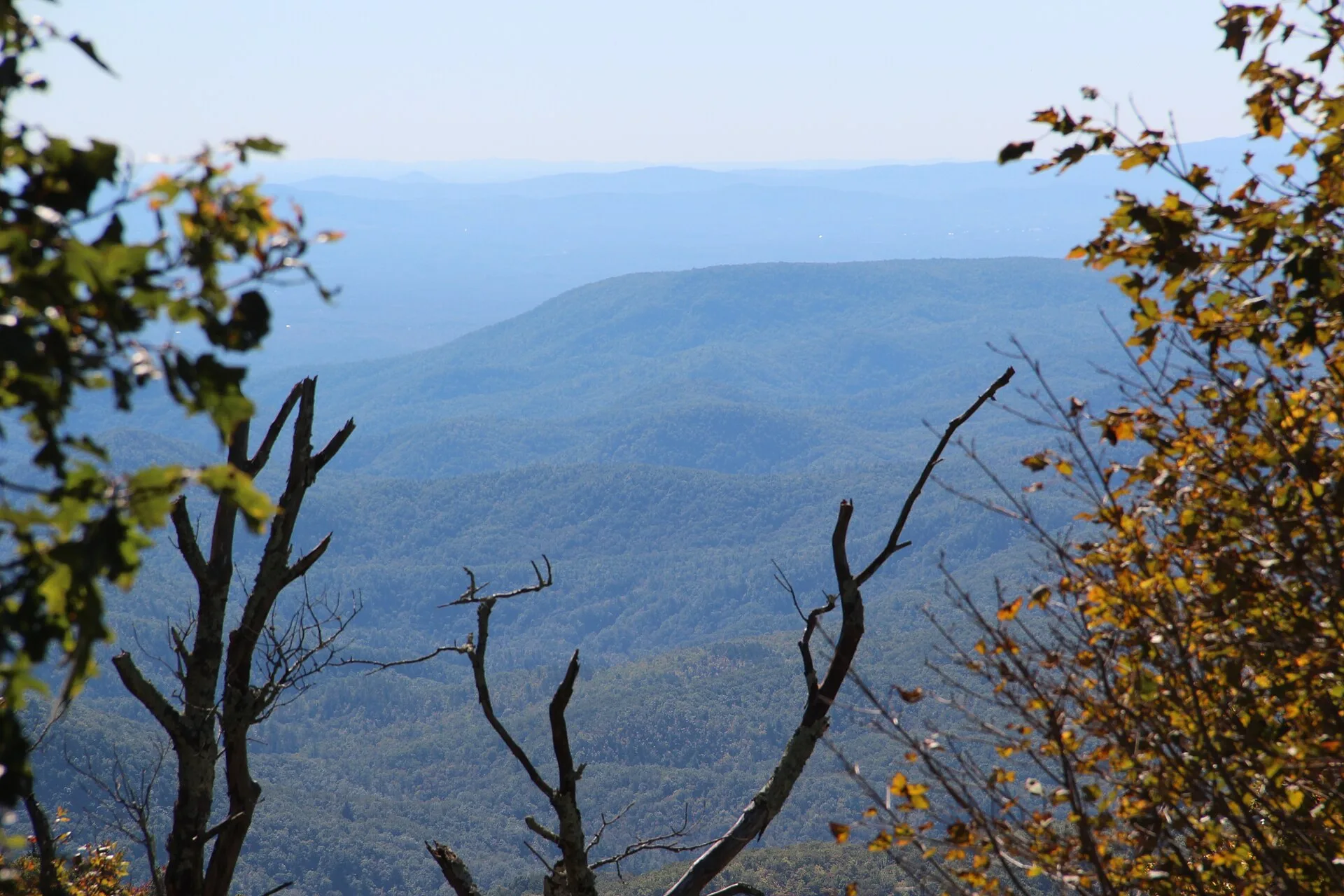
Brown Mountain is not much to look at by day: a long ridge with an almost level crest on the line between Burke and Caldwell counties in western North Carolina, northwest of Morganton, in the Pisgah National Forest. What draws people is the view at night. From overlooks to the north and west, watchers have reported for more than a century lights that swell up just above the ridge, hang for a moment and fade, sometimes singly and sometimes a dozen at once, mostly white but now and then red, blue or yellow.
What happened
The earliest printed account the US Geological Survey could find was a dispatch from Linville Falls to the Charlotte Daily Observer dated September 23, 1913. It credited members of the Morganton Fishing Club with first noticing a light over the mountain a couple of years before, and said they had been laughed at for it. Residents later told investigators they had seen lights in 1908 or 1909, and the lights became a local attraction after a minister, C. E. Gregory, built a summer cottage near Loven’s Hotel at Cold Spring in 1910. Ideas about their source ranged from phosphorescent decay and marsh gas to moonshiners’ lanterns, and folklore tied them to a man searching the slopes by torchlight for a lost love.
The investigation
In October 1913, at the request of Representative E. Y. Webb, the Survey sent a geologist, D. B. Sterrett. After a few days he reported that the lights were locomotive headlights seen across the mountain from the high ground beyond it. The answer pleased few people, and it lost most of its remaining support after the summer of 1916, when a great flood on the Catawba River washed out bridges and track and stopped trains around Morganton for weeks, yet lights were still reported.
Pressure from Congress brought the Survey back. In March and April 1922 it sent George Rogers Mansfield, who spent two weeks in the area and watched on seven evenings, four of them past midnight, from Loven’s Hotel, Gingercake Mountain, Blowing Rock and the summit of Brown Mountain itself. He worked like a surveyor, sighting every light with a plane table and telescopic alidade, then plotting the lines on topographic maps and checking them against roads, towns and railroad timetables.
Of the 23 lights he fixed by instrument, Mansfield attributed about 47 percent to automobile headlights, 33 percent to locomotive headlights, 10 percent to fixed lights such as houses and towns, and 10 percent to brush fires. Only one of the train lights was recognized as a train when he saw it; the others were identified days later from the plotted lines and the schedules. At those distances, he wrote, a headlight throws no visible beam and shows no motion: it flares on as it swings toward the watcher and vanishes as it turns away. The basin east of Marion fills each evening with cool air draining from different valleys, and its uneven density makes distant lights brighten and dim. Cars were already on the valley roads during the 1916 flood. His conclusion was that the lights were “clearly not of unusual nature or origin.”
The explanations
Mansfield’s study covers what is seen from the traditional viewpoints, which look across a wide basin with towns, highways and, in his day, three railroads. It cannot rule out rarer events, and people who know the lights have long insisted that the true Brown Mountain light is something different from the everyday glimmer. He met that argument in the field: one local guide told him the party had not seen the real light, while a Blowing Rock resident told him all the valley lights looked the same. The National Geographic Society has suggested static electrical discharges; others favor ball lightning.
Where it stands
Appalachian State University physicist Daniel Caton and engineer Lee Hawkins kept cameras trained on the ridge for about three years. A few minutes before midnight on July 17, 2016, two paired cameras recorded a bright orb high over the ridge that appeared, vanished and returned in the same place for less than a minute. Because both cameras caught it, the team ruled out a lens flare or an electronic glitch, and they could not match it to any known source. Caton said he liked ball lightning as a possibility but cared more about repeated measurements than a single event. Most of what visitors see from the overlooks has a known source; the occasional exception keeps the legend alive.