
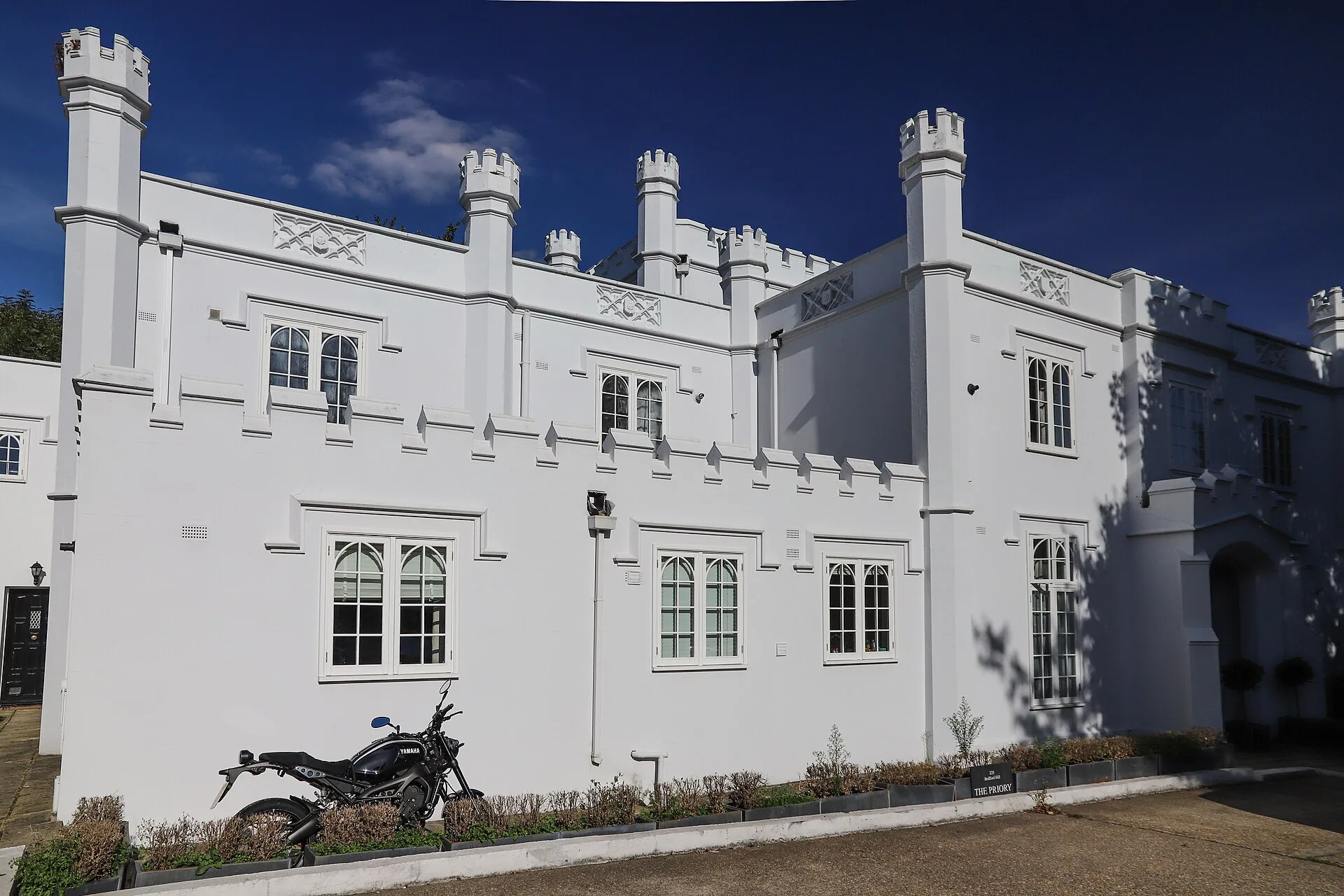
The Priory is a villa on Bedford Hill in Balham, in what was then the Surrey suburbs of London. In April 1876 a young barrister, Charles Bravo, died there over three days from a massive dose of antimony. He never said how he had swallowed it. Two inquests, the second one sensational, established only that someone had poisoned him, and the case has been argued over by lawyers, crime writers and novelists ever since.
What happened
Bravo, about thirty, had married Florence Ricardo the previous December. She was the daughter of a wealthy family, the Campbells of Buscot Park, then in Berkshire, and the widow of an army officer, Captain Alexander Ricardo, whose drinking had wrecked their marriage. Between the two husbands she had had an affair with Dr. James Manby Gully, a fashionable physician decades her senior. She kept control of her own money, and the new marriage was strained. Living with the couple was Florence’s companion, Jane Cannon Cox, a widow who had been with her for four years.
On the evening of Tuesday, April 18, Bravo came home tired from a ride on a difficult horse, ate dinner, and was the only person at the table to drink the burgundy that had stood decanted on the sideboard since lunch. Florence, who had been unwell, was sleeping in a separate room. At about 9:30 he came out of his bedroom shouting for his wife and for hot water. Mrs. Cox reached him first and later testified that he told her he had taken poison and asked her not to tell Florence. The first doctors called were not told this, by their account, and treated him for heart failure. Others followed, including the royal physician Sir William Gull. Bravo lingered until Friday, April 21, telling no one anything more. Professor T. Redwood of the Pharmaceutical Society later found antimony in samples taken from him, enough, it was reported, to kill ten people.
The investigation
The first inquest, held at the house by the Surrey coroner, was brief and, as The Spectator complained in May 1876, remarkably incurious. The butler who decanted the wine was not called, nobody asked who had been in the dining room that afternoon, and Florence was not questioned. Mrs. Cox’s evidence, the only support for suicide, conflicted with what the doctors said she had told them. The jury refused to call it suicide and returned an open verdict.
Press pressure and the suspicions of Bravo’s friends led the authorities to order a second inquest that summer. It ran for about five weeks in front of crowds of reporters, and the questioning laid bare Florence’s affair with Gully in detail that Victorian readers found shocking. The jury found that Bravo had been willfully murdered by antimony poisoning, but that there was not enough evidence to say by whom. No one was arrested. Florence moved to Southsea and died there in 1878, aged about 33, after heavy drinking.
The explanations
Nearly every member of the household has been accused in print. Florence had a motive in a husband who, according to later accounts drawing on police papers, was mean and bullying. Mrs. Cox, whose story of a confession nobody else heard, was said to have been threatened with dismissal. Some writers have pointed at Gully, the displaced lover. A groom whom Bravo had fired has also been suggested. Suicide still has defenders, as does accident: one theory holds that Bravo was secretly dosing Florence with tartar emetic to make her ill and took some himself by mistake.
Yseult Bridges, in How Charles Bravo Died (1956), offered her own solution, and the journalist James Ruddick went back through the original police documents for Death at the Priory, speaking to descendants of most of the people involved. Agatha Christie used the case in several novels as the standard example of an unsolved poisoning that ruined the lives of the innocent.
Where it stands
No one was ever charged, and the people who could have answered the question are long dead. The poison and the timing are well established; who put the antimony in Bravo’s way, and whether he took it knowingly, is not.