
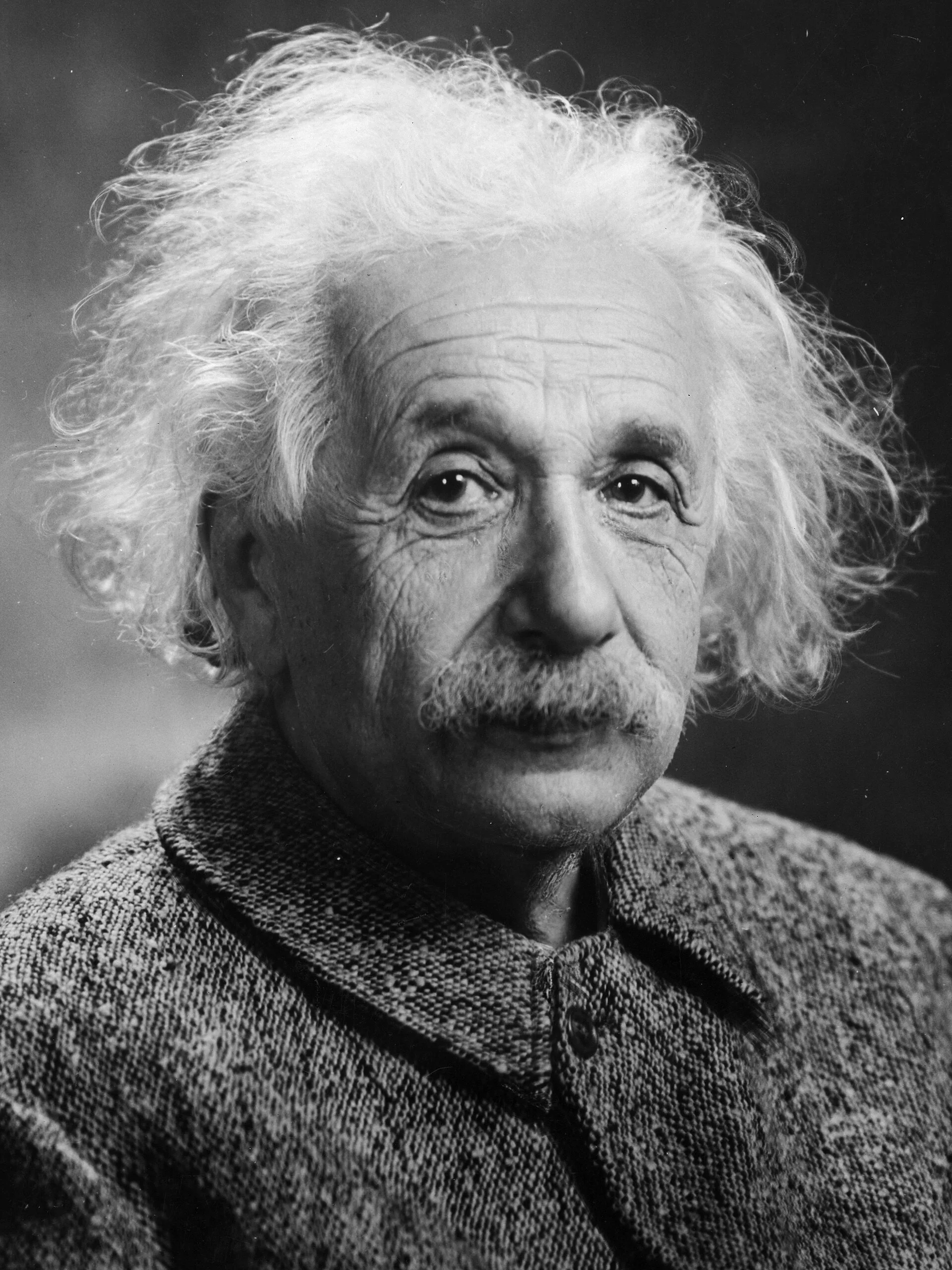
Albert Einstein died at Princeton Hospital in New Jersey early on April 18, 1955, aged 76, after an aortic aneurysm ruptured. He had asked to be cremated, and that afternoon his body was burned in Trenton and his ashes scattered. His brain was not with it. During the autopsy that morning the hospital’s pathologist, Thomas Stoltz Harvey, had removed it, and for most of the next half century it stayed in his keeping.
What happened
Harvey weighed the brain, photographed it from many angles and fixed it in formalin. He then took it to the University of Pennsylvania in Philadelphia, where technicians with a specialist cutting machine divided it into about 240 small blocks, set them in a gel-like embedding material and cut thin sections for microscope slides. Some slides went to other researchers; most of the material stayed with Harvey.
Whether anyone had agreed to this is still argued. An early biography said Einstein had wanted his brain studied, but later research found no sign that he or his family approved beforehand. Einstein’s elder son, Hans Albert, accepted the removal after the fact, on condition that any results appear in serious scientific journals. Harvey said he meant to organize that research. Nothing was published for almost thirty years, and by the 1970s he no longer worked at the hospital.
Decades of custody
The brain dropped out of view until 1978, when Steven Levy, then an editor at New Jersey Monthly, set out to learn what had become of it. He traced Harvey to Wichita, Kansas, where the pathologist eventually showed him the preserved pieces, preserved in two large jars inside a cider box. In the years after Levy’s article, researchers began writing to Harvey for samples.
In 1997 the writer Michael Paterniti drove Harvey and part of the brain across the country, a journey he described in the book Driving Mr. Albert. In 1998 Harvey handed what he still held back to Princeton. He died in 2007, and in 2010 his heirs gave his photographs, slides and a guide to the sectioning to the US military’s National Museum of Health and Medicine in Silver Spring, Maryland. A separate box of slides, passed down from the neuropathologist who had helped section the brain, reached the Mütter Museum in Philadelphia, which has displayed them since 2013. A Rutgers neurologist, Frederick Lepore, helped bring forgotten photographs held by Harvey’s companion to light around the same time.
The studies
The first major paper, by Marian Diamond’s group at the University of California, Berkeley, appeared in 1985. Counting cells in four small samples, it reported that one area of Einstein’s left parietal lobe had more glial cells, the brain’s support cells, relative to neurons than the same area in eleven men who had died at an average age of 64. In 1999 Sandra Witelson’s team at McMaster University in Ontario, working from Harvey’s 1955 photographs, reported in The Lancet that Einstein’s parietal lobes were unusually wide and that part of a common groove, the Sylvian fissure, was missing. Later, the anthropologist Dean Falk and colleagues used the newly released photographs to describe an unusually convoluted prefrontal cortex and other features, and a 2013 study reported unusually extensive connections through the corpus callosum, the bundle linking the two hemispheres.
The critics
The critics’ main objection is the sample size of one. Any single brain will differ from an average in many ways, so finding some differences in Einstein’s proves little unless they are predicted in advance. In 2014 the Pace University psychologist Terence Hines argued that the Diamond study had examined several different cell measures and reported only the ratio that came out significant, a textbook multiple-comparisons problem. He said the shape studies, too, had not shown that the features they described were more than normal variation, suggested the whole literature might reflect researchers finding what they expected, and proposed blind tests in which experts try to pick Einstein’s slides out from ordinary ones. Others have noted that Diamond’s control brains came from men more than a decade younger.
Where it stands
The basic story is not in doubt: Einstein’s brain was taken at autopsy, kept by Harvey for more than forty years and is now split among museums and collections. What the brain can tell anyone about genius is far less settled. No study has shown a feature that explains his work, and the most cited findings remain contested.