
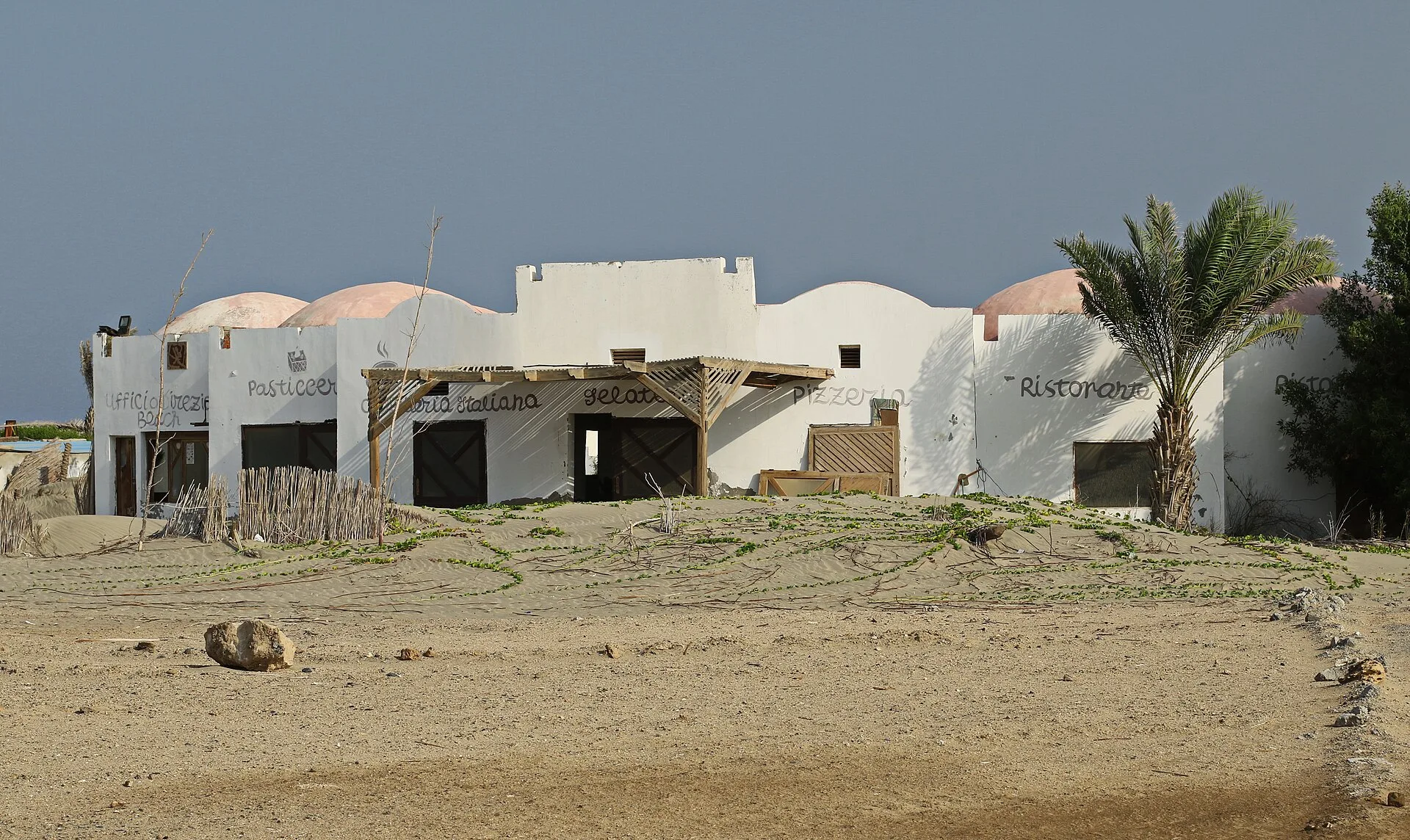
Marsa Alam is a resort town on Egypt’s Red Sea coast, far south of Hurghada, built around package hotels and dive sites. In the last week of April 2017 it became the setting for a death that Poland has argued over ever since, and that no court has resolved.
What happened
Magdalena Żuk was 27 and lived in Lower Silesia. She had planned the trip for herself and her partner, but his passport turned out to have expired, so on April 25, 2017 she flew to Marsa Alam alone. Over the next two days the two spoke often by phone, and her manner changed enough to worry him; he arranged for her to come home early. The attempt to get her onto a flight failed. Her condition deteriorated, and she was taken to a hospital in Marsa Alam.
On April 30, while a friend of the family was already on his way to Egypt to collect her, she fell from a window on the first or second floor of the hospital. She was taken to a second hospital and died of her injuries that day. Within weeks, phone footage showing her struggling with men in a hospital corridor was circulating online, along with recordings of her pleading with her partner to get her out of the country. The footage, more than any finding, has shaped public opinion about the case.
The investigation
The District Prosecutor’s Office in Jelenia Góra opened an inquiry on May 2, 2017, considering an accident, a mental breakdown, a killing and the possibility of trafficking. At a press conference on May 16 the head of the team, Ewa Węglarowicz-Makowska, said the office was treating murder as one working hypothesis among several. Polish prosecutors and a pathologist attended the autopsy in Egypt, and a second post-mortem was carried out in Poland. Her phone, laptop and luggage were examined and opinions were commissioned in forensic medicine, toxicology, genetics, computing, psychiatry and psychology.
In January 2018 the office reported its first conclusions. The cause of death was injury from a fall from height; there were no traces of rape or other violence, and no evidence that she had been the victim of any crime. Around 200 witnesses had been questioned, including passengers on her flight, guests at her hotel, people who saw her at the airport, the travel agents, her family and her fiancé. Prosecutors asked psychiatrists to assess what they called her atypical behavior abroad and the possible effect of starting, and then stopping, antidepressant medication. The file ran to more than a dozen volumes.
The case then slowed to the pace of international legal assistance. Extensions were granted into 2018 and to June 30, 2019 while a supplementary toxicology opinion was awaited. On April 29, 2019 Egypt’s prosecutors agreed to hand over the material their own police had gathered, which the Polish side intended to put before a joint panel of toxicologists and psychiatrists. Spokesman Tomasz Czułowski said that nothing collected so far pointed to sexual violence, other violence or trafficking.
The explanations
Two readings have hardened. The official one is of a young woman in acute psychological crisis, alone in a foreign resort, whose fall was not caused by anyone else; the request for psychiatric opinions and the absence of injuries other than those from the fall support it. The popular one, fueled by the recordings and by the slowness of Egyptian cooperation, is that she was drugged, assaulted or held, and that the hospital fall was a consequence of that. The official Egyptian version is suicide; Polish prosecutors have never adopted that word, nor the trafficking theory, saying only that the evidence shows no crime.
Where it stands
On June 30, 2025 the Jelenia Góra office announced it had suspended the investigation. After more than a dozen legal-assistance requests it was still missing additional information from the Egyptian toxicology and chemical analyses and a statement from one Egyptian witness, and the material that had arrived turned out, once translated, not to cover what was needed. A suspension is not a closure, and prosecutors said the case would resume if the documents came. Her sister called the decision a mockery. Eight years after her death, nobody has been charged and the central question of what happened to her in those five days has no answer that both sides accept.