
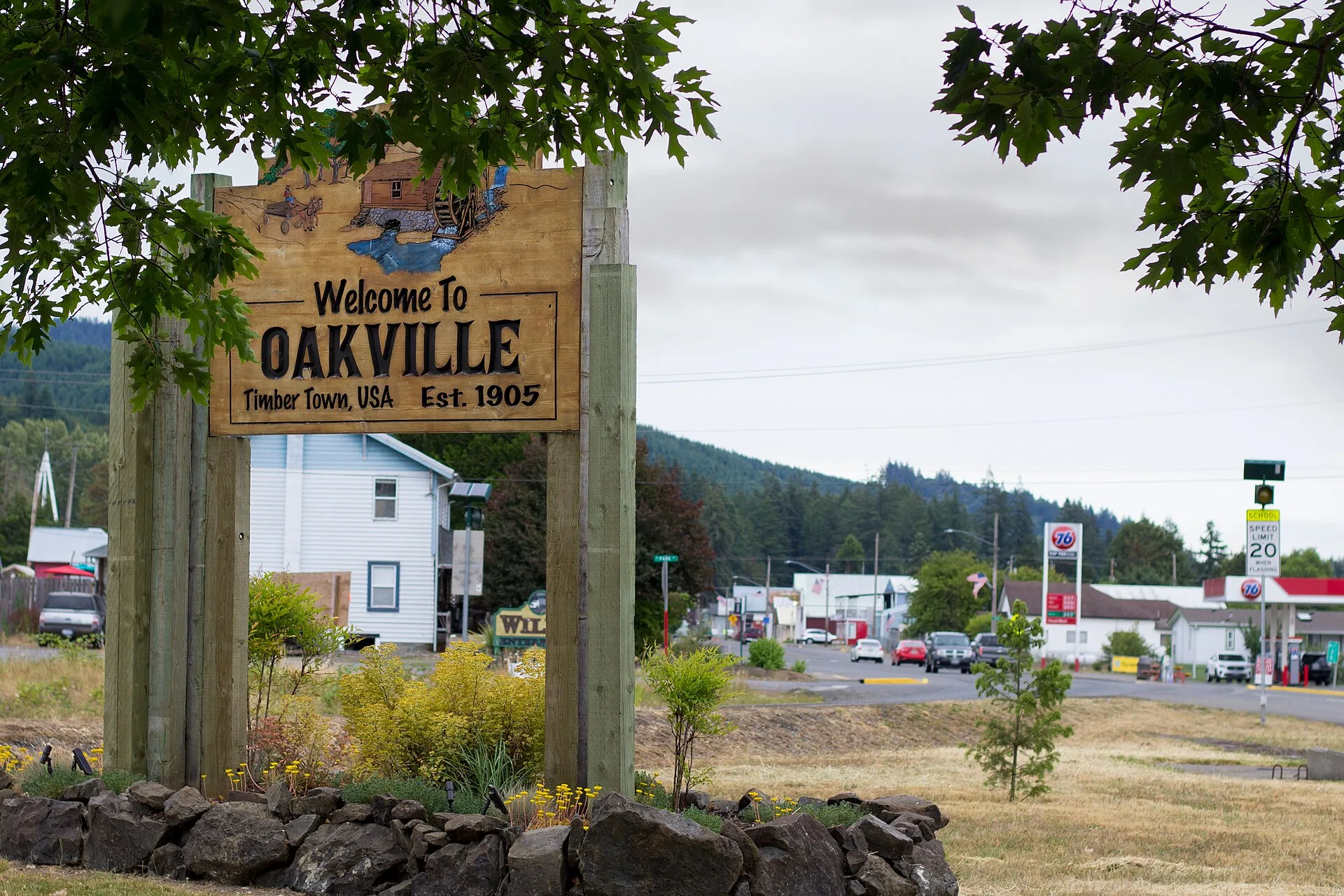
Oakville is a timber town of about 700 people in Grays Harbor County, in the wet south-western corner of Washington State. In August 1994 it briefly became national news because of something its residents found lying on the ground after the rain.
What happened
The first fall was reported on August 7, 1994. Sunny Barclift, who lived on a 29-acre farm outside town with her mother, Dotty Hearn, found small, clear, jelly-like blobs, most of them smaller than a grain of rice, scattered over a shed with a black asphalt roof and the ground around it. They had come down with the night’s rain. Hearn soon felt dizzy and nauseous and was taken to hospital. Barclift and a friend who helped gather the material had milder nausea and tiredness, and a kitten that lived outdoors died a few days later of intestinal trouble. A second fall a few days afterward made nobody ill.
The story grew as it was retold. When the case was dramatized on Unsolved Mysteries, the account had the goo falling six times over three weeks across about 20 square miles, sickening dozens of residents and killing several pets. A police officer, David Lacey, said the stuff had smeared across his patrol car’s windshield before dawn and that he fell badly ill later that day. Hearn’s own doctor, David Little, doubted from the start that the blobs had anything to do with her illness; he diagnosed an inner-ear problem.
What the labs found
Barclift took a sample to the hospital, where a laboratory technician reported seeing what looked like human white blood cells. That single remark is the source of the most repeated claim about the case. It did not survive the next test. After more than a week of phone calls from Barclift, the hazardous-materials unit of the state Department of Ecology agreed to look at the material. Its specialist, Mike Osweiler, reported a range of cells of different sizes, suggesting the blobs came from something that was or had been alive, but the cells had no nuclei. Human white cells do.
A microbiologist with the state Department of Health, Mike McDowell, cultured a sample and grew two bacteria, Pseudomonas fluorescens and Enterobacter cloacae. Both are widespread; one is normally found in the human gut, and both also live in water and wherever waste collects. McDowell described the jelly itself as uniform, with no visible internal structure. Nearly a year after the first fall, a microbiologist at a private laboratory, Tim Davis of Amtest, examined material Hearn had kept frozen and said he saw what appeared to be a cell with a nucleus. Before anyone could take the work further, the samples went missing. The Health Department later said it had no record of what became of the material it received.
The explanations
Aircraft waste was raised and dropped: the Federal Aviation Administration noted that airliner toilet fluid is dyed blue, and the blobs were clear. A more colorful idea came from the coast. The Air Force confirmed that the 354th Fighter Squadron had been flying live bombing practice over the Pacific some 10 to 20 miles off Ocean Shores, and the town’s police chief was told that exploding bombs might have thrown shredded jellyfish into the clouds. Barclift called that ridiculous. It also fails on the lab result, since jellyfish cells have nuclei, and on the repeat falls. Talk of a secret biological test has no evidence behind it.
BBC Science Focus has pointed to a simpler possibility: that the material never fell at all and was simply found on the ground. Gelatinous blobs known as star jelly have been reported for centuries and have been traced at different times to amphibians, algae, slime molds and, in one 2012 English case, to water-absorbing crystals of sodium polyacrylate used in gardening.
Where it stands
No sample survives, no lab ever reported a positive identification, and the one result that pointed toward something sinister was contradicted within days. Oakville’s blobs are documented as an event, with real people who found real material and fell ill around the same time. What the jelly was, where it came from and whether it caused any of the illness remain unknown.