
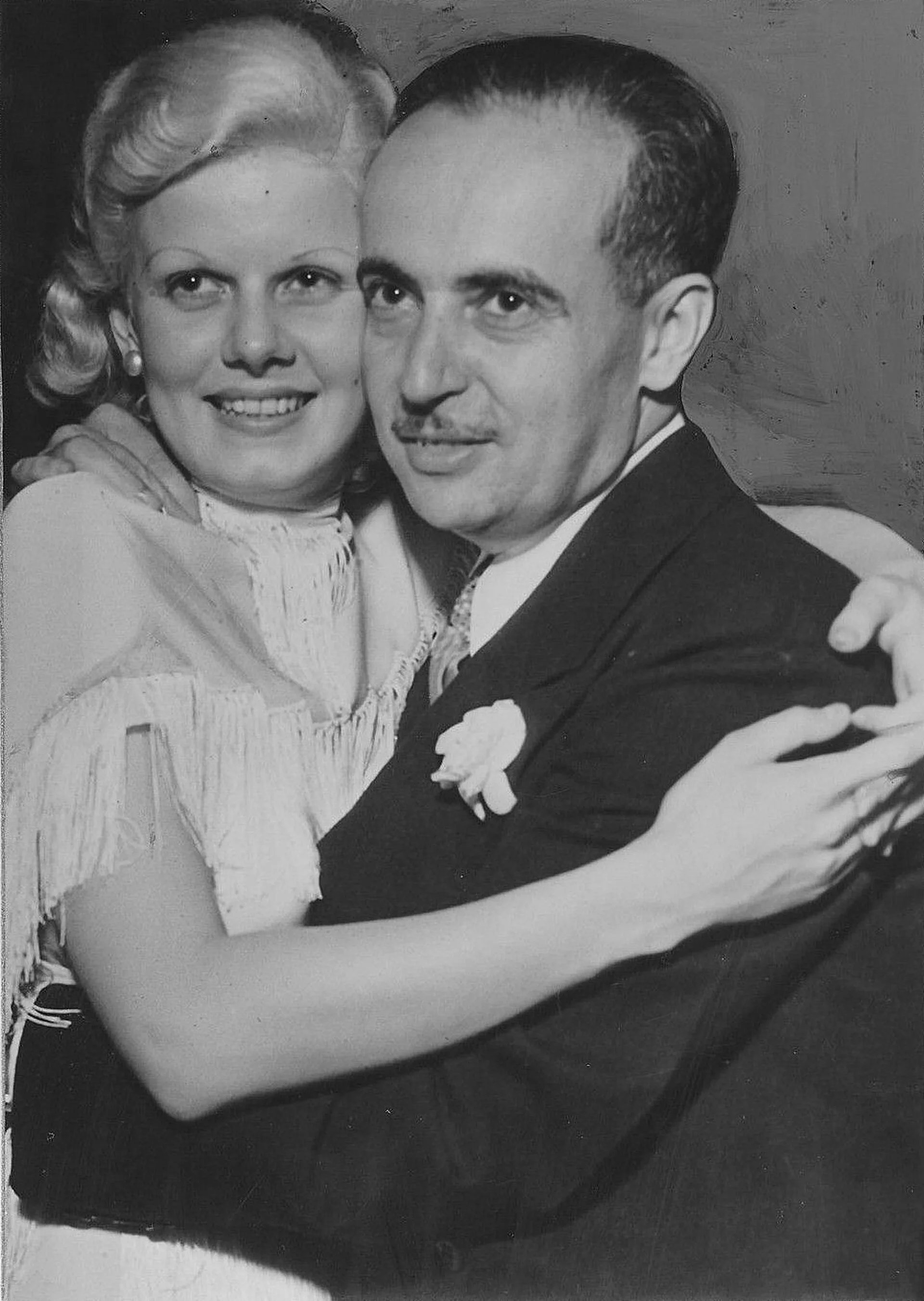
Paul Bern was one of the quieter powers at Metro-Goldwyn-Mayer in the early 1930s: a German-born former stage manager and screenwriter who had become Irving Thalberg’s right-hand producer, and who was known around the lot as a kind, bookish confidant to troubled actresses. In July 1932 he married the studio’s newest sensation, Jean Harlow, then 21 to his 42. They set up house in his secluded home on Easton Drive, up Benedict Canyon above Beverly Hills.
What happened
On the morning of Monday, September 5, the Labor Day holiday, Bern’s butler, John Carmichael, found him dead in a dressing room off the master bedroom. He was naked, shot once through the right temple, with a .38 revolver in his hand. Harlow had gone to her mother’s house the evening before. Before the police arrived, by most accounts more than an hour later, MGM executives were already at the scene. Among the items found was a note in Bern’s handwriting addressed to Dearest Dear. In it he wrote that this was the only way to make amends for a frightful wrong he had done her and to erase his abject humiliation, and he added a postscript saying that last night had only been a comedy.
The investigation
The coroner’s jury heard from studio people who spoke of Bern’s dark moods and from household staff whose accounts of the marriage did not agree, and it returned a verdict of suicide. A grand jury also took evidence; Harlow told it she knew nothing that could explain what he had done. In the meantime, Louis B. Mayer and the studio’s publicists pushed a story that Bern had killed himself because he was impotent, a claim that the medical examiner’s findings, later released, did not support.
Then a second figure appeared. Bern’s brother Henry told reporters that for years Paul had sent money to Dorothy Millette, a woman he had lived with as husband and wife in New York before the First World War and who had since spent time in a sanatorium. She had come west to California that year. Shortly after the death she vanished from a Sacramento River steamer, the Delta King, and her body was later found in the river. Whether she had seen Bern the night he died, and what the note’s last night referred to, became the questions newspapers could not answer.
The explanations
Suicide was the official answer, and many biographers have kept it, differing only on why. David Stenn, Harlow’s biographer, accepted the verdict and blamed the mystery on the studio’s interference with the scene; he argued that Bern’s private torment had more to do with his sexuality than with any physical problem. Eve Golden thought Millette’s reappearance may have pushed an already fragile man to take his life, and that the note was meant for her.
Murder came later. In a 1960 Playboy article the screenwriter Ben Hecht called the case a suicide whitewash and suggested that a woman had killed Bern. District Attorney William McKesson ordered the records checked, found nothing to change the verdict, and dropped the matter after Hecht conceded he had been passing on Hollywood gossip. In 1990 Samuel Marx, MGM’s former story editor, published Deadly Illusions with Joyce Vanderveen. Marx said he had been at the house that morning before the police and had seen Thalberg handling evidence, and he concluded that Millette had shot Bern and then drowned herself, with Mayer’s studio arranging a suicide finding to spare its star. Reviewers found the book lively but speculative.
Where it stands
The physical evidence, a single wound to the head that experts called consistent with a self-inflicted shot and a gun in his right hand, fits suicide, and the official record has never been altered. What is unresolved is the hour before the police came: the studio almost certainly managed the scene, and that leaves room for doubt that cannot now be removed. The case for Dorothy Millette as a killer is a plausible story built on one witness’s memories more than half a century after the event, and it has no corroboration in the 1932 record.