
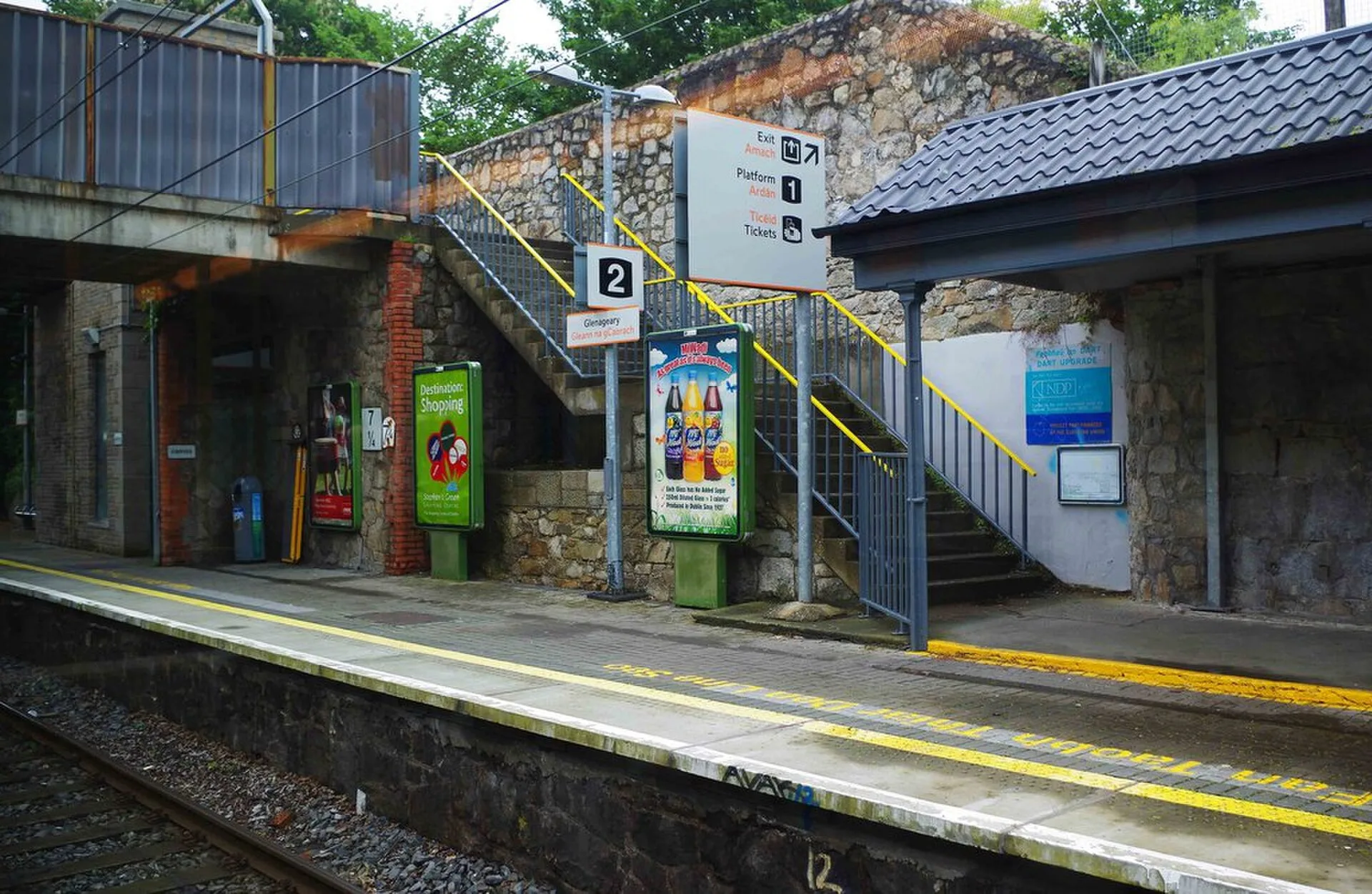
Glenageary is a settled residential suburb on the south side of Dublin Bay, a short walk inland from the harbor town of Dún Laoghaire. Its roads of semi-detached houses are linked by footpaths and laneways, one of which runs between Silchester Road and Silchester Park along the edge of the DART railway line. It was in that walkway, a few minutes from her own front door, that Raonaid Murray died in the first hour of Saturday September 4, 1999.
What happened
Raonaid was 17, born in January 1982, and had a summer job at Sally West, a clothes shop in the Dún Laoghaire Shopping Centre. On Friday September 3 she finished work at about 9 pm and went with a friend to Scott’s pub on George’s Street. She had arranged to meet friends at a nightclub later, and at about 11:20 pm she left the pub to walk the fifteen minutes home and change. She was seen walking out of the town center. She never arrived. At 12:33 am her body was found at Silchester Crescent, less than 500 yards from her home.
The post-mortem recorded four stab wounds from a broad-bladed knife of the kind used in a kitchen. One wound passed through her left armpit into her chest, and she died of shock and blood loss; wounds to her forearm showed she had tried to fend off the blows. She appears to have been attacked a short distance away and to have stumbled toward home before collapsing. The knife has never been found.
The investigation
The inquiry run from Dún Laoghaire Garda Station grew to a scale few Irish murder inquiries have matched. Early witness accounts of her route home conflicted. One person described a young man bothering a girl who matched Raonaid’s description at the top of Corrig Avenue; another saw someone running along Silchester Road toward the laneway known locally as the Metals. A description of a man with short dark hair in dark clothes was circulated and later judged to be mistaken. Three composite sketches were issued, and every nomination that came in from them was followed up. By December 1999 gardaí were working on the theory that she had been followed or intercepted by someone who knew her socially.
Nearly 200 people were identified as suspects over the years and more than a dozen were arrested, some for the killing and some for withholding information, and all were released without charge. By the twentieth anniversary gardaí had taken over 3,400 witness statements, a figure that passed 4,500 by 2024, and not one of them contained a word of hostility toward her. That is the heart of the problem: without a motive, investigators have said, there can be no prime suspect. Because the criminal inquiry stayed open, the inquest was not held until 2013, when a Dublin Coroner’s Court jury returned a verdict of unlawful killing.
From 2016 the Garda Serious Crime Review Team, the force’s cold-case unit, worked through the file in modules. Exhibits were re-examined for forensic opportunities that did not exist in 1999, all seized CCTV was analyzed again, each original line of inquiry was re-run and every suspect was reassessed. The review team’s own appeal page still lists the case. In September 2024 Detective Superintendent Brian O’Keeffe asked anyone who could point to a motive, or who had doubts about an alibi they had once supported, to come forward, warning that silence might be shielding a killer. In September 2026 that request narrowed: gardaí appealed directly to a witness who may have provided an alibi for the person they suspect.
The explanations
Two readings have competed since the first week. One is a chance attack by a stranger, which would explain the absence of motive but sits awkwardly with a well-used suburban path at pub closing time on a Friday. The other, which gardaí have leaned toward, is that she was attacked by someone she knew, which explains how she came to be caught up with so near home but means that one of the thousands of people interviewed has lied, and that someone else has let that lie stand. The repeated appeals about alibis are aimed at that second person.
Where it stands
The incident room at Dún Laoghaire remains open and the appeal is renewed every September, when her family mark the anniversary and Crimestoppers restates its reward. More than a quarter of a century on, the case is not short of witnesses, evidence or suspects. It is short of one person deciding to speak.