
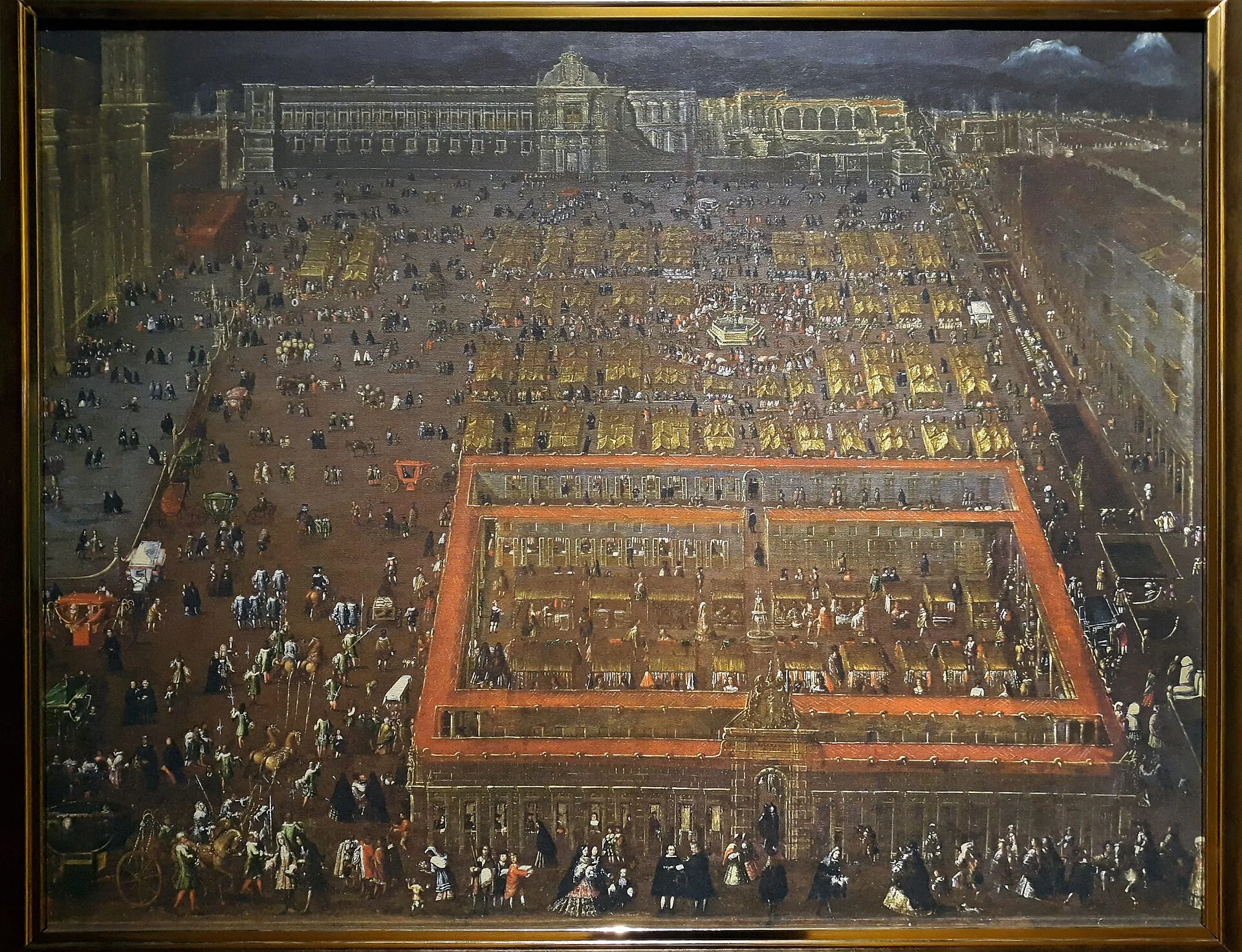
Collections of strange-but-true stories like to cite the case of Gil Pérez, a Spanish soldier said to have been standing guard in Manila one night in October 1593 and to have found himself, moments later, pacing in front of the palace on the main square of Mexico City, some 14,000 kilometers away across the Pacific. He knew, the story goes, that the governor of the Philippines had just been murdered, and the news was confirmed only months later when a ship arrived. The murder is real history. The soldier is much harder to find.
The real event
Gómez Pérez Dasmariñas, governor of the Philippines since 1590, set out from Cavite in October 1593 at the head of an expedition meant to take the Moluccas. He sailed in a galley rowed by paid Chinese oarsmen whom he had declined to chain. Antonio de Morga, who arrived in Manila as a senior royal official two years later and published his history of the islands in Mexico in 1609, describes what followed. On the second day the galley anchored for the night off Punta del Azufre, on the Luzon coast some 24 leagues from Manila. In the last watch before dawn the rowers, wearing white shirts and carrying candles so they could recognize each other, rose against the sleeping Spaniards. The governor came out of his cabin and was struck in the head with a cutlass, dying almost at once. The mutineers sailed the galley away toward China. He was not killed in the Moluccas, as many retellings say, nor in Manila.
The first written version
Morga says nothing of a soldier carried to Mexico. The earliest telling that historians have traced appears in 1698, more than a century later, in the Augustinian friar Gaspar de San Agustín’s chronicle of the conquest of the Philippines. He used Dasmariñas’s death as an object lesson, since the governor had quarreled with the bishop, and listed the supernatural signs that announced it. In Manila, he wrote, a crack opened in a convent wall across the painted portrait of the governor, at the head. In Mexico, the news arrived the same day through Satan, who used some women given to such feats to carry a sentry from the walls of Manila to the main square. Found there in the morning with his weapon, the man asked passersby what city he was in. The Inquisition, San Agustín said, sent him back to the islands, where many who knew him had vouched for the story.
San Agustín gave the soldier no name. He attributed the journey to witchcraft, not to any natural mystery. Born in 1650, he was writing about a man who would have died long before the friar was grown, so his informants were at best repeating what they had heard.
How the story grew
In the 1890s the Mexican historian Luis González Obregón retold the episode as “Un aparecido,” an apparition, in his sketches of colonial Mexico City, placing it on the morning of October 25, 1593. He quoted San Agustín and leaned on Morga for support, writing that Morga reported the governor’s death was known in Mexico City the same day by means he could not explain. Morga’s own text says something narrower. No ships from the Philippines reached New Spain that year, because the two sent ahead had been forced back by storms; their absence led people in Mexico to suspect trouble in the islands, some claimed more than had actually happened, and no one could tell where the rumors came from.
The soldier acquired his name in 1908, when the American writer Thomas Janvier published “Legend of the Living Spectre” in Harper’s Magazine, later collected in his Legends of the City of Mexico. Janvier’s version is the one most people now know: Gil Pérez, about forty, wearing the uniform of the Manila palace guard, questioned by the viceroy Luis de Velasco, held by the Inquisition, and recognized by an officer off the next galleon. Janvier himself presented it as a folk tale current in the city, and noted that magical transport of living people is one of the most widespread motifs in world storytelling, with a close cousin in Washington Irving’s tales of the Alhambra. In the twentieth century, writers on the paranormal turned the devil’s errand into teleportation or alien abduction.
Where it stands
The trail runs one way: a real murder in 1593, an unnamed miracle in a friar’s chronicle 105 years later, a misread historian in the 1890s, and a named, dramatized hero in 1908. The detail that made the story seem testable, a ship arriving with news that matched the soldier’s, is absent from the earliest version. Morga, the one writer close to the events, describes only unexplained rumors of trouble in Mexico. The story is a legend with a historical anchor, not a documented case.