
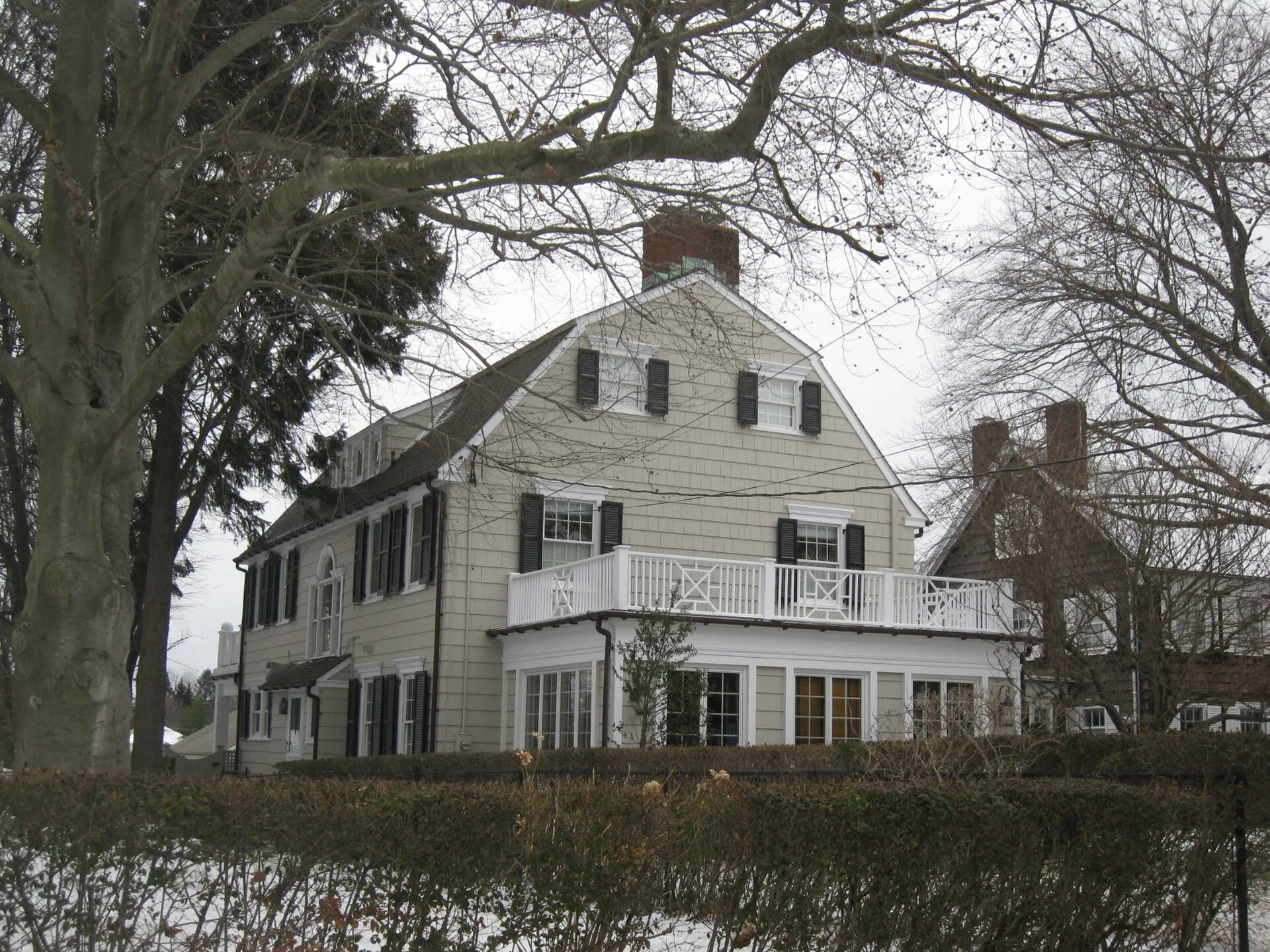
Amityville is a village on the south shore of Long Island, an hour from Manhattan by train. In 1974 the six-bedroom Dutch Colonial at 112 Ocean Avenue, with a boathouse on the canal behind it, belonged to Ronald DeFeo Sr., a car dealership manager, his wife Louise and their five children. Shortly after three in the morning on November 13, 1974 the eldest, 23-year-old Ronald Jr., known as Butch, walked through the house with a .35-caliber Marlin rifle and shot his parents, his sisters Dawn and Allison and his brothers Marc and John as they slept. He raised the alarm at a bar that evening, confessed within a day, and was convicted of six counts of second-degree murder in November 1975 and sentenced to 25 years to life. He died in prison on March 12, 2021.
What happened
George and Kathy Lutz, newly married, bought the house for $80,000 and moved in on December 18, 1975, two weeks after DeFeo was sentenced. They left on January 14, 1976, 28 days later, abandoning their possessions, and the story they told afterward became one of the best-known hauntings in American popular culture. A priest who came to bless the house was told by a voice to get out and was later afflicted with blisters. Kathy levitated. A heavy door was torn off and left hanging from one hinge. Windows were wrenched open against their locks, hundreds of flies filled a sewing room in midwinter, green slime oozed down a wall, a pig-like creature with red eyes peered in at night, and cloven hoofprints appeared in the snow outside.
Early in 1976 Lorraine and Ed Warren, the Connecticut demonologists, went through the house with a news crew from WNEW-TV Channel 5 and a group of psychics, held seances, and pronounced it infested by something from the bowels of the earth. An automatic camera loaded with black-and-white infrared film was left shooting through the night from the second-floor landing. Every frame was empty except one, which appeared to show a small boy with glowing eyes peering out of a bedroom doorway. George Lutz revealed it on The Merv Griffin Show in 1979 and suggested it was John DeFeo, the youngest victim. In September 1977 Prentice-Hall published Jay Anson’s The Amityville Horror: A True Story, and the film followed in 1979.
The investigation
The unmaking began almost at once. The researchers Rick Moran and Peter Jordan established in 1978 that the Amityville police had never been called to the house during the Lutzes’ stay, and that no snow had fallen on the date the hoofprints were supposedly found. James and Barbara Cromarty, who bought the house in 1977, found the original hinges, locks and doorknobs in place with undisturbed paint and varnish, and in eight months there experienced nothing worse than tourists on the lawn. The priest, Father Ralph Pecoraro, gave a sworn affirmation in the Lutzes’ later litigation, unsealed in 2001, that the events described in the book had not happened to him as written.
The decisive witness was William Weber, DeFeo’s defense attorney. In January 1976 the Lutzes had met Weber and the writer Paul Hoffman to work up their experiences for a book; Weber wanted the haunting to support a claim that his client had been driven by voices, and a new trial. The Lutzes took their story to Anson instead, and in May 1977 sued Weber, Hoffman and two magazines for $4.5 million over Hoffman’s articles. Weber counter-sued for breach of contract, and on September 10, 1979 Judge Jack B. Weinstein of the US District Court in Brooklyn dismissed the Lutzes’ case, saying that to a large extent the book was a work of fiction relying on Weber’s suggestions, and proposing to refer the lawyers’ conduct to the state bar. The counterclaim settled the next day. Weber told People magazine that week that he knew the book was a hoax, and told the Associated Press that the horror story had been created over many bottles of wine that George Lutz was drinking.
The explanations
Joe Nickell, who visited the house as a consultant for a television series and interviewed Barbara Cromarty three times, describes the Lutz account as a composite: a traditional haunting, a poltergeist and a demonic possession stitched together, with set pieces that resemble The Exorcist. The glowing-eyed boy in the Warren photograph is generally taken to be Paul Bartz, a member of the Warrens’ team, caught by the timed shutter as he walked past the doorway, his glasses reflecting the infrared flash; skeptics have also noted that the figure’s hair is lighter than any of the DeFeo boys’ and his shirt is of a later style. Ric Osuna’s 2002 reinvestigation of the murders, drawing on DeFeo’s wife Geraldine, adds that the hoax was planned as a device to reopen the criminal case,.
Where it stands
George and Kathy Lutz passed polygraph tests in 1979 and George maintained the core of the story until his death; later disputes over the sequels kept the brand alive through more than a dozen films. The house has passed through a succession of owners since 1977, has had its address changed and its distinctive quarter-round windows replaced to discourage visitors, and none of its occupants has reported anything unusual. What happened at 112 Ocean Avenue was a mass murder. What happened to the Lutzes was a book deal.