
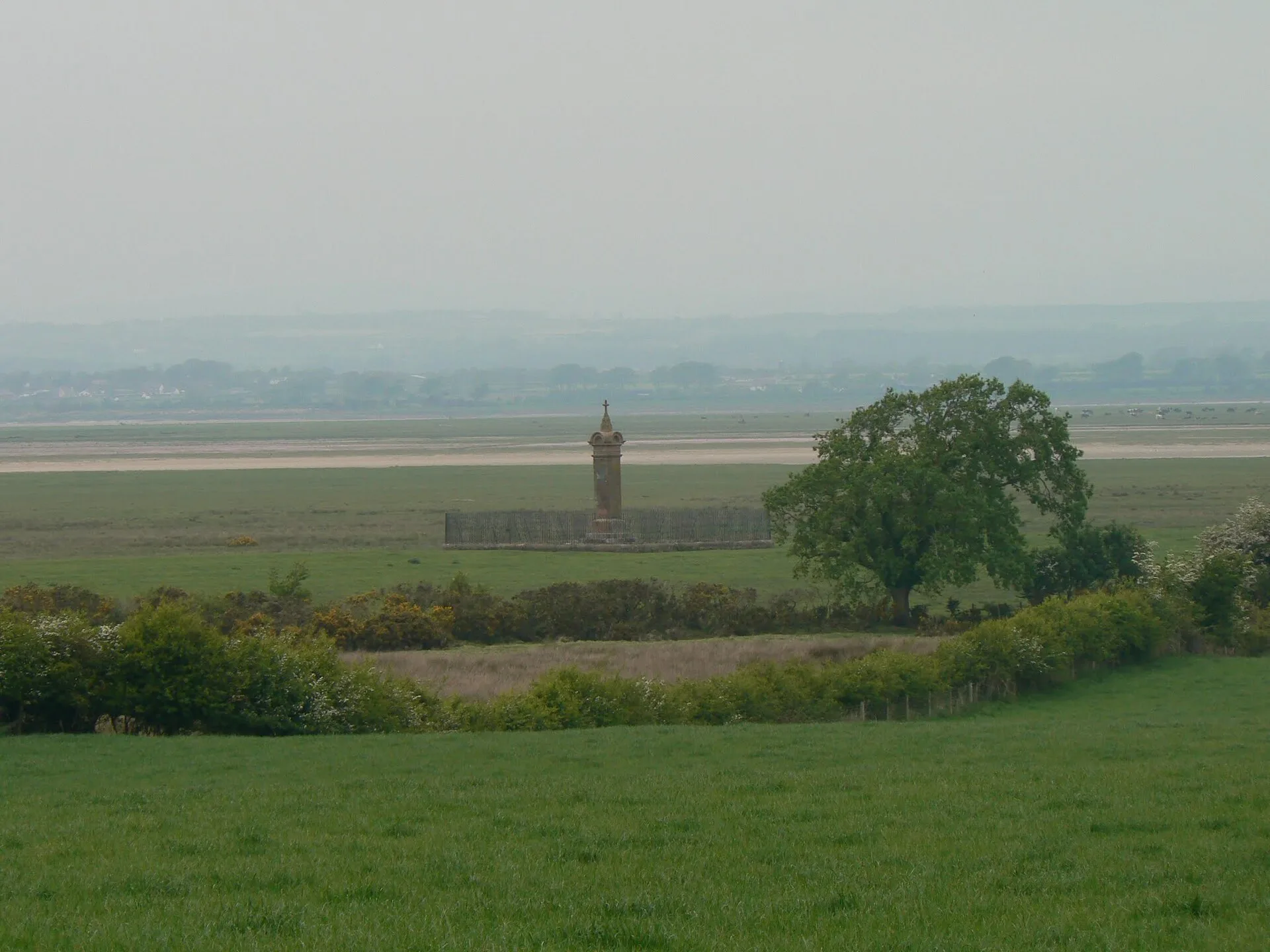
Burgh Marsh is a sweep of flat grazing land on the English side of the Solway Firth, a few miles west of Carlisle, where cattle and sheep wander out toward the tidal channels and the hills of Scotland sit on the far shore. On a bright spring day in 1964 a Carlisle fireman named Jim Templeton drove out there with his wife, Annie, and their five-year-old daughter, Elizabeth, to take some family pictures.
What happened
Templeton was a keen amateur photographer. Writing to the Daily Mail in 2002, he gave the date as May 23, 1964 (a later article by the researchers David Clarke and Andy Roberts puts it a day later) and said he was using a single-lens reflex camera loaded with the new Kodacolor film. He took three frames of Elizabeth sitting in the grass in a new dress, holding a posy of flowers. He said the only other people in sight were two elderly women in a parked car some distance away.
When the prints came back, the staff who handled them remarked that it was a shame someone had walked into the best one. Behind Elizabeth’s shoulder, tilted at an odd angle, stood a pale figure that seemed to wear a white suit and a helmet with a dark visor. Templeton insisted that nobody had been standing there. He showed the print to Carlisle police, who found nothing suspicious, and to Kodak, whose examination found no sign of tampering. According to the BBC, the company went as far as offering a reward to anyone who could show the image had been faked. No one collected it.
The investigation
The Cumberland News ran the photograph on its front page, and within days it was in the national papers and then abroad. Letters arrived from all over the world. The Ministry of Defence, contacted by the paper, offered to examine it if it could have the original film and camera; Templeton declined, and no official file shows anything further. Later that year, he said, two men in dark suits arrived at his fire station in a black Jaguar, showed a card marked Security, referred to each other only by number, and asked to be driven to the spot. When he told them he had seen no one there at the time, they drove off and left him to walk home. At the time he told the press it looked like a practical joke.
A second legend attached itself later. Templeton said that a Blue Streak rocket test at Woomera in South Australia had been stopped around the same time because technicians saw two large figures on the range, and that they later recognized the same shape in his picture. Parts of Blue Streak were built and tested at Spadeadam in Cumbria. Clarke and Roberts found no record of any such sighting. The Woomera launches of that period were halted for bad weather and for a technical fault, and the film said to show a figure, which Clarke traced through Ministry of Defence files, showed a triangle of lens flare.
The explanations
In 1997 Roger Green of Bradford University judged the picture to be a composite, though he did not show how it was made. Clarke, who met Templeton in 2002, came away convinced that he was honest and genuinely puzzled. In 2014, for the photograph’s 50th anniversary, Clarke offered a plainer answer. Another frame from the same outing shows Annie Templeton, who by her husband’s account had been standing behind him. Clarke argued that she walked into the background of the Elizabeth shot without her husband noticing, because the viewfinder on that camera showed only about 70 percent of the frame. Seen from behind with her dark bobbed hair, and with her pale blue dress overexposed to white, she would make the outline of the spaceman.
That reading explains why no one saw a stranger, why the negative is untouched, and why the figure appears in one frame only. It does not convert every skeptic, because the figure’s apparent size and lean are hard to judge on a flat marsh. Nothing in the record, however, needs a visitor from space.
Where it stands
Templeton died in November 2011, never having accepted any ordinary explanation. The photograph remains one of the best-known anomalous images in Britain, kept alive by the men-in-black and Woomera stories that grew around it. As a photograph it is real; as evidence of a spaceman on the Solway, it has a likely and mundane solution.