
Stories of a large, black, spectral dog run through the folklore of Norfolk and Suffolk. In East Anglia the animal is called Shuck or Black Shuck, a name the Oxford English Dictionary traces to the Old English scucca, meaning a devil or fiend. The phrase first appears in print in 1850, when a clergyman described Shuck the dog-fiend in the journal Notes and Queries, but the beast is much older in spirit: a passage in the Peterborough Chronicle for 1127 already describes black huntsmen and black hounds seen in the countryside near Peterborough. The single event that made Black Shuck famous, though, is a summer storm in 1577.
What happened
On Sunday August 4, 1577, between nine and ten in the morning, a violent storm of rain, lightning and thunder broke over the market town of Bungay while the parish was at service in St Mary’s Church. According to a pamphlet published shortly afterward, the church went so dark that people could not see each other except by the lightning, and the building seemed to shake. Then a black dog, or the Devil taking that form, ran down the body of the church between the worshippers. It passed between two people kneeling at prayer and twisted their necks so that both died where they knelt. It gripped another man on the back, who shrivelled up as if scorched but survived. The clerk, cleaning a gutter, was knocked down by a thunderclap; the clock’s wheels and wires were wrenched apart; and marks like claws were left in the stones and the church door.
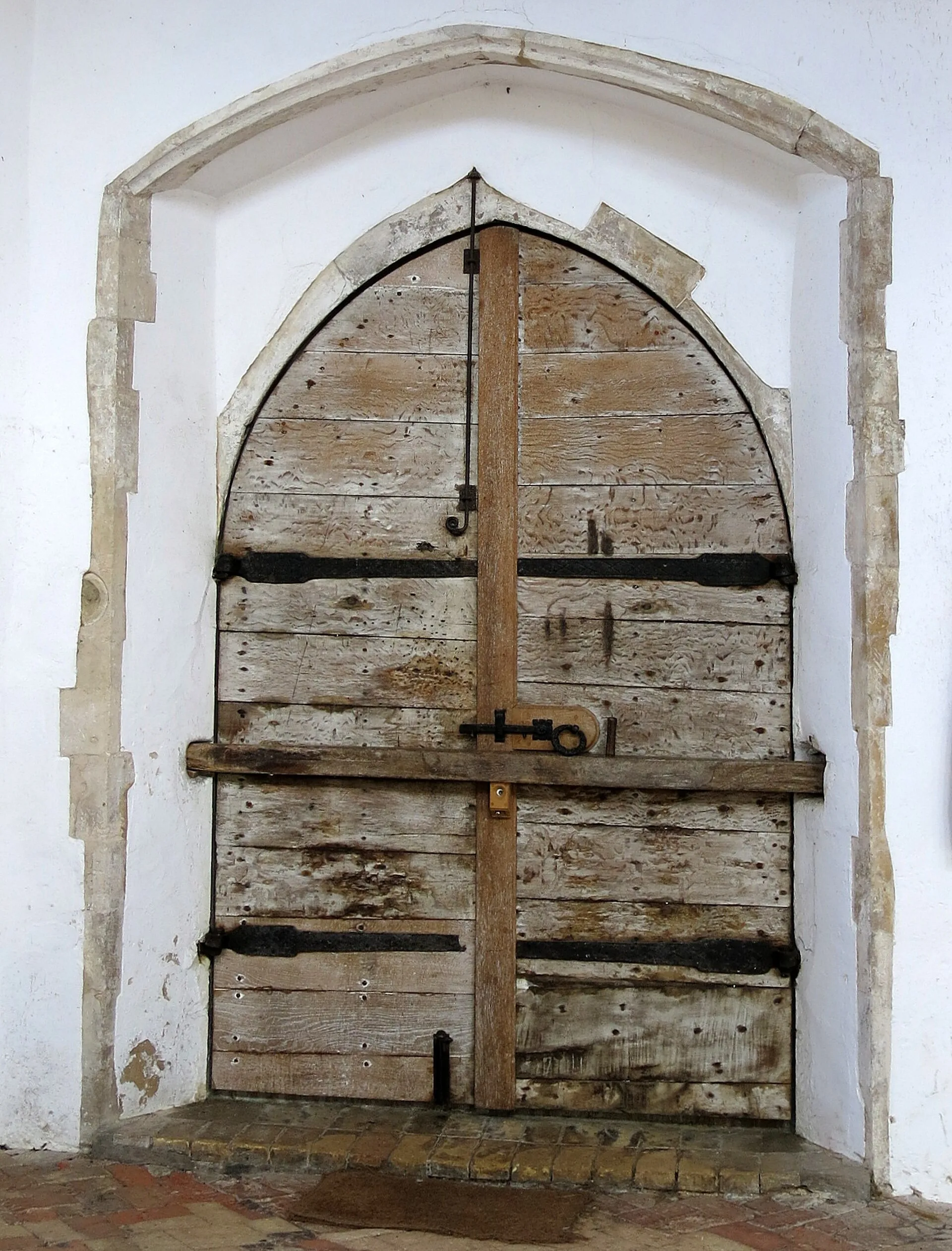
The same pamphlet says that on the same day the creature entered the church at Blythburgh, about seven miles away, perched on the beam that once carried the rood, swung down through the nave, killed two men and a boy, burned another man’s hand, and flew out. At Blythburgh the scorch marks on the great north door are still shown to visitors as the Devil’s fingerprints.
The record
Almost everything about the dog comes from that one source: A Straunge and Terrible Wunder by Abraham Fleming, a young writer and translator working for London printers, published by Francis Godly at the west end of St Paul’s. Fleming did not claim to have been there; he said he had set the events down as he received them. His preface presents the storm as one of the signs by which God warns a sinful nation to repent, and the pamphlet ends with a prayer.
Local sources tell a plainer story. The history of Holy Trinity, Blythburgh, quotes a contemporary account in which lightning split the church door, went back up into the steeple, tore its timbers and broke the chimes before moving off toward Bungay, and records that a man of about forty and a boy of fifteen were found dead. At Bungay, according to local writers who have examined them, the churchwardens’ book and the parish register both note the severity of the storm, and the register records two men dying in the bell tower of St Mary’s. Neither mentions a dog or the Devil. The chroniclers Stow and Holinshed also recorded the storm without any animal.
The explanations
Read against those records, the 1577 account looks like a real lightning strike retold as a sermon. Men in a bell tower during a thunderstorm are exposed to lightning, which can kill outright, throw people down and leave others badly burned while sparing those beside them. Fleming’s details, from the sudden darkness to the man who was shrivelled but lived and the shattered clock, fit the effects of a strike on a medieval church. A black dog was a familiar regional image of evil, and Fleming wrote at a time when many readers took violent weather as a direct act of God or the Devil. Once in print, the dog became part of the story at both churches.
Where it stands
Black Shuck has since been adopted by the town it supposedly terrorized. Bungay holds an annual Black Shuck festival around the anniversary in early August, with a parade and several days of art, music and events celebrating local myths and legends. The storm, the deaths and the burned door are matters of record; the hound that caused them is a sixteenth-century embellishment.