
Most Bigfoot evidence is visual: a blurry film, a plaster cast, a photograph of a shape in the trees. The Sierra Sounds are the exception. They are about ninety minutes of audio, recorded in the early 1970s at a remote hunting camp high in California’s Sierra Nevada, and for fifty years they have been the recording that believers point to first and skeptics find easiest to doubt. Nobody disputes that the tapes are real tapes. The argument is about what was standing outside the tent.
What happened
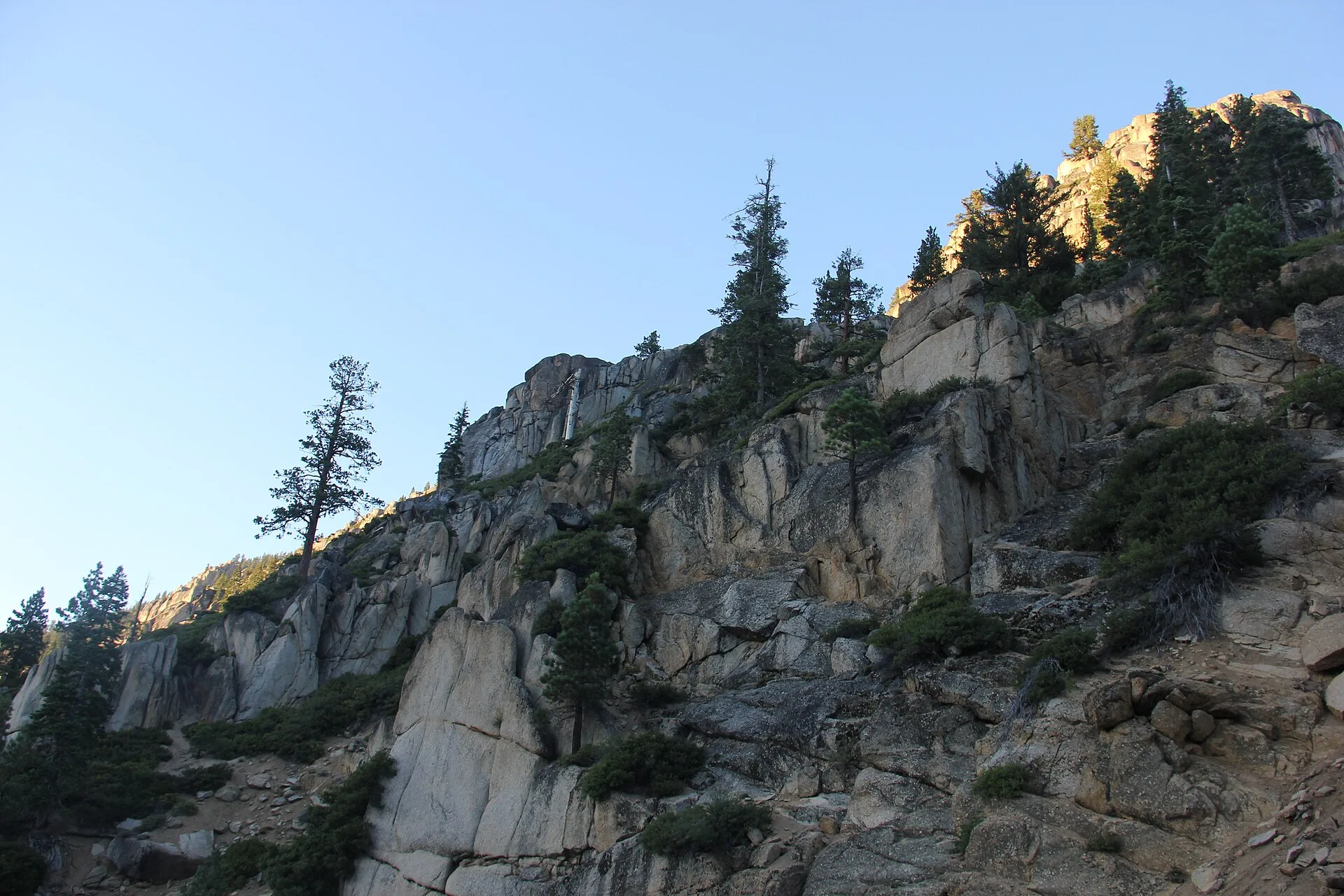
The camp was used by a party of hunters who, by their account, had been visited at night for several seasons by large unseen animals that screamed, whistled and banged on things. One of them, Ron Morehead, began bringing recording equipment. He was joined by Al Berry, a newspaper journalist who said he went up expecting to expose a hoax. Between about 1971 and 1975 they dangled a microphone from a tree branch, ran it to a reel-to-reel recorder inside the shelter, and captured what sounded like two or more creatures circling the camp: deep whoops, rapid grunts, wood knocks and, most famously, bursts of fast, clipped vocalizing that fans later nicknamed “samurai chatter”. They also reported finding eighteen-inch footprints in the snow. They did not, in several years of visits, photograph anything, which both men attributed to the darkness and to the difficulty of seeing out of the shelter.
Berry wrote the story up with the author B. Ann Slate in a 1976 paperback, “Bigfoot”, and the recordings circulated on cassette among researchers. They were discussed at a 1978 academic conference on Sasquatch at the University of British Columbia, whose papers were published in 1980 as “Manlike Monsters on Trial”. Morehead later released the audio commercially as the Sierra Sounds albums and continues to sell them.
The investigation
The only analysis by people outside the Bigfoot community was done for the 1978 conference by an electrical engineer at the University of Wyoming, R. Lynn Kirlin, and a graduate student, Lasse Hertel. They ran the recordings through spectral analysis and reported that they could find no sign the tapes had been slowed down or sped up, and that the estimated vocal-tract length of the loudest speaker was greater than that of an average man. They did not claim to know what had made the sounds.
The claim that the tapes contain language came much later and from one man. R. Scott Nelson, a retired US Navy cryptologic technician and interpreter who had worked in Russian, Spanish and Persian, began transcribing the recordings around 2008. He concluded that they contained repeated phonemes combined into words, devised his own notation for them, which he called the Sasquatch Phonetic Alphabet, and stated that the sounds were definitely a language, definitely not human, and could not have been faked. His papers were self-published and have never been peer reviewed.
The explanations
The linguist Karen Stollznow, writing for Scientific American in 2013, set out the skeptical case. The expeditions were organized specifically to find Bigfoot; the animals were heard but never seen; some of the sounds are plainly bears or other known species; wood knocks are trivially easy to produce; and the “language” sounds to her like an amateur’s idea of what a primate proto-language might be. She added that fluency in several human languages and a career in translation do not qualify anyone to identify an undocumented language, which is the work of field linguists, and that Nelson’s refusal to use the standard International Phonetic Alphabet makes his transcriptions impossible to compare with anything. Her verdict was that the recordings are most probably a hoax, or that Berry and Morehead were themselves hoaxed by someone in the woods.
Brian Dunning of the Skeptoid podcast made a different point in 2019: the samurai chatter is unlike every other recording ever attributed to Bigfoot, and has been heard in one small area only. Real animal species have consistent calls; a creature whose vocal repertoire changes completely from one state to the next is more likely to be several creatures, or none. He also noted that a YouTuber had reproduced the chatter convincingly with his own voice, and found the account of two men who heard the animals outside their tent on every visit for years yet never opened the flap with a camera hard to credit.
Where it stands
Berry died in 2012 and maintained to the end that nothing had been staged. Morehead still lectures and sells the recordings, and the tapes remain the only Bigfoot audio ever to have been examined by an engineer with no stake in the result. That examination found only that the recording itself was not obviously tampered with. What it recorded is unproven, and the most ordinary reading, that the campers were visited at night by people rather than by an unknown primate, has never been ruled out.